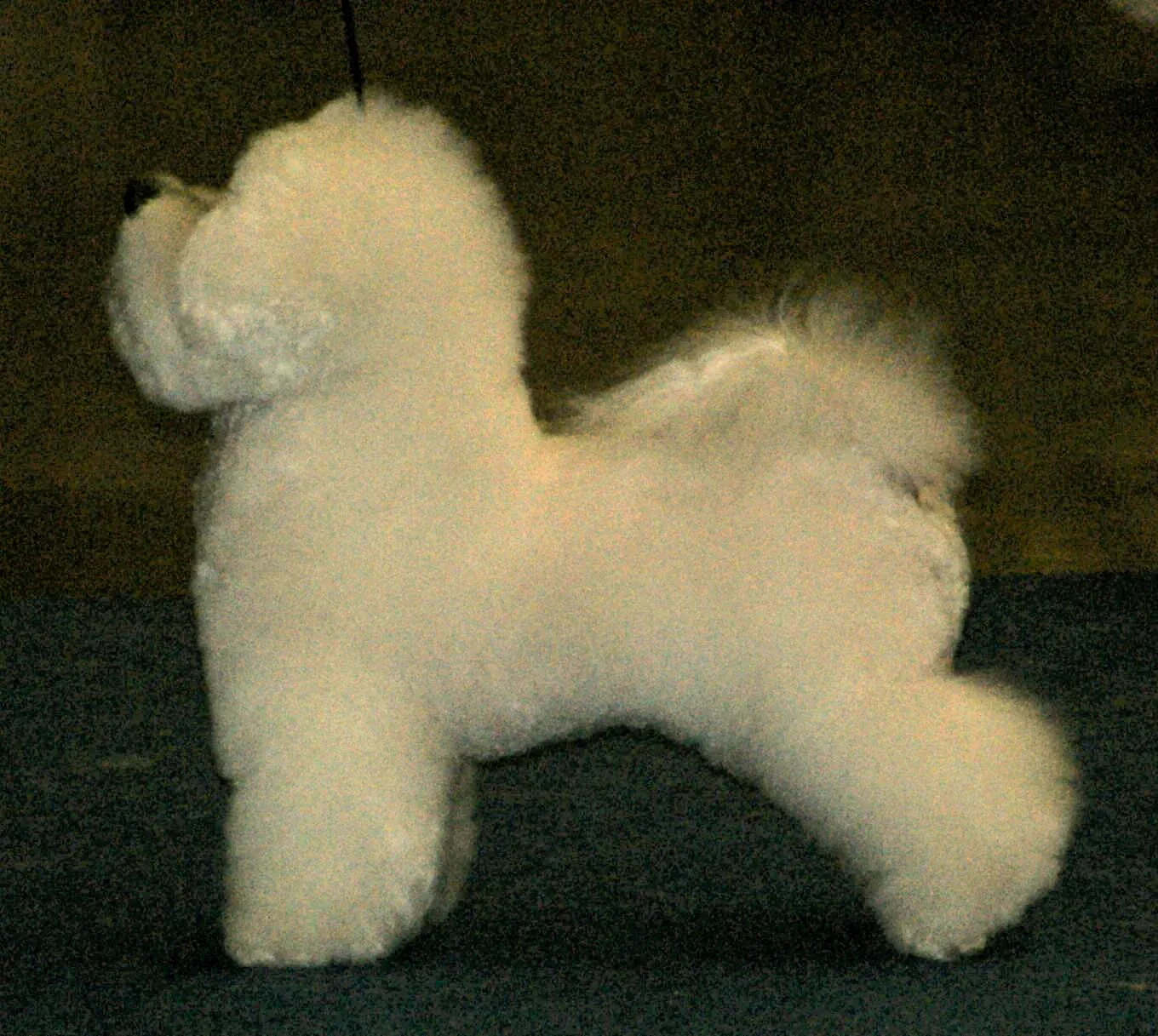
It belongs to the Bichon group of lapdogs that grew up around the Mediterranean, and its more specific home is the island of Tenerife, according to most histories. It was a pet of the French court, later a circus and street performer, and was recognised in France under its present name in 1933. Standards describe a cheerful, outgoing dog of about 23 to 29 cm at the withers. It suits owners who can groom a curly coat every few days and who want a dog that is happiest close to its people.
Bichon Frisé quick facts
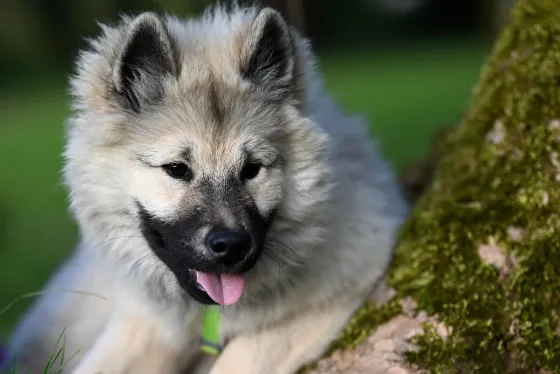 Related breedGerman Spitz1400 to 1899 · Germany
- Descendant breeds
- Havanese, Coton de Tulear, Bolonka (project data, medium confidence)
- Country of origin
- Belgium and France (FCI patronage); older roots on Tenerife, Canary Islands, and around the Mediterranean
- Period of development
- About 1300 to 1933 (project data, medium confidence); named "Bichon à poil frisé" in France in 1933
- Other names
- Bichon à Poil Frisé, Tenerife Dog, Bichon Tenerife
- Type
- Companion and toy dog (FCI Group 9, standard no. 215; AKC Non-Sporting Group; recognised by the UK Kennel Club)
- Height
- About 23 to 29 cm depending on the club (see the breed standard below)
- Weight
- No weight in the standards
- Coat
- Fine, curly, silky; trimmed or kept long
- Colour
- White; cream, buff or apricot shading allowed in young dogs
- Life span
- Project data: 14 to 15 years. UK studies: median about 13 years
- DNA family
- "Poodle" (Parker et al. 2017), strong support
Name and origin
 Related breedKurī1250 to 1300 · New Zealand
What the name means
"Bichon" is generally explained as a short form of "barbichon", a little barbet. The barbet is an old French water dog with a long curly coat, so the name points to a small curly dog. "Frisé" is French for curled or frizzed, and "à poil frisé" means "with curly hair". The full French name is therefore "Bichon à Poil Frisé", the curly-coated bichon, and it was fixed in 1933 (see below). Before that, the dog was known on the Continent mostly as the Tenerife or Teneriffe dog.
The French verb "bichonner", to pamper or fuss over, is often linked to the dogs, which were washed, scented and ribboned at court. This is a popular etymology and the link is plausible, but this draft has not checked a dictionary source for it.
The Mediterranean Barbichon family
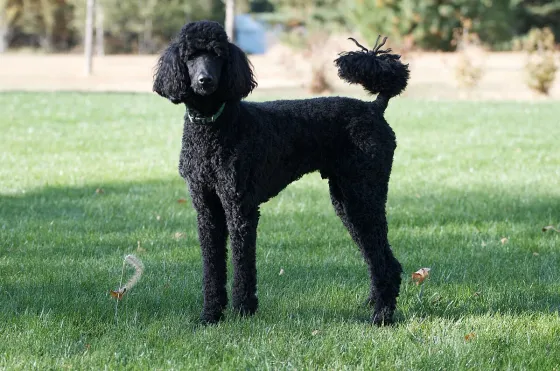
Several small white dogs with long coats appear in European records from the Middle Ages onward. They are usually grouped as the "bichons" or "Barbichon" dogs: the Maltese (from Malta), the Bolognese (from the Italian city of Bologna), the Bichon Tenerife, and later offshoots such as the Havanese and the Coton de Tulear. The group is held together by looks, size and purpose, since all were lapdogs for people who could afford them. How closely they are related is a more open question, and DNA gives a partial answer (see the relatives section).
Tenerife and the sailors' legend
Most histories say the Bichon Frisé descends from small bichon-type dogs that reached the Canary Islands from Spain, and that Spanish and Italian traders and sailors later took them back to Europe. A common version places the move to Italy around the 14th century. This is the traditional story, told in breed club and kennel club histories. Dated records of the voyages are thin, so treat the route and the dates as legend with a plausible core. The project data gives the development period as about 1300 to 1933 with medium confidence.
History
 Same eraStandard Schnauzer1400 to 1880 · Germany
Renaissance courts
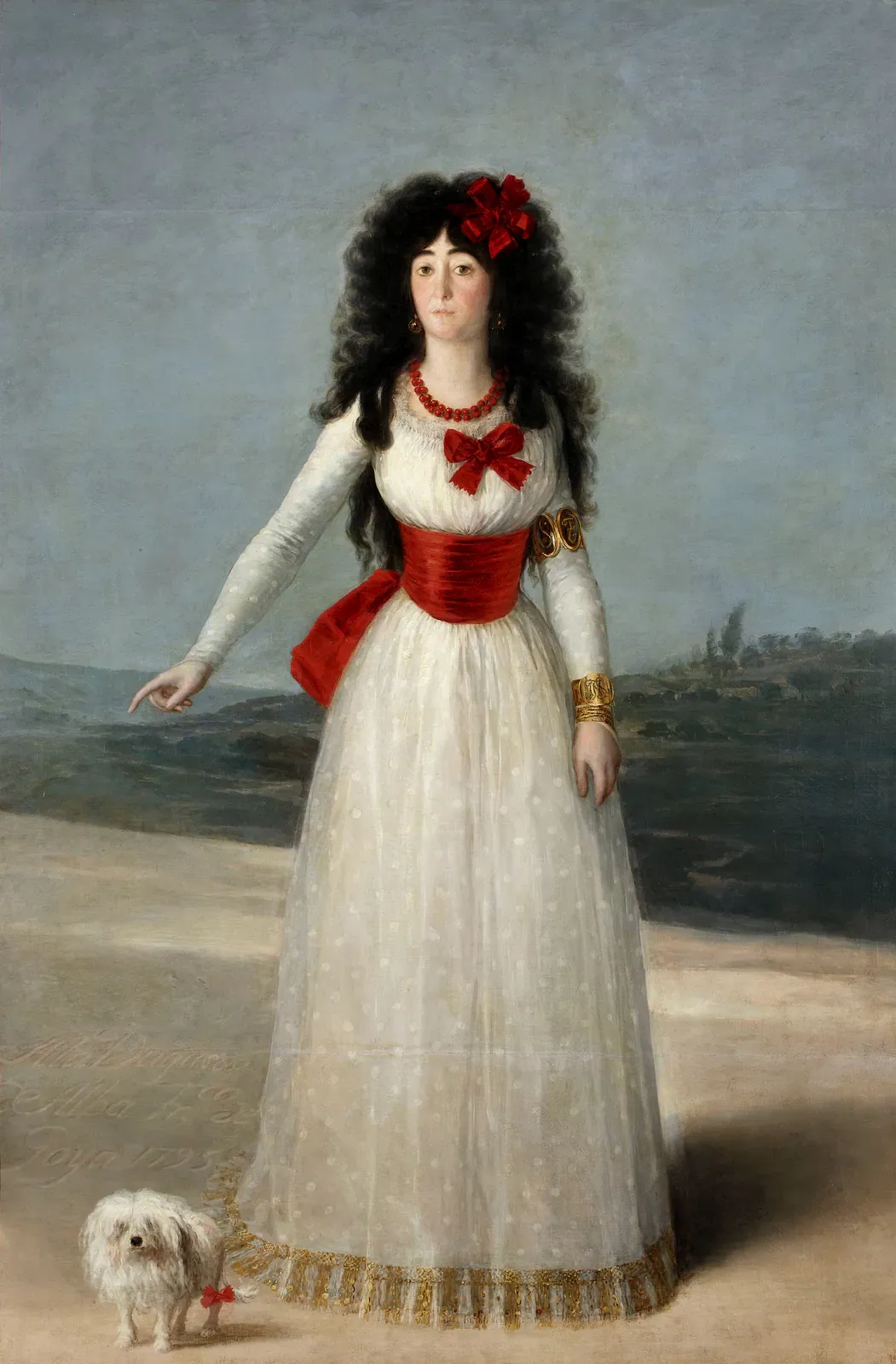
The traditional account says the dogs became fashionable at the French court under Francis I (reigned 1515 to 1547) and were at their peak under Henry III (reigned 1574 to 1589). Henry III is said to have carried a few in a basket hung from ribbons round his neck. This anecdote appears in kennel club histories, including the AKC's. It is a long-repeated story, not a documented fact.
Circus and street performers
After the French Revolution of 1789, aristocratic households lost their wealth and the pet dogs of the courts lost their status. Histories say the bichons ended up on the street, led by organ grinders, working fairs and circuses. Their small size, quick learning and cheerful manner made them good performers. This is the stage of the breed's story that many sources describe in similar terms but none documents in detail, so the dates are loose.
Standard and recognition
The breed was recognised in France under the auspices of the Société Centrale Canine in March 1933 as the "Bichon à Poil Frisé". The FCI lists the breed as standard no. 215, with Belgium and France as joint countries of origin.
| Year | Event |
|---|---|
| About 1300 | Start of the period used in the project data for the development of the breed |
| 1515 to 1589 | Reigns of Francis I and Henry III, when the dogs are said to have been court favourites |
| 1789 | French Revolution; the dogs are said to move from court to street |
| 1933 | Recognised in France as Bichon à Poil Frisé |
| 1956 | Helene and Francois Picault bring six Bichons from France to the United States (AKC history) |
| 1971 | AKC accepts the breed into its Miscellaneous class |
| April 1973 | AKC full recognition, Non-Sporting Group |


Relatives, ancestors and descendants
The project knowledge base lists no fixed parent breeds for the Bichon Frisé. It records the Bichon Tenerife type as the forerunner of several other breeds.
Descendant breeds
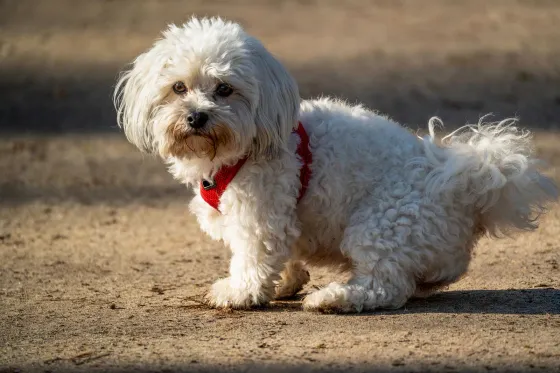
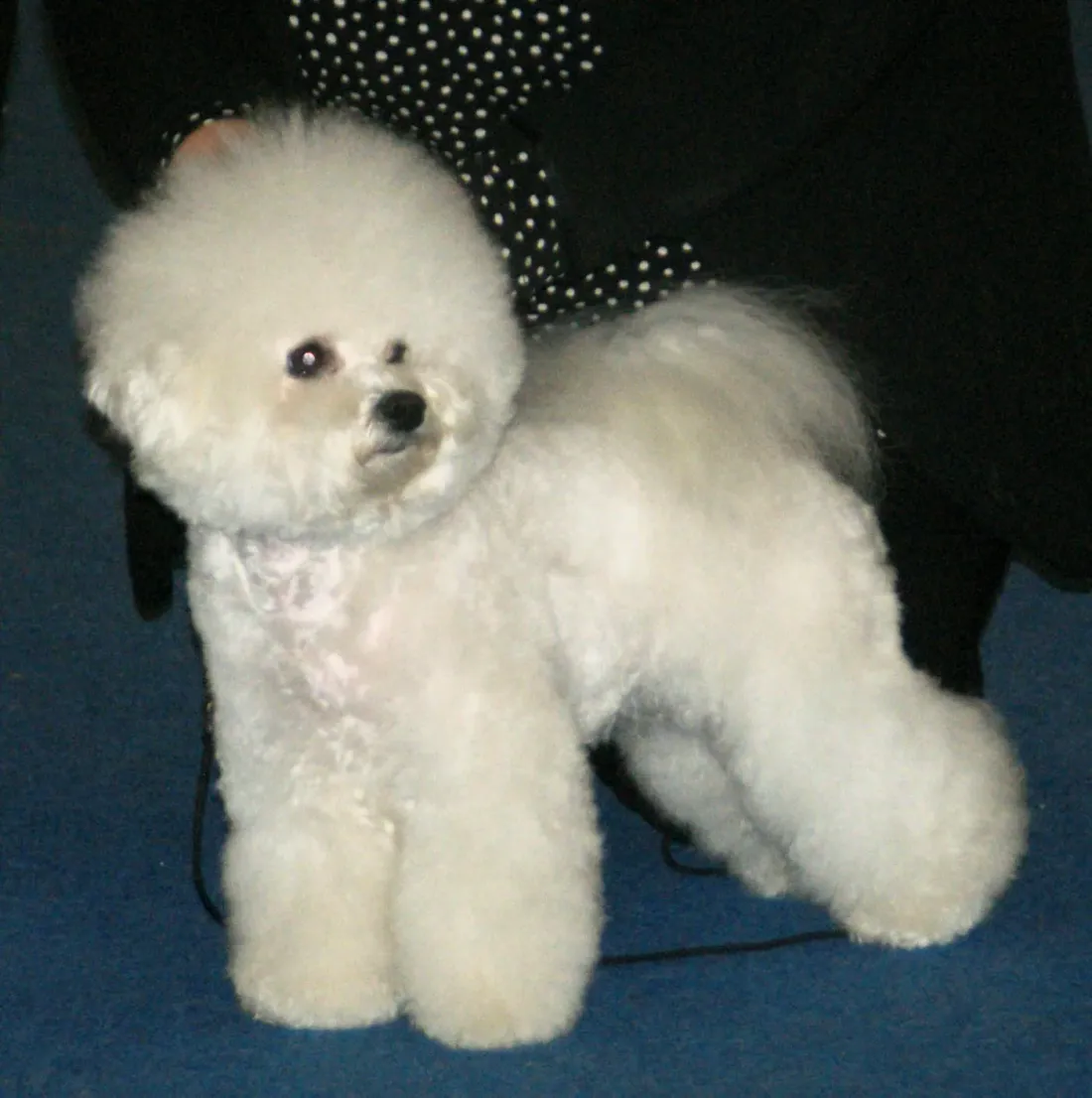
- Havanese (Cuba). The Blanquito de la Habana, forerunner of the Havanese, is said to descend from the Bichon Tenerife (project data, medium confidence; Wikipedia and Parker 2017).
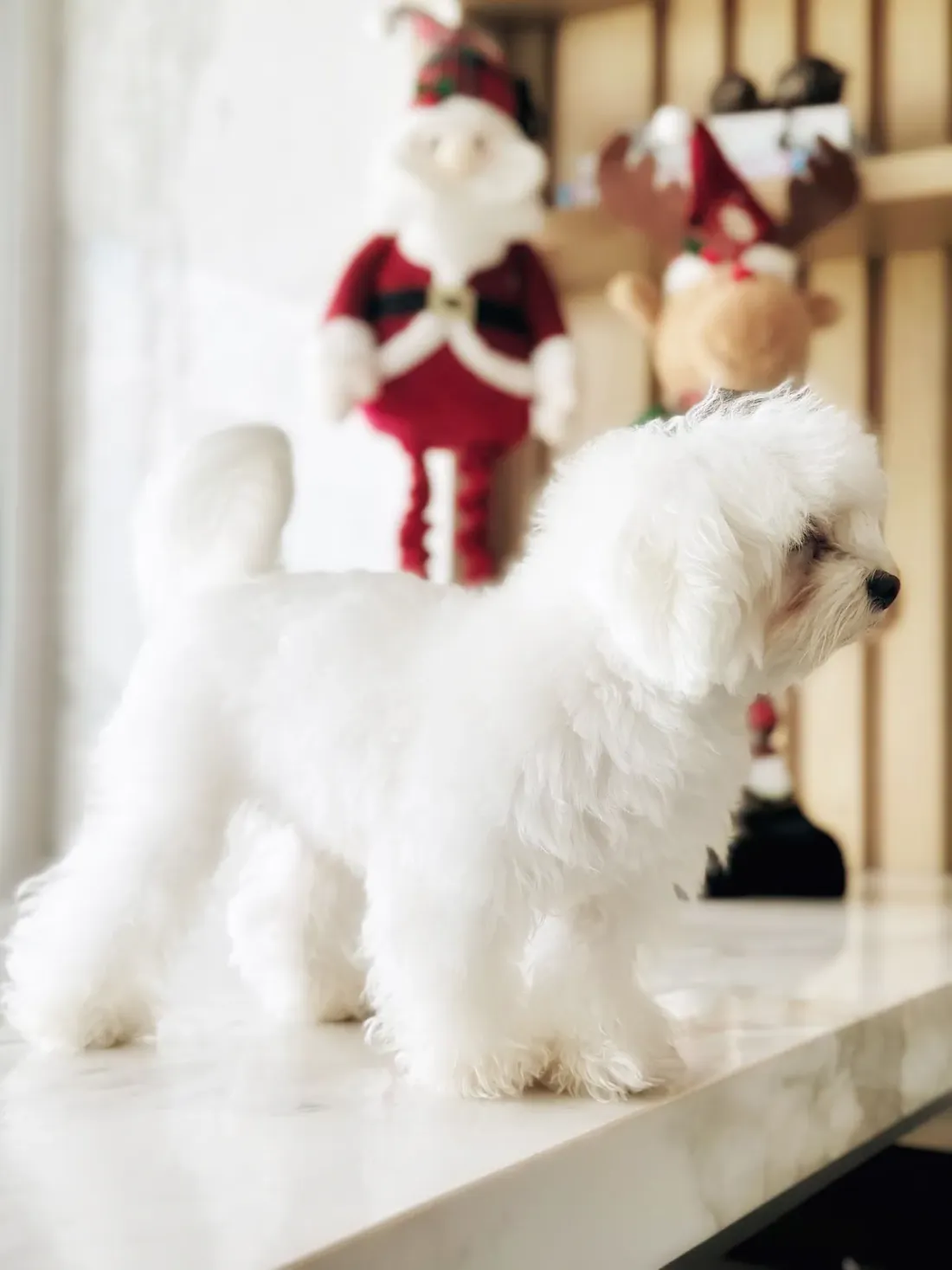
- Coton de Tulear (Madagascar). Believed to descend from Tenerife dogs brought to Madagascar (project data, medium confidence).
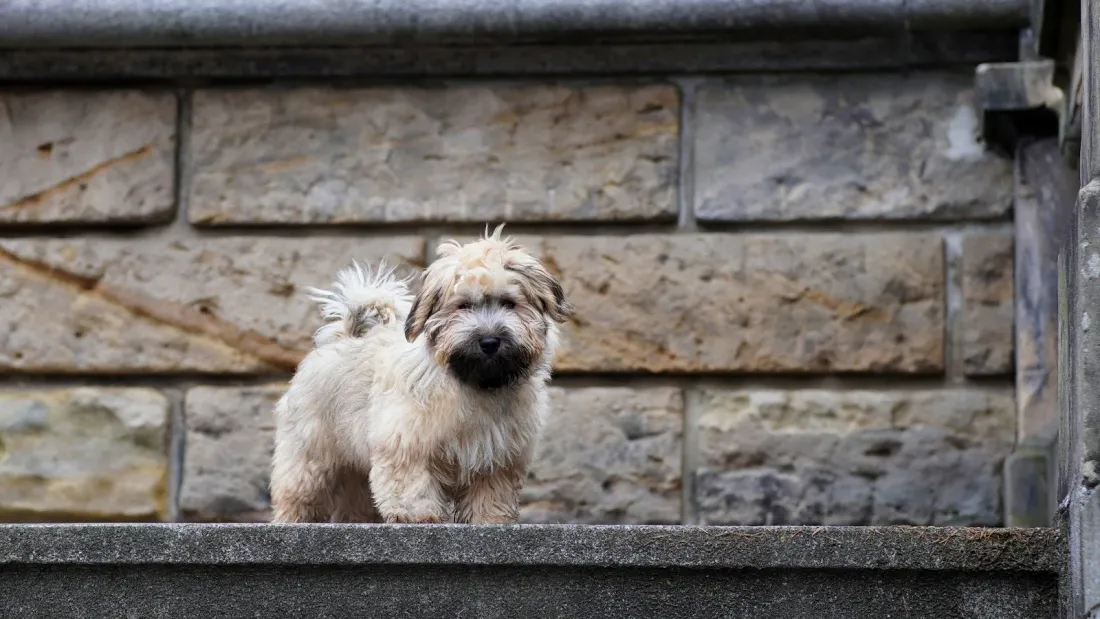
- Bolonka (Russia). Bred in the Soviet Union from French lapdogs of Bolognese and bichon type; the project data names the Bichon Frisé among the small breeds used (medium confidence).
Other bichon-type breeds
- Maltese. Older Mediterranean lapdog, named after the island of Malta.
- Bolognese. Named after Bologna; project dates give about 1200 to 1500.
- Löwchen. Small French lion-clipped dog, also in the Poodle clade.
What does DNA say?
A 2017 study by Parker and colleagues (Cell Reports) analysed 1,346 dogs from 161 breeds and sorted them into 23 supported clades. The Bichon Frisé falls in the Poodle family, with strong support, together with the Poodle, Maltese, Havanese, Bolognese, Coton de Tulear and Löwchen. The study also measured shared , long stretches of identical DNA inherited from common ancestors. The more (Mb) two breeds share, the stronger the sign of shared founders or crossing. It cannot say which direction the genes flowed.
Source: Parker et al. 2017, as recorded in this site's breed database.
The Havanese result is the clearest. It fits the story that the Havanese grew from Tenerife dogs taken across the Atlantic. The Maltese result supports a shared Mediterranean lapdog base, and the Poodle result fits the curly coat and the barbet link in the name. The Pug figure is smaller and tells us about contact between small companion breeds, not about shared ancestry in the same sense.
Descend from it · 3
- Coton de TulearMadagascar
- HavaneseCuba
- BolonkaRussia
Source: Parker et al. 2017. Percent of the whole genome.
| Breedwith Bichon Frisé | Shared DNA with Bichon Frisé (Mb)Shared DNA (Mb) |
|---|---|
| Havanese | 29.0 |
| Maltese | 15.3 |
| Poodle | 12.9 |
| Pug | 11.0 |
The breed standard
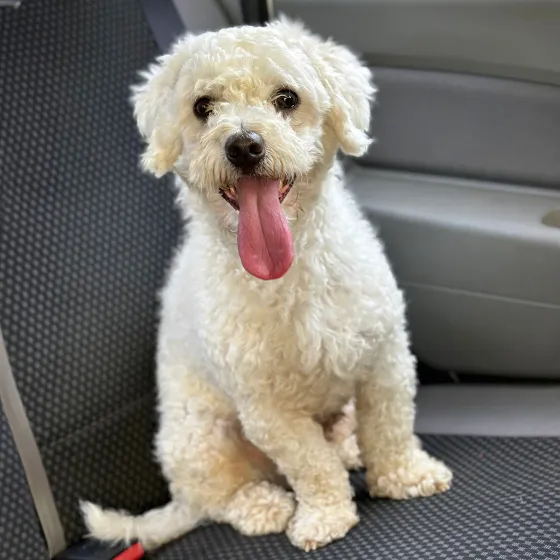
A breed standard is the written ideal a kennel club judges dogs against. The Bichon Frisé standards agree on the broad picture: a small, sturdy, well-balanced dog, longer than it is tall, with a plumed tail carried over the back and a white, curly coat. They differ on exact height and on colour wording.
| Trait | FCI (no. 215) | AKC | UK Kennel Club |
|---|---|---|---|
| Height at withers | 25 to 29 cm; tolerance 1 cm over for males, 2 cm under for females | About 9.5 to 11.5 in (24 to 29 cm) | 23 to 28 cm (9 to 11 in) |
| Weight | Not given | Not given | Not given |
| Coat | Fine, silky curls | Soft dense undercoat, coarser curly outer coat | Fine, silky, loose corkscrew curls about 7 to 10 cm long; may be shown trimmed or untrimmed |
| Colour | White | White; cream, buff or apricot markings allowed in young dogs | White; cream or apricot markings acceptable up to 18 months |
| Head | Slightly rounded skull | Slightly rounded skull | Slightly rounded skull; muzzle to skull ratio about 3 to 5 |
| Ears | Dropped, covered with long hair | Dropped, covered with long hair | Hang close to the head, set slightly above eye level |
| Tail | Raised and curved over the back | Raised and curved over the back | Never docked; hair touches the back |
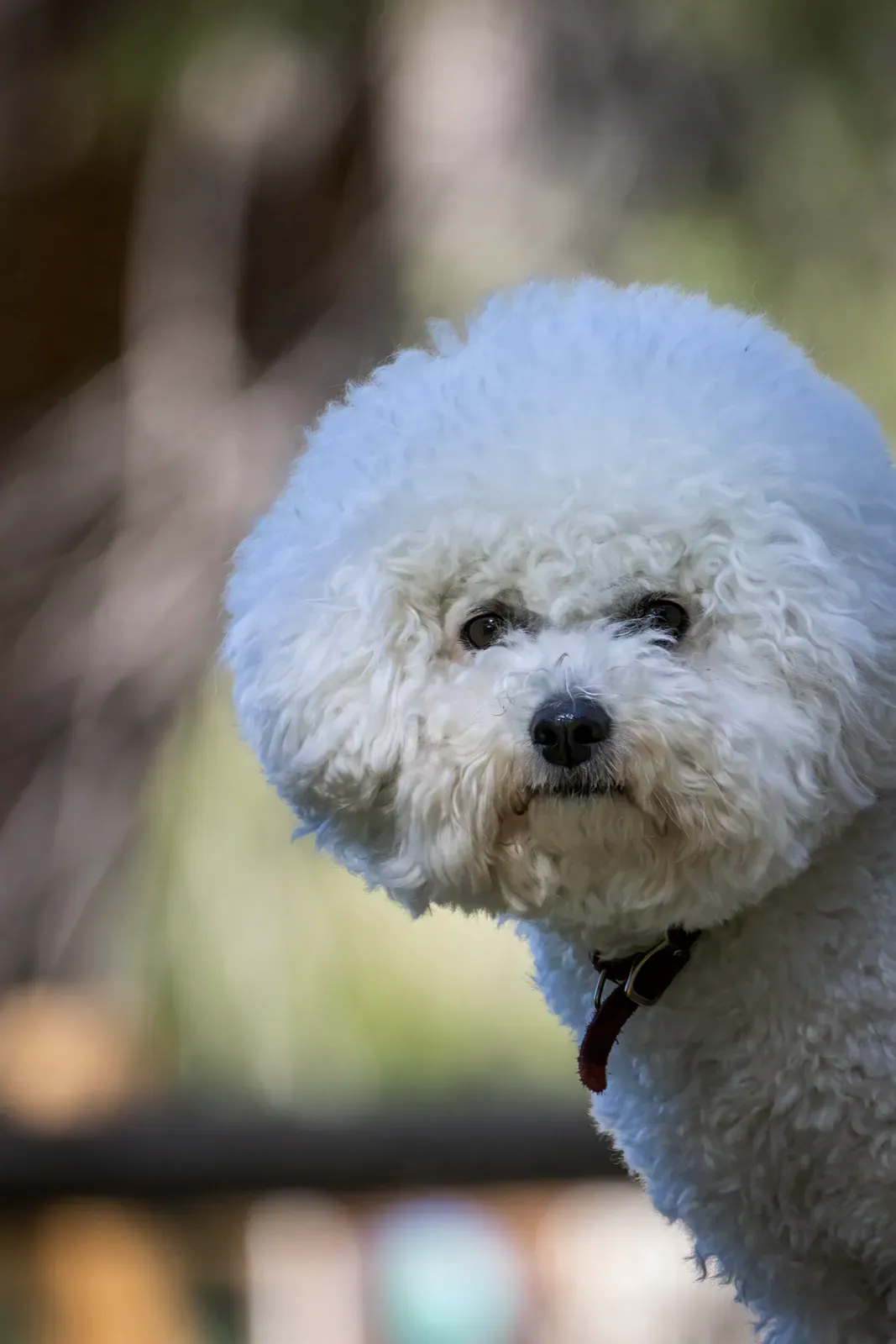
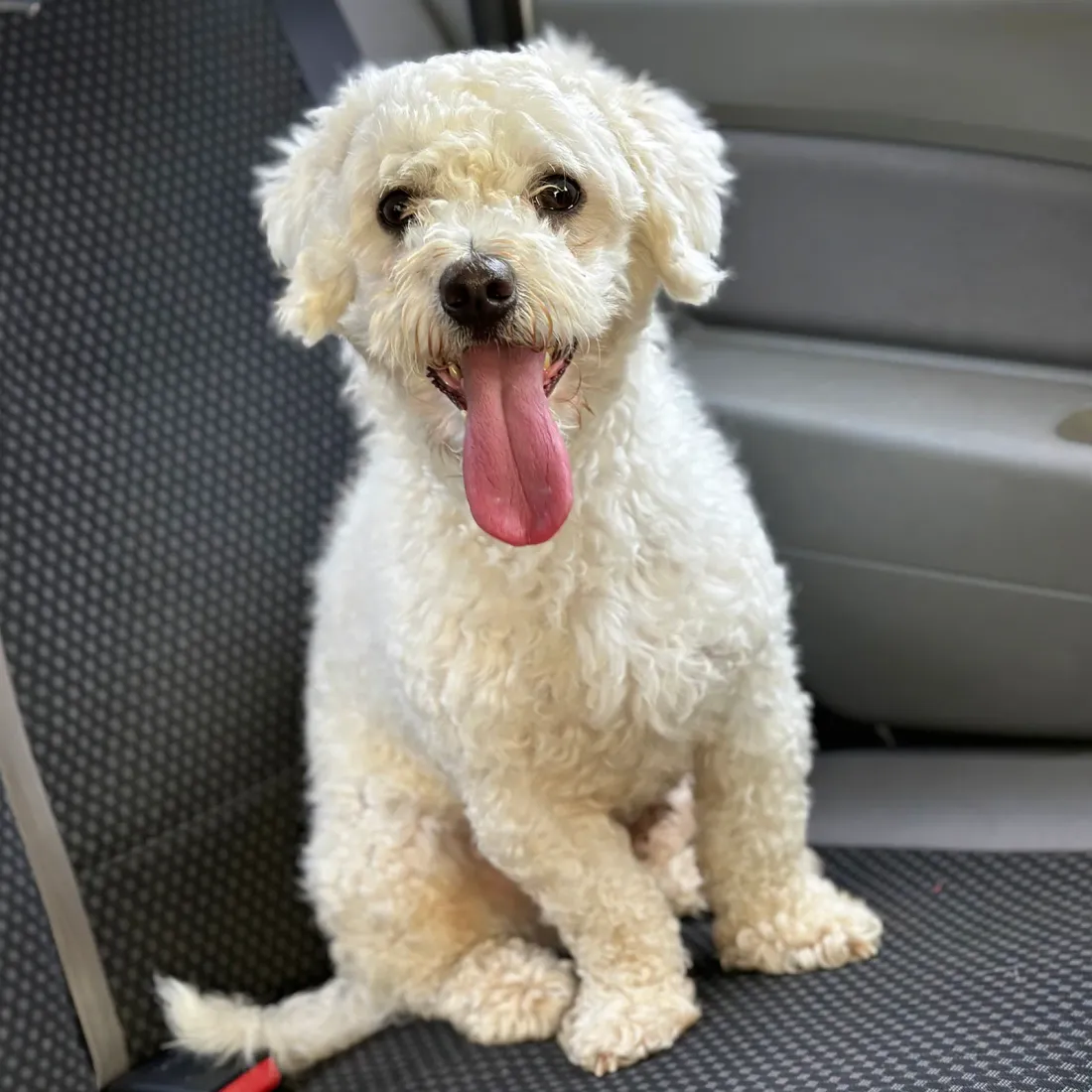
The dark pigmentation under the white coat is part of the ideal: black nose, dark round eyes with black rims, and dark skin. All clubs describe a cheerful, lively dog. Show dogs are presented with a rounded outline.
Weight is not part of any of these standards. Pet dogs vary in weight with frame and condition, so a vet is the best guide to a healthy weight for an individual dog.

Coat and grooming
The coat is the main reason people choose the breed and the main daily task. The curly coat does not drop hair freely. Loose hairs tend to stay caught in the curls, so the dog sheds little around the house but mats if the hair is not brushed out. Standards describe the coat as fine and silky, which tangles more easily than a coarse texture.
- Brushing. Brush and comb down to the skin several times a week, more often for a long coat. Mats form behind the ears, in the armpits and between the back legs.
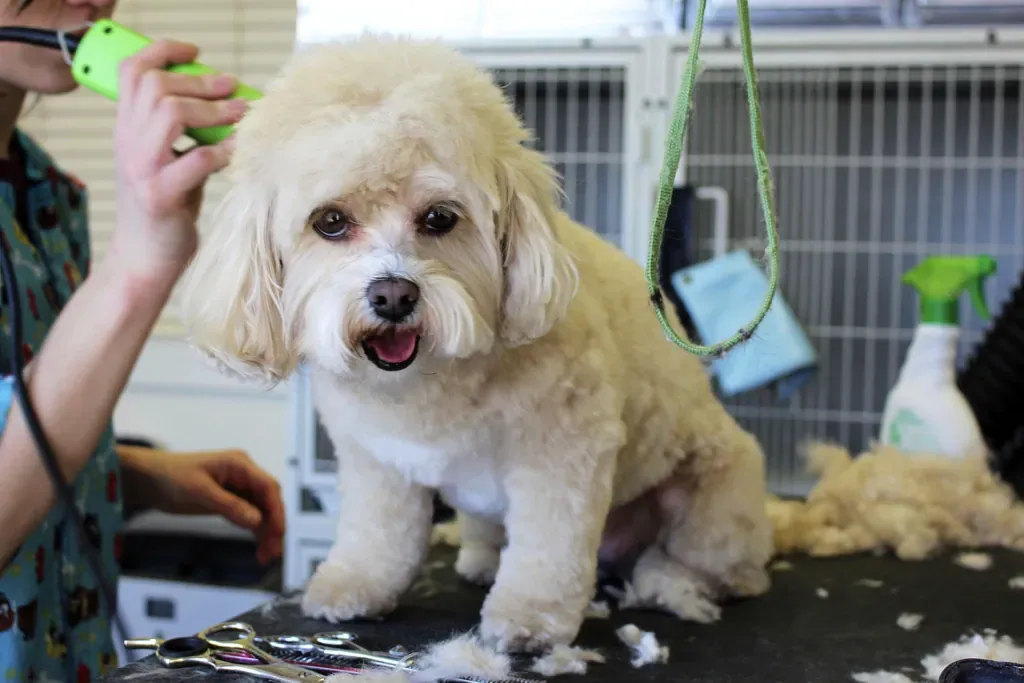
- Trimming. Show dogs are scissored into a rounded shape by a specialist. Pet owners usually choose a shorter all-over trim every few weeks, which is simpler to look after.
- Bathing. Many owners bathe roughly every few weeks and dry the coat fully, since a damp curly coat mats faster. Individual vets and groomers advise on frequency.
- Face and eyes. The white hair around the eyes and mouth tends to stain. Gentle daily wiping keeps it clean. Persistent tearing or sore skin deserves a vet check.
- Teeth and nails. Small dogs of many breeds benefit from regular tooth brushing and nail trims. This article does not cite a breed-specific study for dental disease.
Is a Bichon Frisé hypoallergenic?
No dog breed has been shown to be hypoallergenic, and the Bichon Frisé is no exception. The breed is often sold as "hypoallergenic" because its curly coat sheds little loose hair, so there is less visible hair around the home. The allergen, however, is mostly protein from saliva, skin and dander, not from hair itself.
The best-known test of the claim is Vredegoor and colleagues (Journal of Allergy and Clinical Immunology, 2012). They measured Can f 1, the main dog allergen, in hair samples and in homes with dogs of breeds sold as hypoallergenic (Labradoodle, Poodle, Spanish Waterdog, Airedale Terrier) and with Labrador Retrievers. Hair from the "hypoallergenic" breeds carried more Can f 1, not less. Levels in settled dust were lower for Labradoodles only, and airborne levels did not differ between breeds. The authors found no evidence to call any breed hypoallergenic. The study did not include the Bichon Frisé, but it tested the general claim on other low-shedding curly breeds.
Allergic people who want a dog should spend time with the individual dog, and ideally in the home, before taking one on, and ask an allergist for advice.
Temperament
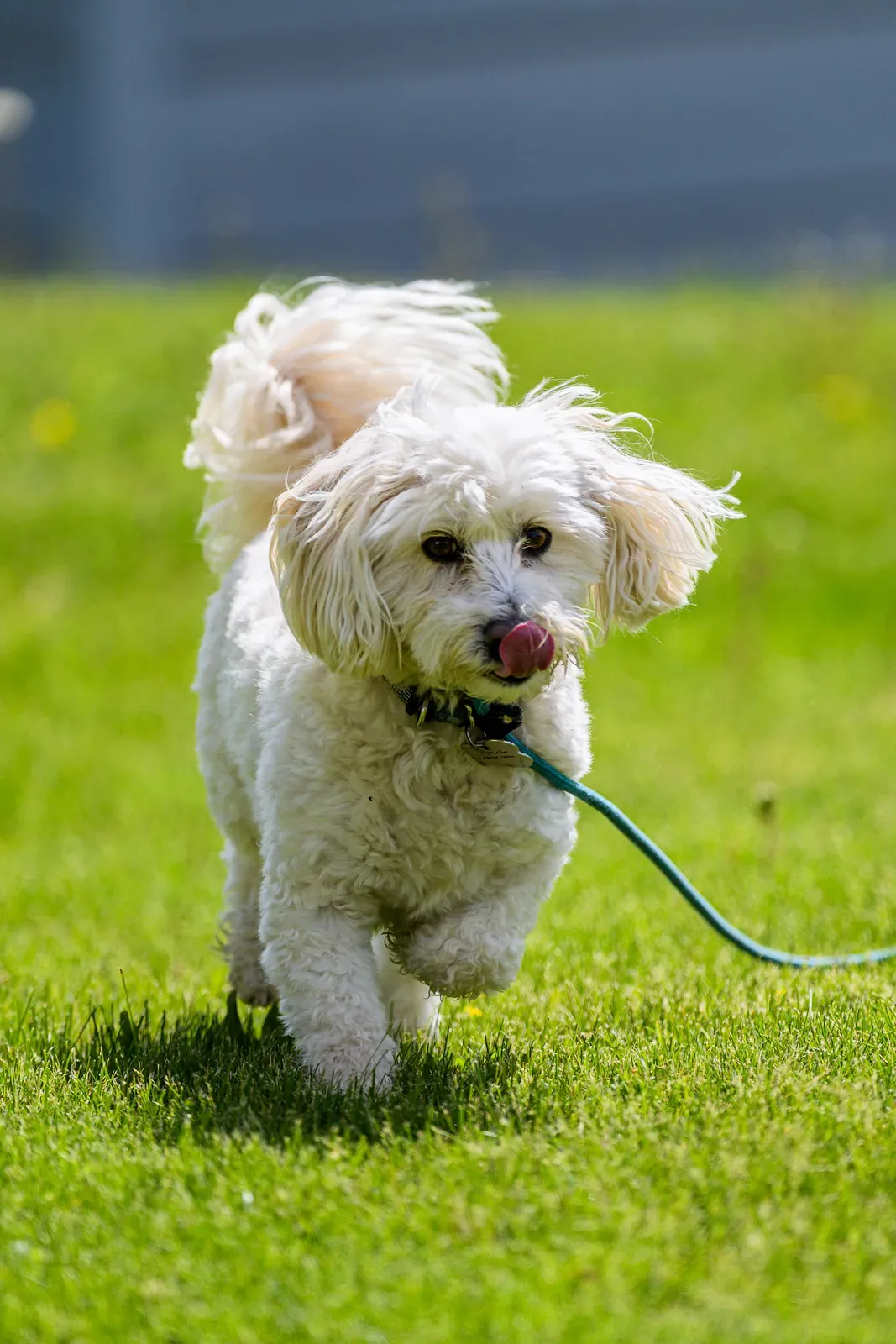
The standards describe a gay, happy, lively dog that is friendly and outgoing. In daily life that means a dog that wants to be near its people, greets visitors with enthusiasm and plays in short, bouncy bursts. The AKC calls the breed one of the world's "personality dogs". Many are playful well into old age.
Temperament varies by dog. Early, gentle socialisation shapes how a puppy copes with new people, noise and grooming. A bichon that is not taught to be alone from puppyhood can find separation hard. Because the breed was developed as a companion, many dogs follow their owner from room to room. Barking is individual, and some dogs bark at doorbells and passers-by unless trained.
Small size makes a bichon easy to handle but also easy to injure. Children need to be taught to pick the dog up properly and to leave it alone when it rests.
Health
Most Bichon Frisés live long, healthy lives. This section lists what the research says about conditions seen more often in the breed, so that breeders can screen for them and owners know what to watch for. Information here is general. Talk to a vet about your own dog.
On lifespan, UK sources give a median of about 13 years. The Kennel Club and BSAVA survey of purebred dogs in the UK (Adams et al. 2010) found a median age at death of 12 years and 11 months from 34 reported deaths. VetCompass data (O'Neill et al., The Veterinary Journal, 2013) gave a median of 12.99 years from 55 dogs. Both samples are small. The project data gives 14 to 15 years, which is above these UK medians, so treat 12 to 15 years as the realistic range.
| Condition | What it is | How common | What helps |
|---|---|---|---|
| Patellar luxation | The kneecap slips out of its groove. Dogs may skip a step on one back leg, then carry on normally | VetCompass (O'Neill et al., Canine Genetics and Epidemiology, 2016): Bichons had about 2.9 times the odds of crossbreds. A Swedish Kennel Club study of 1997 to 2014 data on Bichon Frisés and Chihuahuas found about 12 percent of Bichons affected, or about 1 in 8 | Vet knee check before breeding, healthy weight, strong muscles through steady exercise. Mild cases may need only monitoring; surgery is an option for others |
| Cushing's disease (hyperadrenocorticism) | The body makes too much of the hormone cortisol. Signs include drinking and urinating more, a pot belly, thin coat | VetCompass (O'Neill et al., 2016): about 1 in 360 dogs overall (0.28 percent), and Bichons had about 6.5 times the odds of crossbreds. It is mainly a disease of older dogs | Early vet check if a middle-aged or older dog drinks more than usual. Blood tests confirm it and medicine can control it |
| Bladder stones (urolithiasis) | Mineral stones form in the bladder and can cause straining or blood in the urine | The breed is among those most often seen in Canadian Veterinary Urolith Centre submissions for both struvite and calcium oxalate stones (Canadian urolith reports). A study of Bichon Frisés found higher urine calcium in stone-formers. No "1 in N" figure was found | Plenty of fresh water, regular toilet breaks, prompt vet check for straining. Vets choose diet and treatment to match the stone type |
Not every health issue in the breed has a published prevalence figure. This article does not give figures for others (for example skin allergies or dental disease) because no named breed-specific study was checked. Breeders can ask a vet about the full list and about the dog's own family history.
Research and science
The most visible study results for the Bichon Frisé are about disease, not behaviour. The breed turns up in VetCompass comparisons because its numbers in UK primary-care practices are large enough to measure. VetCompass is a research programme at the Royal Veterinary College that anonymises the records of dogs seen at everyday vet practices, and its figures describe dogs seen by vets, not all dogs. A higher odds ratio shows a pattern in the records, not an individual dog's fate.
The DNA work (Parker et al. 2017) is the other main source here. It links the Bichon Frisé with the rest of the Poodle clade and shows the Havanese as its closest relative among the breeds tested, which matches the Tenerife story told by breeders for a century.
Living with a Bichon Frisé
Ratings come from the breed standards and club or vet guidance cited in this article. Where evidence is thin the table says "varies".
| Area | Rating | Why |
|---|---|---|
| Exercise per day | Medium | Small, lively companion dog. Daily walks and play fit; no club cited here gives a minutes figure |
| Training needs | Medium | Eager to please and outgoing per the standards. Toilet training can be slow in small breeds, and individuals vary |
| Grooming time and frequency | High | Curly silky coat needs brushing several times a week and trimming every few weeks |
| Shedding | Low | Loose hair stays in the curls, which also means matting if not brushed |
| Barking | Varies | Individual. Can bark at sounds if not trained |
| Time alone | Fair to poor | Bred as a companion (FCI Group 9). Dogs need to be taught to be alone early |
| Children | Good | Friendly and outgoing. Supervise because the dog is small and easy to hurt |
| Other dogs | Good | Friendly and outgoing per the standards; socialise early |
| Cats and small pets | Varies | No named study. Depends on the individual and its early experience |
| Flat living | Good | Small size suits it, with daily outings |
| Heat tolerance | Varies | Thick curly coat, but no study was found. Avoid midday heat, provide shade and water |
| Cold tolerance | Fair | Dense coat, small body. A short trim may mean a coat in winter. Varies by dog |
| First-time owner fit | Good | Friendly and trainable. The main learning curve is grooming |
A great fit if you:
- Can brush a curly coat every few days and book a trim every few weeks.
- Want a dog to share the sofa, the kitchen and the car.
- Live in a flat or small house and enjoy daily walks and play.
- Are home for much of the day, or can arrange company.
Think twice if you:
- Want a dog that needs no grooming.
- Are away from home all day with no plan for company.
- Expect a "hypoallergenic" dog to solve allergies (see above).
- Have toddlers who are rough with small pets.
Before you get one
- Health checks to ask a breeder for. A vet knee (patella) examination of both parents. Ask the breeder about any history of bladder stones, hormone disease and eye problems in the family. Responsible breeders are happy to talk about all of this.
- Puppy or adult. Breed rescues and general rescues occasionally have adult bichons. An adult's temperament is already visible, and grooming habits are often in place.
- The first year. Expect weekly grooming practice, toilet training, early separation training, vaccinations and a vet check. Puppy classes help with manners and confidence.
Similar breeds to consider
- Maltese. Another white bichon-type lapdog, with a straight silky coat instead of curls.
- Havanese. Closest DNA relative in Parker 2017, with a longer wavy coat.
- Coton de Tulear. White cottony coat, a descendant of Tenerife-type dogs.
- Bolognese. Calm Italian bichon with a fluffy coat.

Bichon Frisé fun facts
- The French verb "bichonner", to pamper, is popularly traced to these dogs.
- Henry III of France is said to have carried bichons in a basket hung from ribbons round his neck.
- In 2001 a Bichon Frisé called JR won both the AKC National Championship and Best in Show at Westminster, the first of the breed to do both (AKC history).
- Tenerife-type dogs are said to be the forerunners of the Havanese of Cuba and the Coton de Tulear of Madagascar.
Frequently asked questions
Is a Bichon Frisé hypoallergenic?
No breed has been shown to be, and the curly coat does not remove the allergens in saliva and dander (Vredegoor et al. 2012). Spend time with the dog before committing.
What is the Bichon Frisé temperament?
Cheerful, outgoing and playful per the standards. Most want to be close to their people, and many find long periods alone difficult.
How long does a Bichon Frisé live?
UK studies give medians of about 13 years (12.99 years in , 12 years 11 months in the Kennel Club survey). The project data gives 14 to 15 years.
How big is a Bichon Frisé?
About 23 to 29 cm at the withers depending on the club standard. No standard gives a weight.
Does a Bichon Frisé shed?
Very little. Loose hair stays in the curls, so the coat needs regular brushing to avoid mats.
What health problems do Bichon Frisés get?
Studies note knee problems (patellar luxation), Cushing's disease and bladder stones more often than in other breeds. Most dogs live long, healthy lives.
What is the difference between a Bichon Frisé and a Maltese?
Both are small white lapdogs from the bichon group. The Bichon Frisé has a curly, cotton-like coat and a rounded show trim, while the Maltese has a long, straight, silky coat.
Where does the Bichon Frisé come from?
Tradition places its roots on Tenerife, and its modern form was shaped in France and Belgium, where it was recognised in 1933.
Read next
Sources (13)
- Adams V.J. et al., "Methods and mortality results of a health survey of purebred dogs in the UK", Journal of Small Animal Practice, 2010.
- American Kennel Club, Bichon Frise breed information, standard and history pages.
- Dogs New Zealand and The Kennel Club (UK), Bichon Frise breed standard.
- Fédération Cynologique Internationale, Bichon à Poil Frisé, standard no. 215.
- O'Neill D.G. et al., "Longevity and mortality of owned dogs in England", The Veterinary Journal, 2013.
- O'Neill D.G. et al., "The epidemiology of patellar luxation in dogs attending primary-care veterinary practices in England", Canine Genetics and Epidemiology, 2016.
- O'Neill D.G. et al., "Epidemiology of hyperadrenocorticism among 210,824 dogs attending primary-care veterinary practices in the UK", 2016.
- Canadian Veterinary Urolith Centre, breed submission reports on struvite and calcium oxalate stones; and a study of urinary metabolites in calcium oxalate stone-forming Bichon Frisés.
- Swedish Kennel Club data study on heritability of patellar luxation in the Chihuahua and the Bichon Frisé (1997 to 2014).
- Parker H.G. et al., "Genomic analyses reveal the influence of geographic origin, migration, and hybridization on modern dog breed development", Cell Reports, 2017.
- Vredegoor D.W. et al., "Can f 1 levels in hair and homes of different dog breeds: lack of evidence to describe any dog breed as hypoallergenic", Journal of Allergy and Clinical Immunology, 2012.
- Wikipedia, "Bichon Frisé", "Bichon", "Havanese dog", "Coton de Tuléar", "Bolonka" (used for summaries, checked against the sources above).
- Project knowledge base, breed records and Parker 2017 shared-haplotype table (this site).