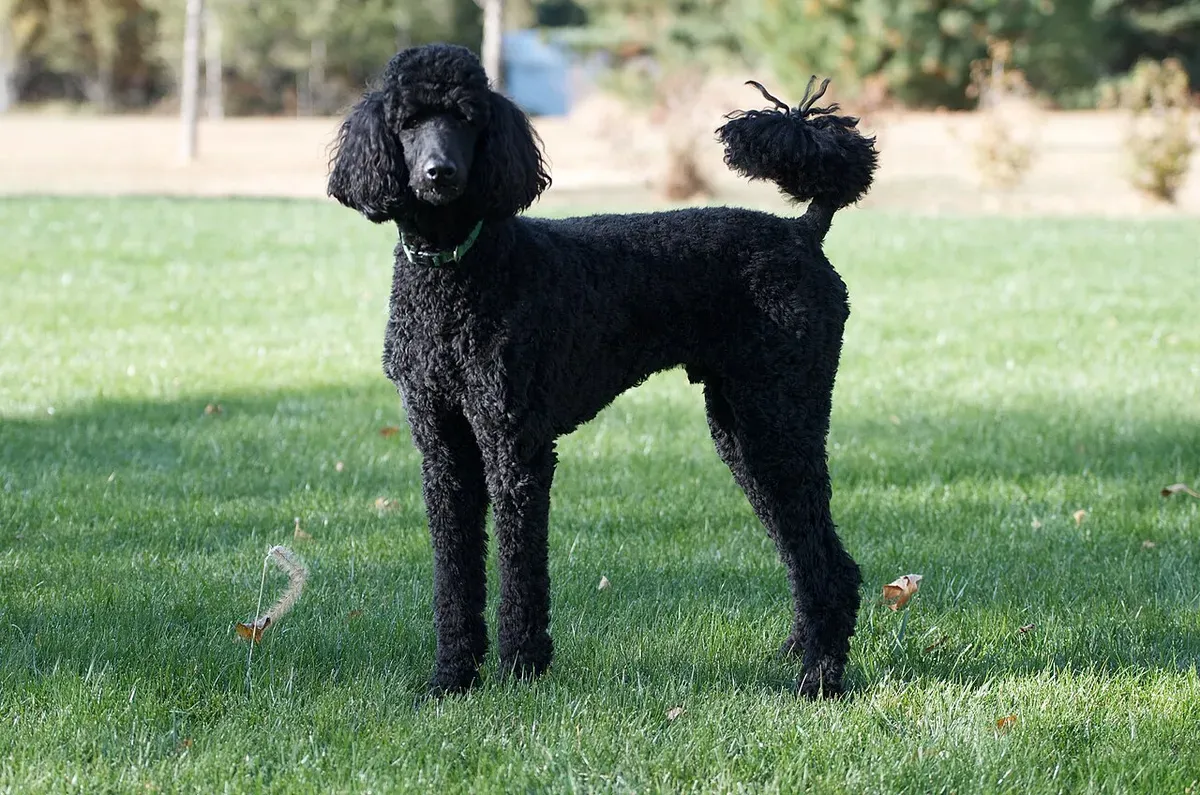
It comes in three sizes recognised by most kennel clubs (Standard, Miniature and Toy), and the FCI adds a fourth, Medium. Its country of origin is disputed: most cynologists say Germany (the Pudel), while the FCI lists France (the Caniche). The breed is known for high intelligence, a low-shedding coat and a long life, and it is the Poodle half of every popular "doodle" cross. It suits owners who enjoy training and can keep up with coat care every few weeks.
Quick facts
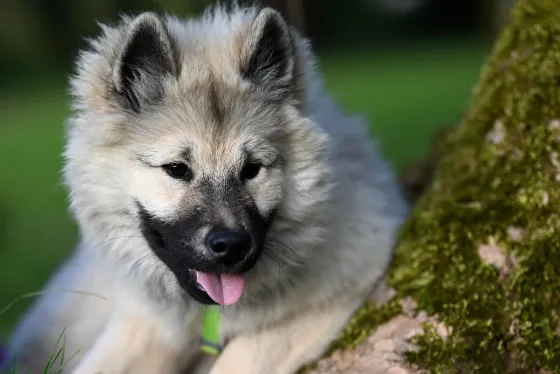 Related breedGerman Spitz1400 to 1899 · Germany
- Closest DNA relatives
- Havanese, Bichon Frise, Portuguese Water Dog, Maltese
- Descendant breeds
- Miniature Schnauzer (in part), Pudelpointer, Bolonka and the doodle crosses
- Country of origin
- Disputed. Germany (most cynologists) or France (FCI standard lists France)
- Period of development
- About 1400 to 1874 (project data, medium confidence); Kennel Club (UK) recognition 1874
- Original job
- Retrieving waterfowl from water
- Type
- Water dog (FCI Group 9, Companion and Toy Dogs, standard no. 172; AKC Non-Sporting Group; UK Kennel Club Utility group for all three sizes)
- Sizes (FCI)
- Standard over 45 to 60 cm; Medium over 35 to 45 cm; Miniature over 28 to 35 cm; Toy over 24 to 28 cm
- Sizes (AKC)
- Standard over 38 cm; Miniature 25 to 38 cm; Toy 25 cm or under
- Weight
- Roughly 2 to 3 kg (Toy) up to 20 to 32 kg (Standard); breed standards give no weight
- Coat
- Dense, curly, harsh-textured, single layer, sheds very little
- Colours
- Solid colours: black, white, brown, apricot, cream, silver, blue, red and others, depending on the club
- Life span
- Project data: 12 to 16 years. Smaller sizes live longer than Standards
- DNA family
- Poodle family (Parker et al. 2017, strong support)

Name and origin
 Related breedKurī1250 to 1300 · New Zealand
The name
The English word comes from German Pudel, which comes from Low German pudeln, "to splash". A Pudel is a dog that splashes about in water, which fits the breed's job. The French name Caniche comes from chien canard, "duck dog", a name that also points to wildfowl and water. Both names say the same thing: this was a duck-retrieving dog. They do not settle which country gave the breed its shape.
Germany or France?
The Poodle has two nationalities.
- The German case. The name is German. Most cynologists place the breed's early development in Germany, from water dogs of a type like today's Standard Poodle, and describe it as a waterfowl retriever there. Wikipedia's Poodle article summarises this as the majority view.
- The French case. The FCI lists France as country of origin and calls the Poodle a descendant of the French Barbet, another curly water dog. The Poodle became strongly tied to French life and culture, which is why it is often called the national dog of France. The FCI standard is "Caniche (Poodle)" and the FCI breed number is 172.
- A diplomatic answer. Accounts of the dispute add that the FCI was shaped by French and German founders, and that Germany accepted France as the listed origin to avoid friction. Treat this as a retelling, not a documented decision.
The project knowledge base follows the FCI and records France as the country, with the Barbet as parent breed at low confidence, since the Barbet link is held by the FCI and some cynologists but is not proven. In the Parker 2017 DNA study the Poodle also sits in a of its own that includes the Portuguese Water Dog and several small companion breeds, and the study cannot say where the breed was first fixed. The honest answer: a curly water dog of central and western Europe, with Germany and France both shaping it.
History
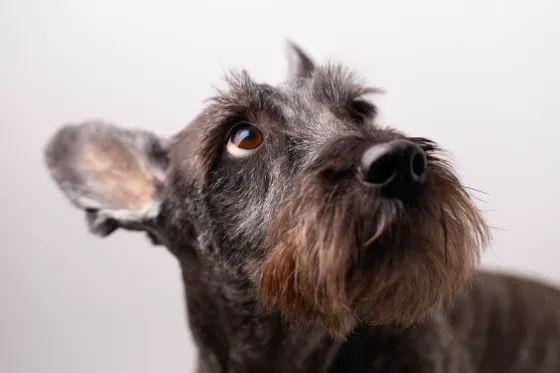 Same eraStandard Schnauzer1400 to 1880 · Germany
Water retriever roots
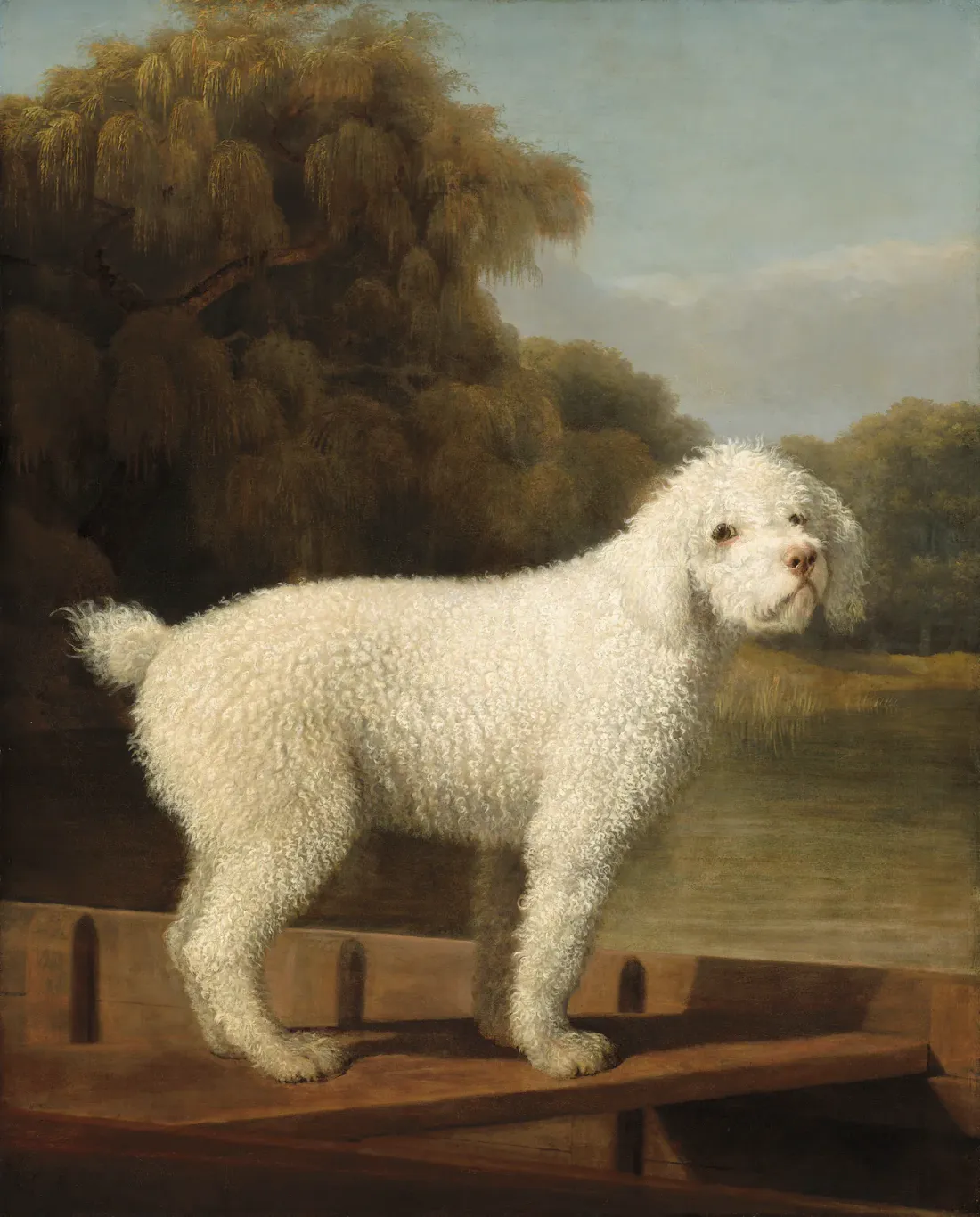
The Poodle began as a working gundog. Hunters used large curly dogs to find and bring back ducks and other waterfowl from lakes and marshes. A thick, water-resistant coat and a strong swimmer's build were the selection pressure, and the dog's willingness to work with its handler was as important as coat. Dogs of this kind appear in European records from the late Middle Ages. The project data places the period of development at roughly 1400 to 1874 with medium confidence, which reflects how thin the early record is. Stories that tie the breed to specific ancient nations are not backed by evidence in the sources used here.
The clip
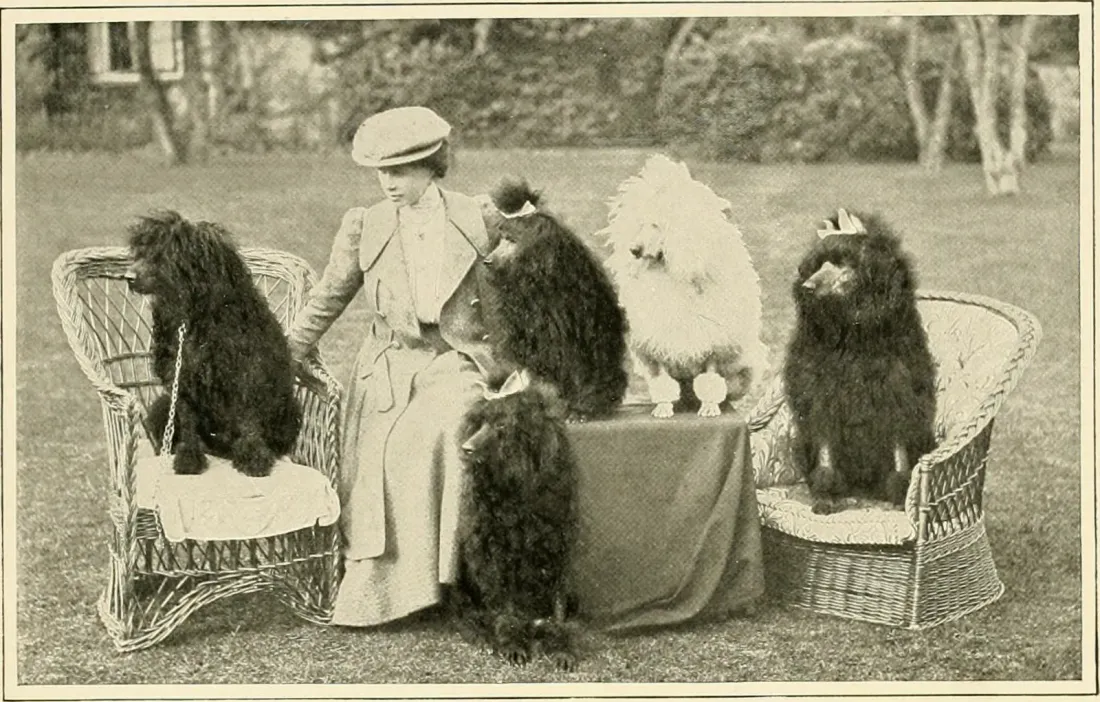
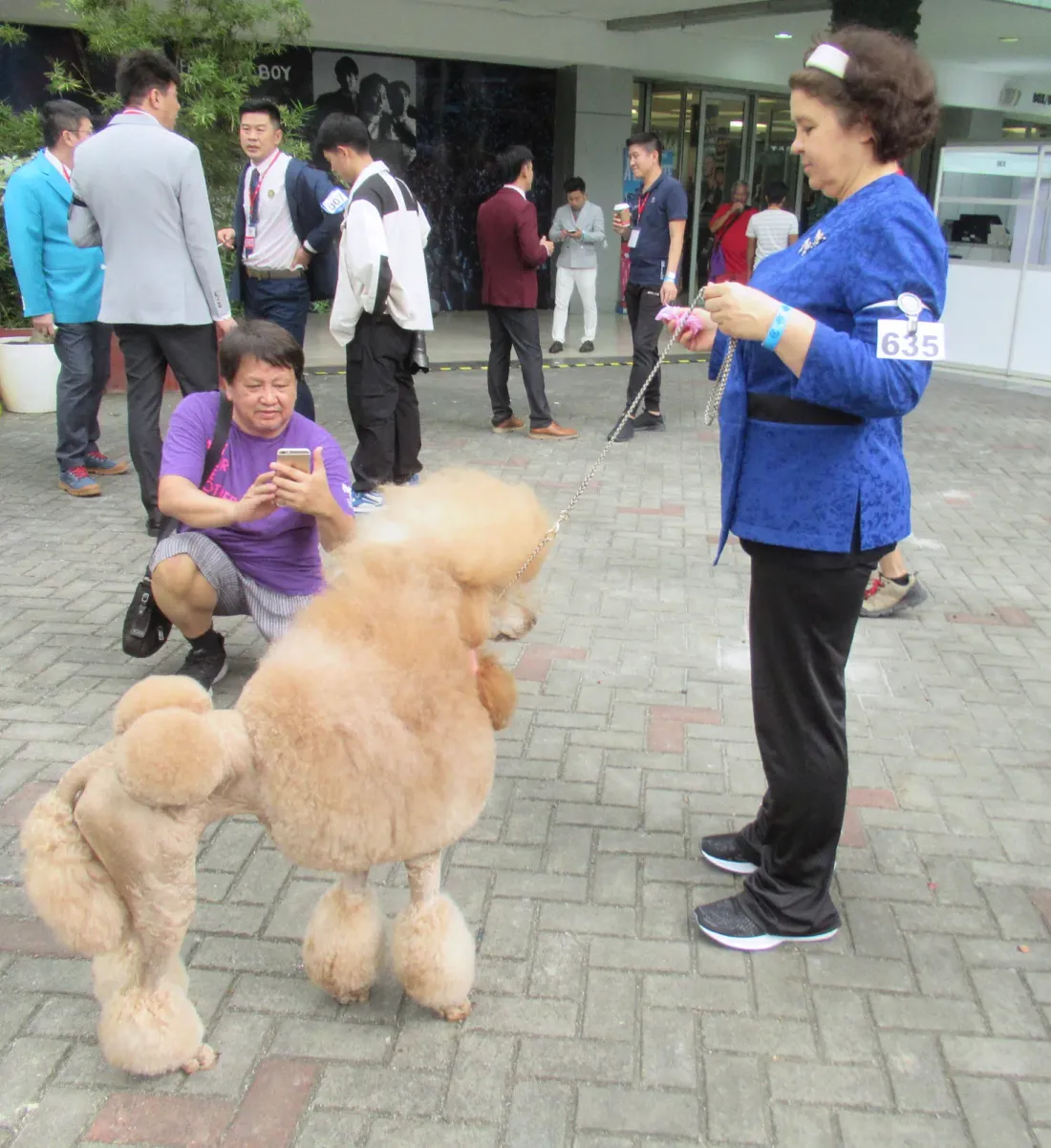
The famous Poodle clip began as a working haircut. Retrievers swam better with the coat cut from the hindquarters, face and limbs, and hunters left the hair on the chest, around the joints and on the hips so that the heart, lungs and joints stayed warm in cold water. Accounts of the continental clip, with its bare back end, pompons on the legs and rounded topknot, say this is where it comes from. Some accounts also say the ribbon that tied the topknot helped handlers spot the dog in the water. That detail is repeated widely but is not firmly sourced here.
Over time the clip became a show-ring and fashion style. Kennel clubs now describe several accepted clips: the Continental clip and the English Saddle clip for adults in the show ring, and a plain "puppy clip" for young dogs. The "sporting clip" or "lamb clip" is a short all-over trim that many pet owners choose, and most breed clubs do not allow it in the ring.
Circus, court and company
Poodles were quick to learn, and over the centuries the breed was used as a performing and companion dog. Smaller dogs were bred to be lap companions, which is the origin of the Miniature and Toy. The Poodle's popularity in French society, and its link to French culture, made the breed a symbol of fashion in other countries. The breed also worked as a truffle finder and as a military dog in some accounts, though the sources used here do not give dates for these roles.
Kennel club recognition
| Year | Event |
|---|---|
| 1874 | Poodle recognised by the Kennel Club in the United Kingdom |
| 1886 | Poodle recognised by the American Kennel Club |
| 1931 | Poodle Club of America founded |
| 1960 to 1982 | Poodle is the most registered breed with the AKC (AKC data; check before publishing) |
The FCI lists the breed as standard no. 172 (definitive) with France as country of origin, in Group 9, Companion and Toy Dogs. The AKC puts the Poodle in the Non-Sporting Group. In the UK all three sizes sit in the Kennel Club Utility group, a catch-all for breeds bred for a job that no longer fits the other groups.

Relatives and DNA
Ancestors, sister breeds and descendants
Ancestor
- Barbet. The FCI and some cynologists hold that the Poodle descends from the Barbet. The knowledge base records this at low confidence.
Sister breed
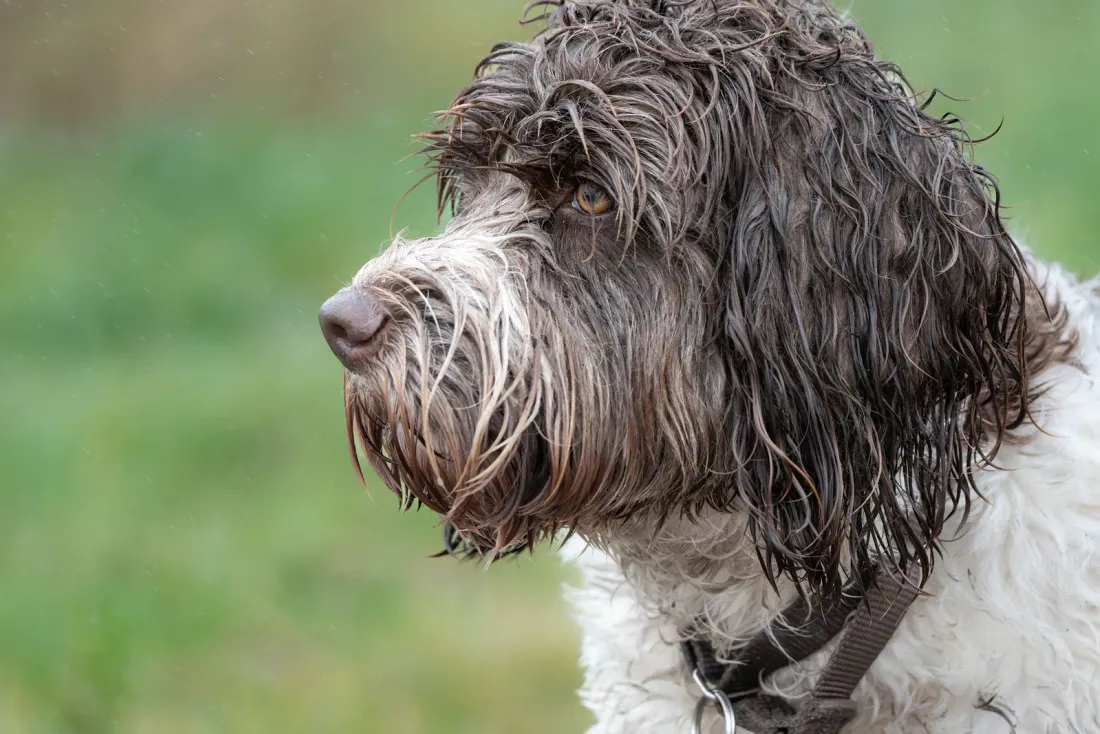
- Portuguese Water Dog. The two appear to have developed from the same ancient pool of curly-coated water dogs.
Descendant breeds
- Miniature Schnauzer. Poodle blood is often listed among the breeds used to build the Miniature Schnauzer.
- Pudelpointer. A German gundog developed from Pointers crossed with Poodles, to make a hardy all-round hunting dog.
- American Water Spaniel and Boykin Spaniel. Listed in the knowledge base as Poodle descendants, with the Boykin through the American Water Spaniel line. Confidence is lower here.
- Bolonka. A small companion breed from Russia, in the Poodle family.
- Doodle crosses. Labradoodle, Australian Labradoodle, Goldendoodle, Cockapoo, Cavapoo and Maltipoo. See "Doodles and other Poodle crosses" below.
What DNA says
A 2017 study by Parker and colleagues (Cell Reports) analysed 1,346 dogs from 161 breeds and sorted them into 23 supported clades. The Poodle sits in the Poodle family with strong support. The study also measured shared , long stretches of identical DNA inherited from common ancestors. The more (Mb) two breeds share, the stronger the sign that they were crossed or have shared founders. The method cannot say which way the genes flowed.
Source: Parker et al. 2017, as recorded in this site's breed database.
Two results stand out. The Havanese, a small companion dog from the Bichon group, shares more DNA with the Poodle than any other breed in the table, which fits the idea that Poodle blood helped shape small curly companions. The Portuguese Water Dog, a working water dog, shares as much as the Bichon Frise, which supports the sister-breed link.
Sister breeds · 1
- Portuguese Water Dog1200 to 1938
Descend from it · 10
- American Water SpanielUnited States
- PudelpointerGermany
- Miniature SchnauzerGermany
- CockapooUnited States
- BolonkaRussia
- GoldendoodleUnited States
- LabradoodleAustralia
- Australian LabradoodleAustralia
- CavapooUnited States
- MaltipooUnited States
- Havanese17.6 Mb 0.7%
- Bichon Frisé12.9 Mb 0.5%
- Portuguese Water Dog12.9 Mb 0.5%
- Maltese10.7 Mb 0.4%
Source: Parker et al. 2017. Percent of the whole genome.
| Breedwith Poodle | Shared DNA with Poodle (Mb)Shared DNA (Mb) |
|---|---|
| Havanese | 17.6 |
| Bichon Frise | 12.9 |
| Portuguese Water Dog | 12.9 |
| Maltese | 10.7 |
The breed standard
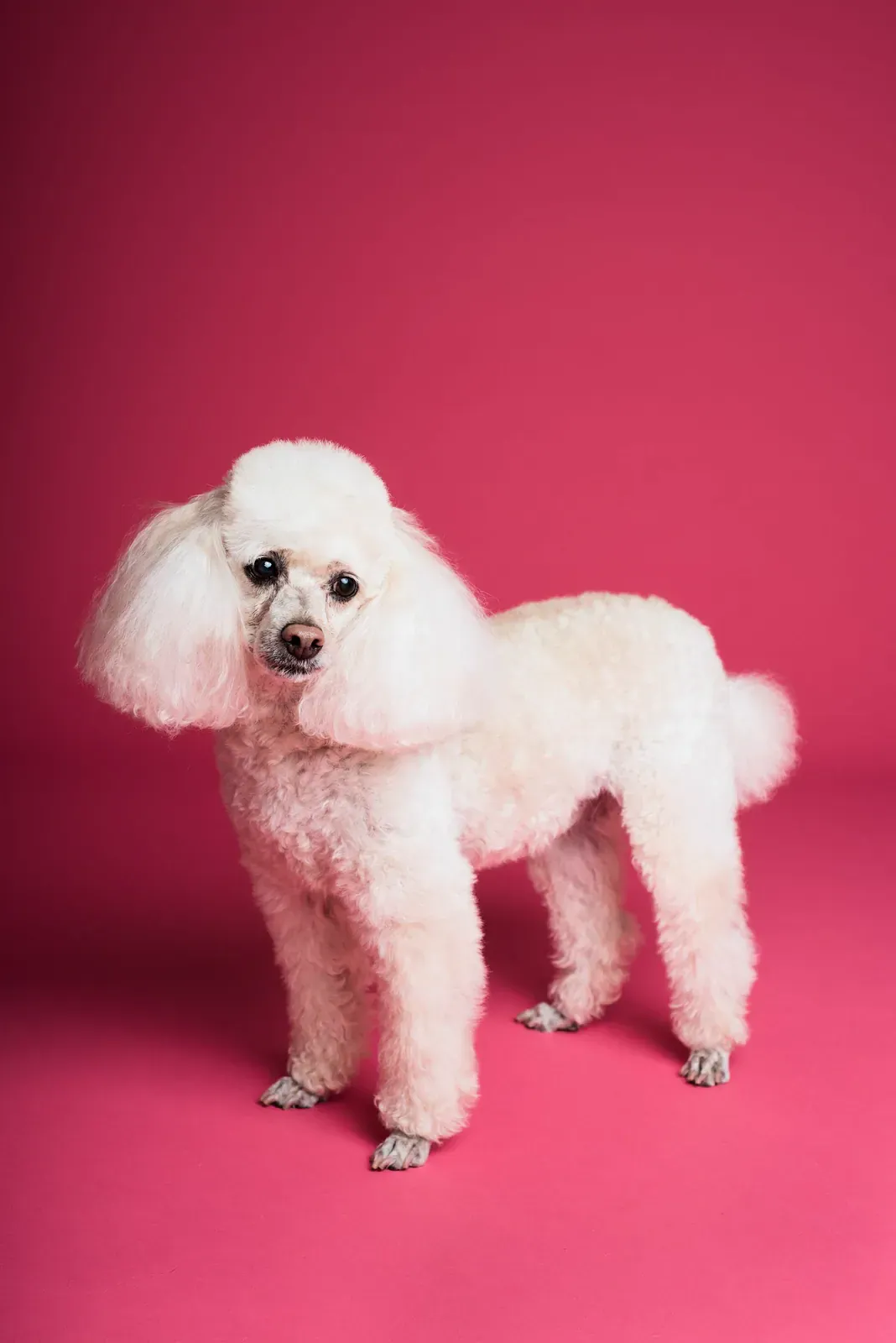
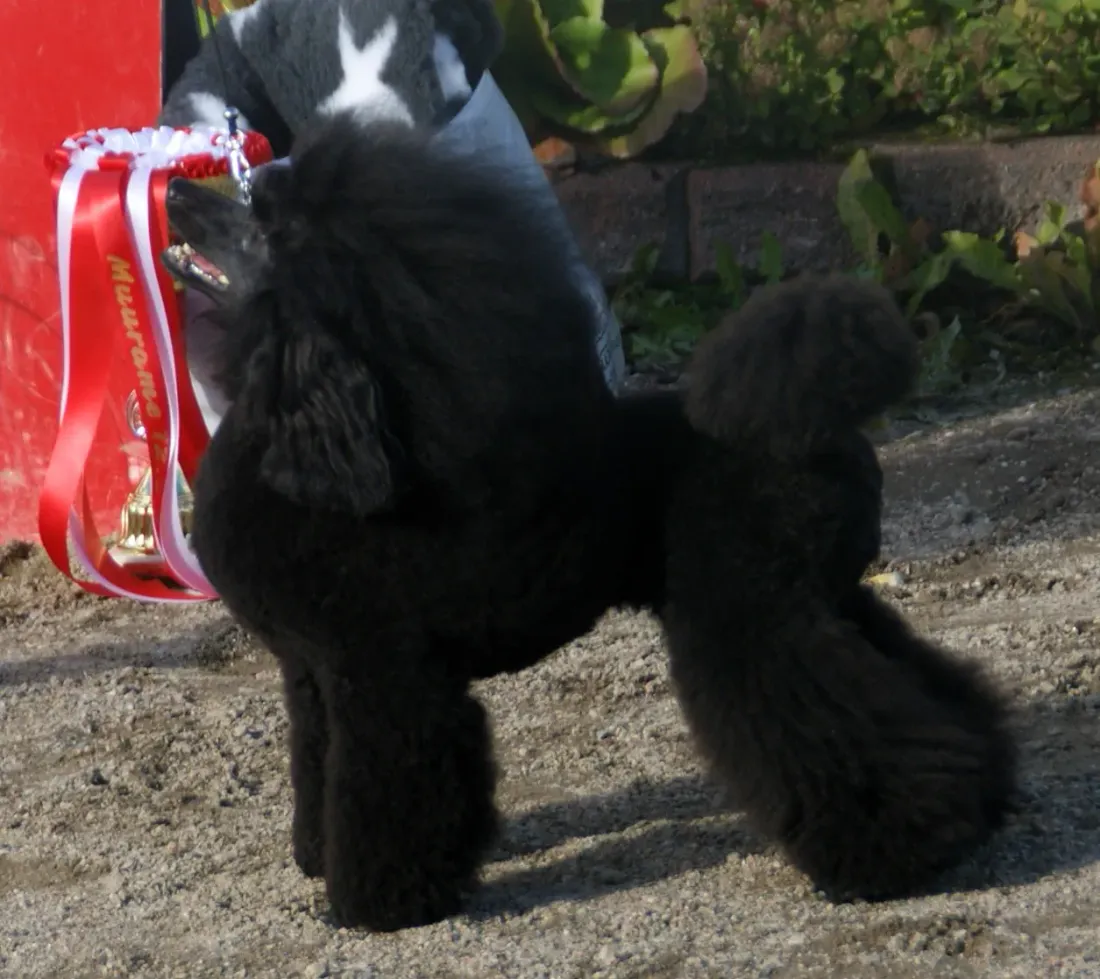
A breed standard is the written ideal for a breed, and kennel clubs judge dogs against it. The Poodle is described in the FCI standard (no. 172), the AKC standard and the UK Kennel Club standard. They describe the same elegant, square, well-balanced dog that moves with a light, springy step and carries its head high. The clubs differ mainly in which varieties they list. The standards use varieties of one breed, not separate breeds, and the varieties differ only in height.
| Trait | FCI | AKC | UK Kennel Club |
|---|---|---|---|
| Varieties | Standard, Medium, Miniature, Toy | Standard, Miniature, Toy | Standard, Miniature, Toy |
| Standard height | Over 45 to 60 cm | Over 38 cm | Over 38 cm |
| Medium height | Over 35 to 45 cm | Not a variety | Not a variety |
| Miniature height | Over 28 to 35 cm | 25 to 38 cm | 28 to 38 cm |
| Toy height | Over 24 to 28 cm | 25 cm or under | Under 28 cm |
| Weight | Not given | Not given | Not given |
| Group | Group 9, Companion and Toy Dogs | Non-Sporting | Utility |
Height rules vary in detail, so check the current text of the club that applies to your dog. Reference works give rough weights: about 20 to 32 kg for Standards, 12 to 14 kg for Mediums, 5 to 8 kg for Miniatures and 2 to 4 kg for Toys. These are approximate, since none of the three standards states a weight.
Apart from height, the standards agree on the main features:
- Head. Long, fine, with a straight muzzle and a slight stop.
- Eyes. Dark, almond-shaped, alert.
- Ears. Long, hanging, close to the head and covered with long wavy hair.
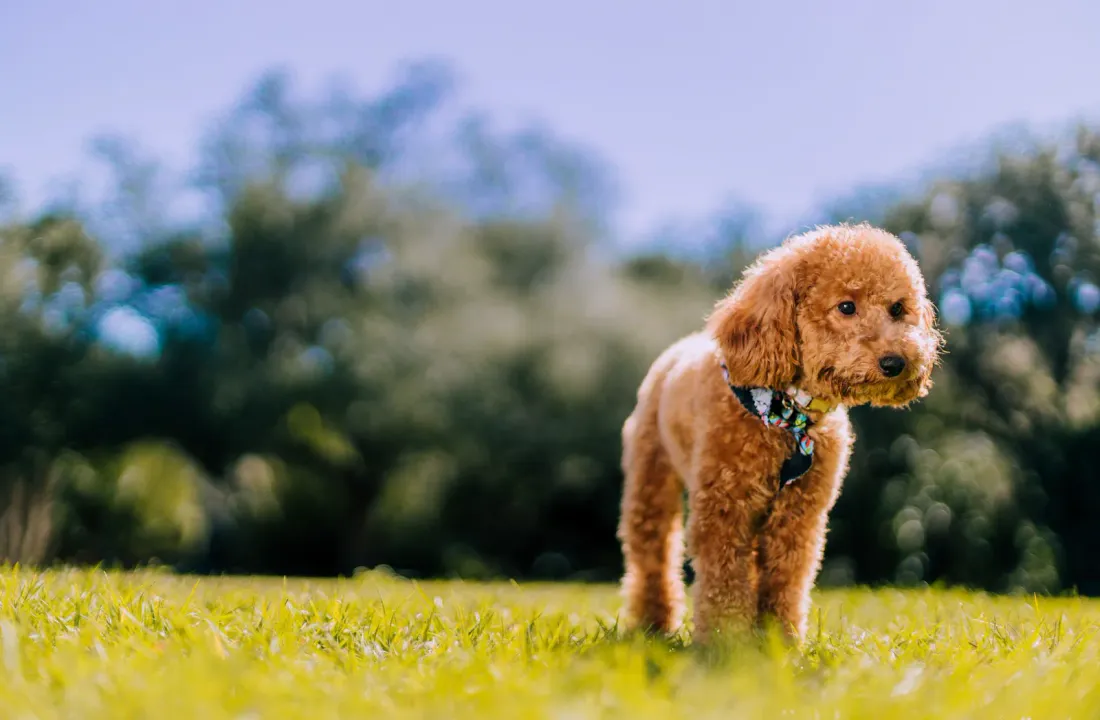
- Coat. Dense, harsh to the touch, curly or corded. It sheds very little but keeps growing.
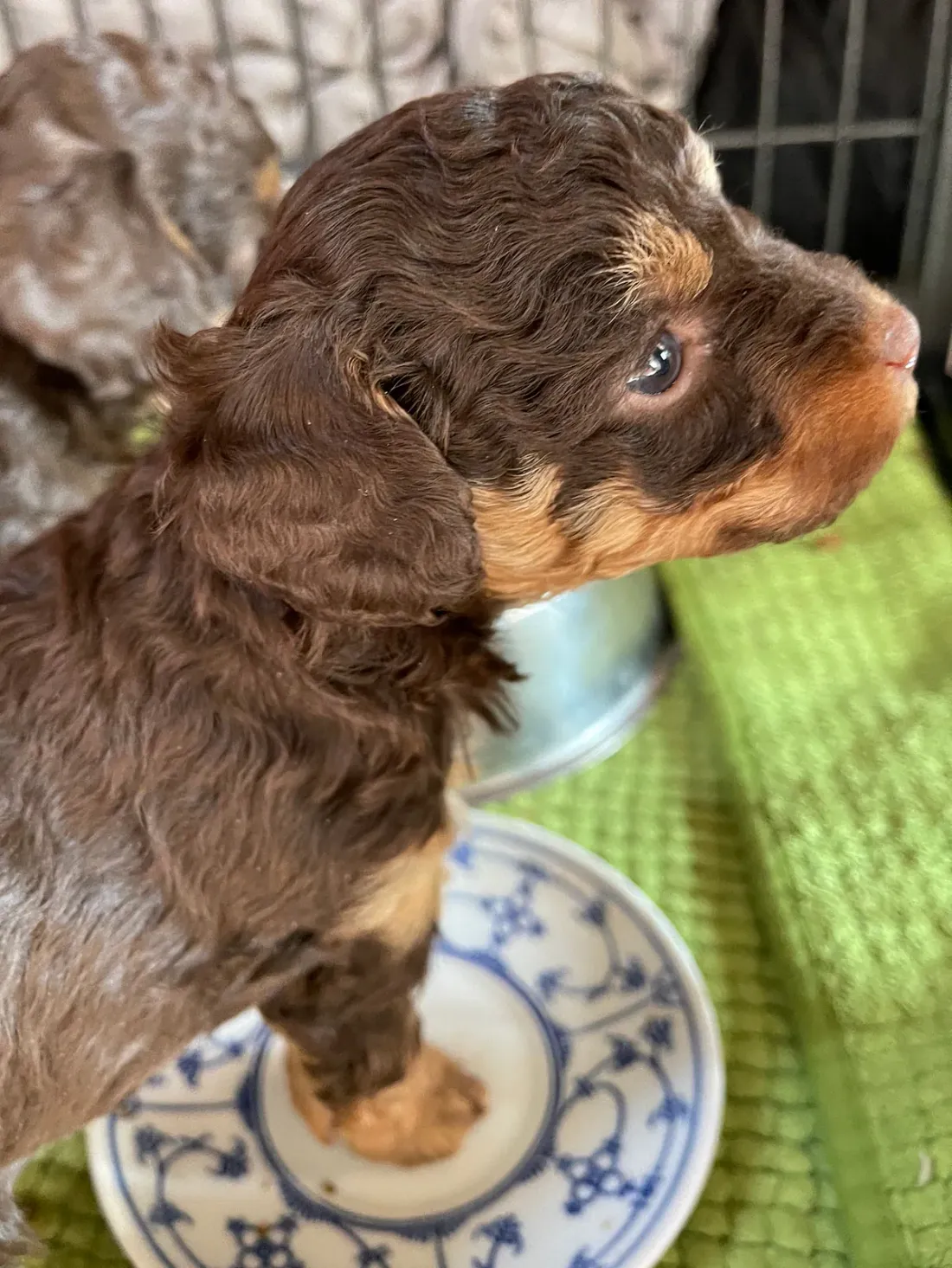
- Colours. Solid colours: black, white, brown (chocolate), apricot, cream, silver, blue and red, depending on which club's list applies. Parti-coloured Poodles exist but most clubs do not accept them in the show ring.
- Build. Square, balanced, with a high head carriage and light movement.
Historically the Standard came first, and the smaller varieties were bred down from it. Smaller Poodles tend to live longer, as the health section shows.
Temperament
Standards and breed clubs describe an alert, active, intelligent dog with a lot of pride. The AKC describes the breed as eager to please and good in family settings. The Kennel Club (UK) describes the Poodle as intelligent and trainable, and the Standard as an active dog that needs a good deal of exercise.
In daily life:
- People focus. Poodles bond closely with their family and want to be part of what is going on. Left alone for long hours, a Poodle may bark or become anxious.
- Trainability. The breed learns quickly. That helps with training, and it also means bad habits stick just as fast if rewards are inconsistent.
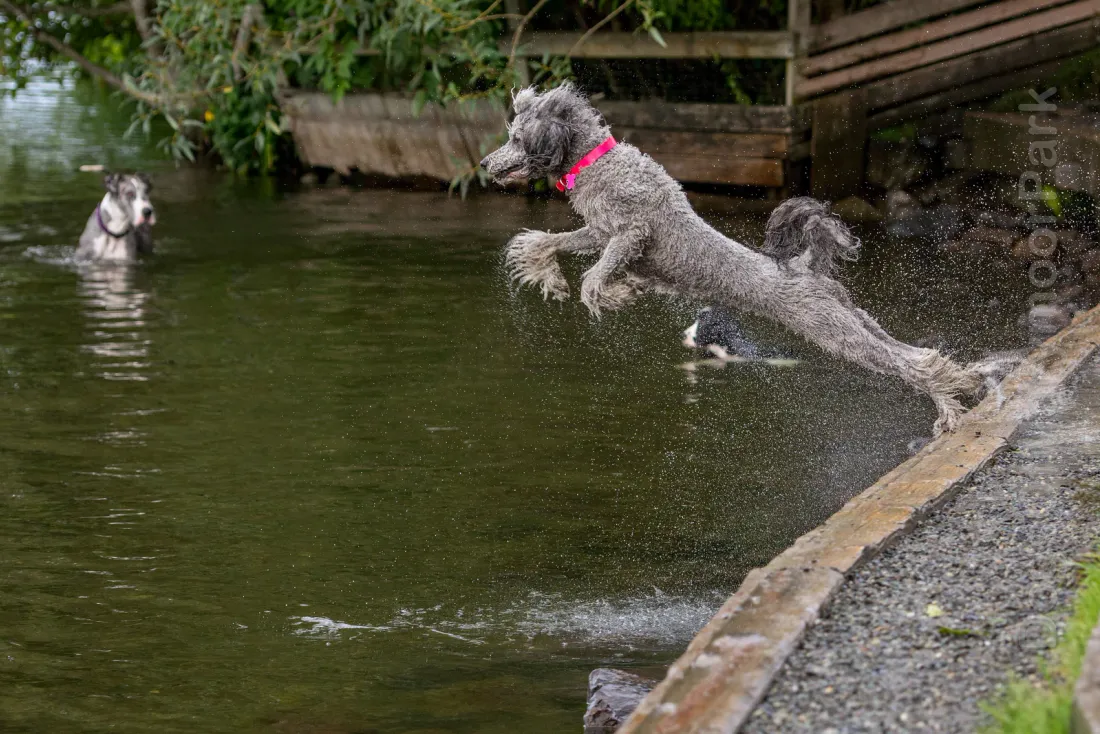
- Energy. Standards need real daily exercise and games. Miniatures and Toys are livelier than their size suggests. All varieties enjoy fetching and swimming, a trait from the retriever heritage.
- Reserve with strangers. Many are wary of strangers, and some Toy Poodles are noisy at the door. Early socialisation helps.
Temperament varies by line and by individual. A small dog is not automatically a calm dog.
Poodle intelligence
Stanley Coren's 1994 book The Intelligence of Dogs ranked the Poodle second for working and obedience intelligence, after the Border Collie. The ranking came from a survey of North American obedience judges, so it measures how quickly a breed learns commands, not intelligence in general. The Poodle's reputation as easy to train, and its use in obedience, agility, rally, service work and tricks, fits that result.
Coat, shedding and allergies
Poodles shed very little because their curly hair stays trapped in the coat until it is brushed or clipped out. Matting is the main coat problem. Most owners book a groomer every four to six weeks, or learn to clip the coat themselves.
"Hypoallergenic" needs care. Dog allergy is mostly a reaction to proteins in saliva, skin flakes and urine, not to hair alone. No breed is proven to be free of allergens, and a low-shedding coat does not guarantee fewer symptoms. Anyone with a dog allergy should spend time with the specific dog before committing.
Health
Most Poodles live long, healthy lives. This section lists what breeders screen for and what owners can watch for, so problems are caught early. The knowledge base gives a life span of 12 to 16 years. UK Kennel Club health survey data, as cited in breed information, puts the median age at death near 12 years for Standards, about 14 years for Miniatures and nearly 15 years for Toys. Lewis and colleagues (Canine Genetics and Epidemiology, 2018) analysed Kennel Club longevity data for UK breeds, and their breed tables are the place to check current Poodle figures.
No named study used here gives a breed-wide percentage for these conditions, so "How common" uses plain words and the source behind them, not "1 in N" figures. Information here is general. Talk to a vet about your own dog.
| Condition | What it is | How common | What helps |
|---|---|---|---|
| Sebaceous adenitis (Standard) | Autoimmune skin disease that affects the oil glands, giving dry, thinning hair and scaling | Seen more often in Standards than in most breeds; Pedersen et al. 2015 and UC Davis describe a rise since the mid-20th century, with many more dogs carrying it than showing signs | Skin checks, choosing a breeder who screens and knows the pedigree, early vet visit for coat changes |
| Addison's disease (Standard) | The adrenal glands make too little of certain hormones, treated with daily medication | Seen more often in Standards; Pedersen et al. 2015 link it to from a small group of mid-20th-century founders | Pedigree-aware breeding, vet blood tests if a dog seems tired or unwell, medication works well once diagnosed |
| Bloat, gastric dilatation-volvulus (Standard) | The stomach fills with gas and can twist, which needs emergency care | Glickman and colleagues at Purdue (1994) listed the Standard Poodle among higher-risk breeds | Several smaller meals, rest around mealtimes, knowing the warning signs and the nearest emergency vet |
| (Standard) | A loosely fitting hip joint | Listed in the Poodle Club of America health statement as a screening item | Hip scoring of parents, a lean weight, sensible exercise while growing |
| Progressive retinal atrophy, prcd-PRA (Toy, Miniature) | Inherited gradual loss of vision | Listed in the Poodle Club of America health statement (2024) and Kennel Club health tests; the DNA test shows | DNA test of breeding dogs, yearly eye exams |
| Patellar luxation (Toy, Miniature) | The kneecap slips out of its groove | Listed for Toy and Miniature Poodles as a common small-breed knee condition | Knee checks by a vet, lean weight, surgery in the moderate to severe cases |
| Legg-Calve-Perthes disease (Toy, Miniature) | The top of the thigh bone loses blood supply in young dogs, usually from around five months | Listed for Toy and Miniature Poodles in breed health summaries | Early vet visit for a limp in a young dog |
| Tracheal collapse, mitral valve disease, dental disease (Toy) | Small-breed windpipe, heart valve and tooth problems | Listed in breed health summaries as common in small dogs | Chest strap instead of a collar, regular heart checks, tooth brushing and dental care |
| Epilepsy and cancer (Standard) | Seizure disorders and tumours | Reported among causes of illness and death in breed health summaries and Kennel Club longevity data | Regular vet checks, reporting new lumps or seizures early |
For breeders, the Kennel Club and the Poodle Club of America recommend eye testing, hip scoring (Standards) and DNA testing for PRA and other tested conditions. Sebaceous adenitis and Addison's disease are complex, so a health-tested pedigree lowers the odds but does not remove them.
Doodles and other Poodle crosses
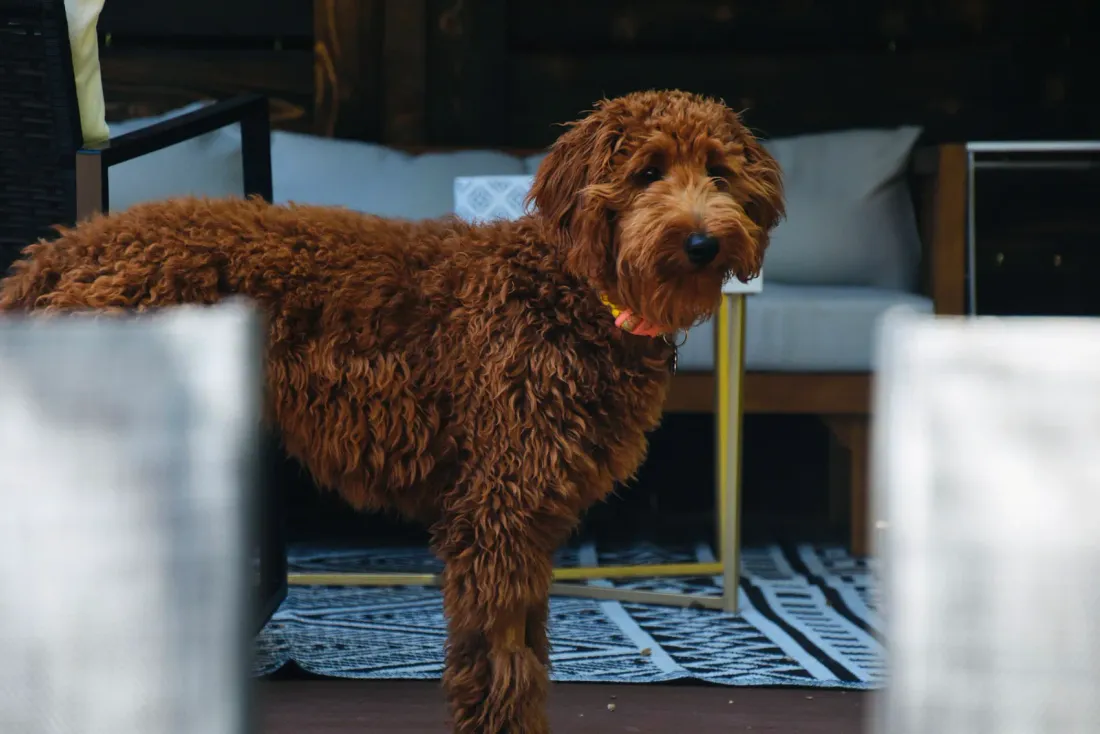
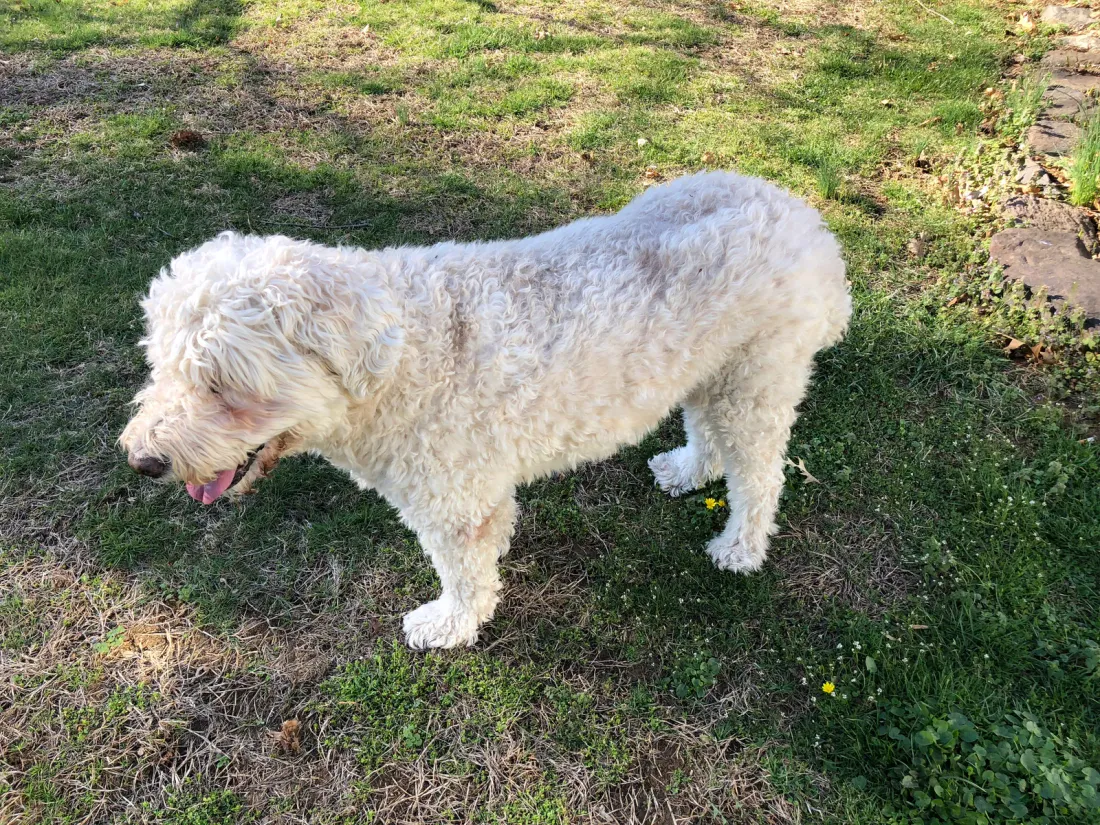
The Poodle is the base for the largest group of designer crosses, the doodles and similar mixes.
- Labradoodle. Wally Conron, a breeder at Royal Guide Dogs Victoria in Australia, crossed a Labrador Retriever and a Poodle in 1989 to try to produce a guide dog for a blind woman whose husband was allergic. Years later, Conron said publicly that he regretted the outcome, because breeders with little concern for health had followed his idea (interviews reported in 2019). He called many resulting dogs unhealthy, which is his view, not a study result.
- Goldendoodle, Cockapoo, Cavapoo, Maltipoo. Mixes of the Poodle with a Golden Retriever, a Cocker Spaniel, a Cavalier King Charles Spaniel and a Maltese. The Standard Poodle is used for the larger crosses and the Miniature or Toy for the smaller ones.
- Australian Labradoodle. A later effort that mixes more breeds, aiming at a more consistent type.
In practice, a first-generation cross has no fixed coat, size or temperament. One puppy may have a low-shedding curly coat while its sibling sheds like a Labrador. Health depends on both parents, and a well-bred cross needs screening for the conditions of both breeds. A purebred Poodle is more predictable.
Living with a Poodle
Ratings below follow the breed standards, club guidance and sources in this article. They describe the typical Poodle and vary by variety and by individual.
| Area | Rating | Why |
|---|---|---|
| Exercise per day | Medium to High | Standards need real daily exercise (Kennel Club); Miniatures and Toys are livelier than their size suggests |
| Training needs | High | Learns fast and needs steady, rewarding training and mental work (Coren 1994, AKC) |
| Grooming time and frequency | High | Coat keeps growing; brushing often and clipping about every four to six weeks |
| Shedding | Low | Hair stays in the coat until brushed or clipped out |
| Barking | Medium | Some Toys are noisy at the door; varies by line |
| Time alone | Poor | Close bonds; may bark or become anxious if left for long hours |
| Children | Good for Standards and Miniatures, Fair for Toys | AKC calls the breed good in family settings; very small Toys need careful handling |
| Other dogs | Good | Varies with early socialisation |
| Cats and small pets | Varies | Retriever heritage; no breed source gives a clear rating |
| Flat living | Good for Toys and Miniatures, Fair for Standards | Needs daily walks and mental work in any size |
| Heat tolerance | Varies | Not covered by the sources used here |
| Cold tolerance | Varies | The coat was bred for cold water, but clipped dogs may need a coat; not firmly sourced here |
| First-time owner fit | Good | Easy to train, if the owner commits to grooming and company |
A great fit if...
- You enjoy training, tricks or dog sports and want a quick learner.
- You can commit to a groomer visit or home clipping about every four to six weeks.
- You want a low-shedding coat, knowing no dog is allergen-free.
- You are home for much of the day, or can arrange company.
Think twice if...
- You are away most of the day, since Poodles can get bored and find their own entertainment.
- You want a dog with no grooming costs.
- You dislike a dog that follows you from room to room.
- You have very young children and want a Toy, which needs careful handling.
Before you get one
- Health tests to ask a breeder for. Eye testing, DNA testing for prcd-PRA, hip scoring for Standards, and what the breeder knows about sebaceous adenitis and Addison's disease in the pedigree (Kennel Club and Poodle Club of America recommendations).
- Puppy or adult. Adult dogs from breed rescues can suit owners who want a calmer start, and the coat and temperament are already visible. A puppy needs early socialisation, training and coat habits from the first weeks.
- First year. Expect puppy classes, getting used to grooming and brushing from the start, and extra care with a Toy's small bones and teeth.
Similar breeds to consider
- Portuguese Water Dog. A curly, low-shedding water dog that is more active and sturdier.
- Bichon Frise. A small, curly-coated companion with a similar grooming routine.
- Havanese. A small companion dog and the closest DNA relative of the Poodle in the table above.
- Barbet. A rarer curly water dog, listed as a possible ancestor.
Frequently asked questions
Where do Poodles come from?
Germany by most accounts, France by the FCI. The breed began as a water retriever.
What is the difference between a Standard, Miniature and Toy Poodle?
Height. The AKC separates them at 38 cm and 25 cm; the FCI also adds a Medium variety. The standards describe the same type of dog.
How long do Poodles live?
Project data gives 12 to 16 years. Smaller Poodles tend to live longer than Standards.
Are Poodles hypoallergenic?
No breed is proven allergen-free. Poodles shed little, which some allergy sufferers find easier to live with.
Why do Poodles have that haircut?
The clip began as a working cut that eased swimming and kept joints and the chest warm. Today it is mainly for the show ring.
Is a Poodle smarter than a Border Collie?
Coren's survey of obedience judges ranked the Poodle second and the Border Collie first for working and obedience intelligence.
Is a Poodle a good family dog?
Yes, in a household that gives it company, exercise and training. Toy Poodles need care around small children.
What is the difference between a Poodle and a doodle?
A Poodle is a purebred dog with a fixed type. A doodle is a cross between a Poodle and another breed, and its size, coat and temperament vary.
Read next
Sources (13)
- American Kennel Club, Poodle breed page, breed history and Poodle standard.
- Coren S., The Intelligence of Dogs, 1994.
- Fédération Cynologique Internationale, Caniche (Poodle), standard no. 172.
- Glickman L.T. et al., Purdue University study on risk factors for canine gastric dilatation-volvulus, from 1994.
- Lewis T.W. et al., "Longevity and mortality in Kennel Club registered dog breeds in the UK in 2014", Canine Genetics and Epidemiology, 2018.
- Parker H.G. et al., "Genomic analyses reveal the influence of geographic origin, migration, and hybridization on modern dog breed development", Cell Reports, 2017.
- Pedersen N.C. et al., "The effect of genetic bottlenecks and inbreeding on the incidence of two major autoimmune diseases in standard poodles, sebaceous adenitis and Addison's disease", Canine Genetics and Epidemiology, 2015.
- Poodle Club of America, about the club, AKC breed standard and health statement for the AKC, December 2024.
- The Kennel Club (UK), Poodle (Standard), Poodle (Miniature) and Poodle (Toy) breed information pages.
- UC Davis Center for Companion Animal Health, "Sebaceous adenitis in Standard Poodles".
- Wikipedia, "Poodle" (used for the origin debate and summaries, checked against the other sources listed).
- News interviews with Wally Conron on the Labradoodle, September to October 2019.
- Project knowledge base, breed records and Parker 2017 shared-haplotype table (this site).