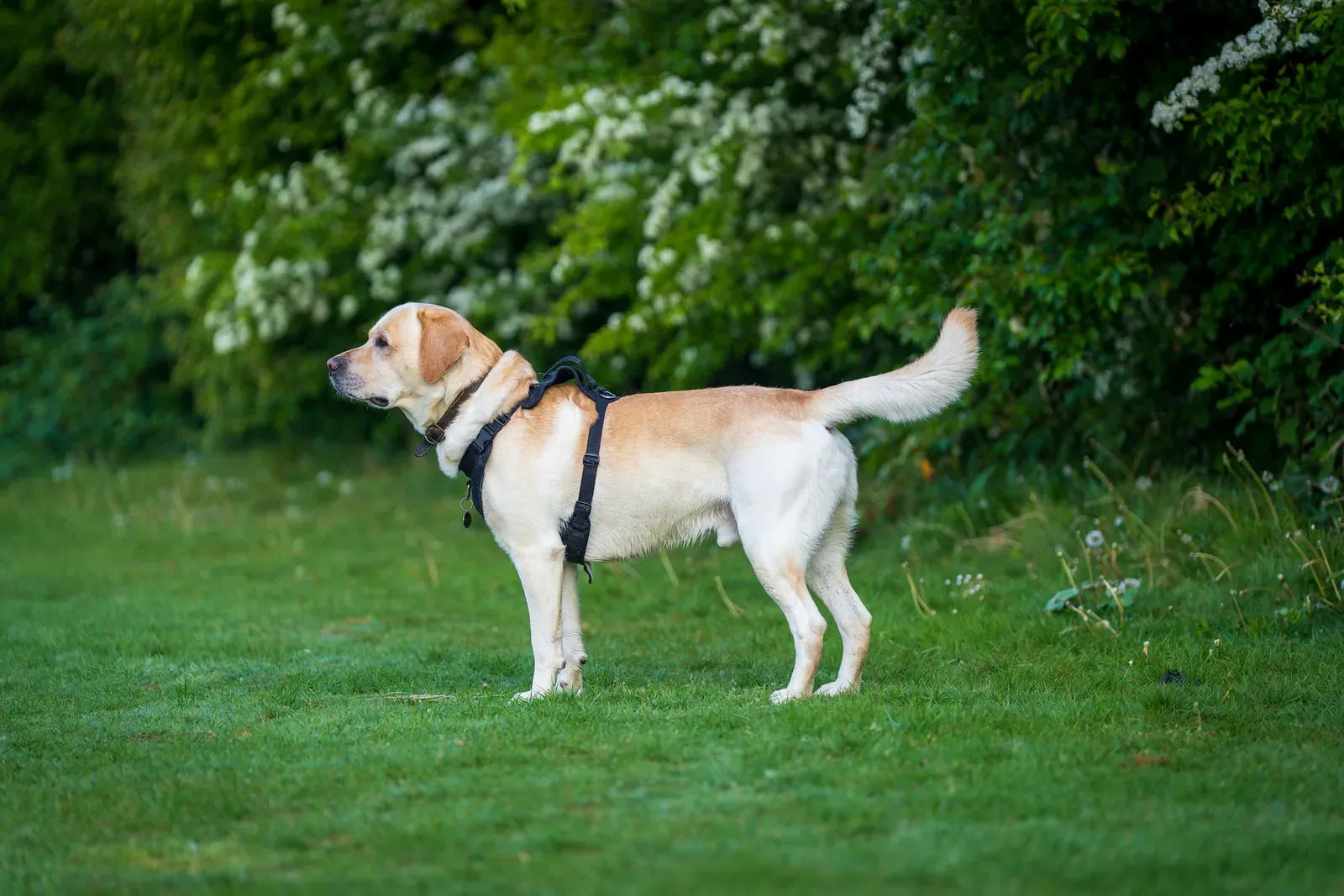
British sportsmen refined it in the 1800s into a calm, soft-mouthed retriever, and the Kennel Club recognised it in 1903. Labradors are friendly, eager to please and easy to train, which is why they are so common as guide and assistance dogs. They are also prone to obesity, and a 2016 study found a gene change (in POMC) that raises appetite in about one in four of them. They suit active families who can exercise them daily and control their food.
Labrador Retriever quick facts
 Related breedAustralian Shepherd1840 to 1957 · United States
- Closest DNA relatives
- Flat-coated Retriever, Golden Retriever, Newfoundland
- Country of origin
- Great Britain (FCI), from Newfoundland stock
- Period of development
- About 1800 to 1903 (project data)
- Ancestor
- St John's water dog (extinct as a distinct type)
- Type
- Retriever (FCI Group 8, Retrievers, Flushing dogs, Water dogs; FCI standard no. 122; AKC Sporting Group; UK Kennel Club Gundog Group)
- Height
- Kennel Club standard: dogs 56 to 57 cm, bitches 54 to 56 cm at the shoulder
- Weight
- AKC standard: dogs 29 to 36 kg, bitches 25 to 32 kg (show types often heavier, field types lighter)
- Coat
- Short, dense, weather-resistant double coat, with a thick "otter" tail
- Colours
- Black, yellow, liver (chocolate)
- Life span
- Project data: 10 to 12 years. UK study median 12.0 years; chocolate 10.7 years
- Exercise
- At least 1 to 2 hours a day, with off-lead play and swimming if possible
- DNA family
- Retriever (Parker et al. 2017)
- Related breeds
- Labradoodle, Australian Labradoodle, Goldendoodle (crosses)
Where does the name "Labrador Retriever" come from?
 Related breedBouvier des Flandres1800 to 1912 · Belgium, France
The name is a geographic misnomer. The breed comes from the island of Newfoundland, not from the Labrador region of the mainland. The project knowledge base does not explain why the name was chosen, only that the breed was developed in Britain from St John's water dogs of Newfoundland. The earliest written use usually cited is a letter of 1887 from the third Earl of Malmesbury to the sixth Duke of Buccleuch, in which he says he always called his dogs "Labrador dogs" and had tried to keep them as pure as he could. The Earl lived in Dorset, so a Dorset aristocrat attached the name of a place neither he nor the dogs came from.
"Retriever" is simpler. It is a job title: the dog finds and brings back shot game, unharmed, from land or water. FCI places the breed in its group of retrievers, flushing dogs and water dogs.
What is the history of the Labrador Retriever?
 Same eraBulldog1835 to 1875 · United Kingdom
The St John's water dog in Newfoundland
The ancestors of the Labrador lived on the coast of Newfoundland in the 1700s and 1800s. Fishermen and settlers kept short-coated water dogs, called St John's dogs or St John's water dogs after the island's main port. These dogs swam out to haul lines and nets and retrieved fish that slipped from the hooks. Their coat shed water, and their webbed feet and strong tail suited swimming. This is also where the Labrador's love of water comes from.
The St John's water dog is not a recognised breed today. The project knowledge base lists it as the parent of the Labrador and notes it died out as a distinct type. The larger, long-coated Newfoundland shares the same island origin, and Parker and colleagues (Cell Reports, 2017) found the two breeds share some DNA, while the Labrador's much closer relatives are other British retrievers (see below).
Poole, Dorset and the British development
From the early 1800s, ships carrying salted cod between Newfoundland and the port of Poole in Dorset brought St John's dogs to England. British sportsmen noticed how well they retrieved waterfowl. Colonel Peter Hawker described the St John's breed in his shooting manual of 1814, and the second Earl of Malmesbury is recorded as shooting over imported St John's dogs from about 1809. Several estates used them and bred them selectively for retrieving, mixing them with British hunting dogs to fit the shooting style of the day. (The knowledge base notes the British hunting dog crosses; the exact parents are not recorded.)
Two aristocratic kennels shaped the type. The Malmesbury family, at Heron Court in Hampshire, and the Dukes of Buccleuch and Earls of Home in Scotland kept the dogs separate from later imports. Histories describe a shoot at Heron Court in the 1880s where the sixth Duke of Buccleuch and the twelfth Earl of Home saw the Malmesbury dogs work, and the third Earl sent dogs named Ned and Avon north to start the Buccleuch line. These stories come from breed histories and club pages, not from stud books checked for this draft.
A British rule change helped fix the breed. The rabies quarantine introduced in the late 1800s ended the import of Newfoundland dogs, so later breeding relied on the dogs already in Britain. (Source: general breed histories; the date is not verified here.)
Colours, the Kennel Club and the AKC
The breed was black at first. Yellow Labradors appear in the records around 1899, and a dog called Ben of Hyde, born that year in the Major Radclyffe kennel, is often named as an early yellow ancestor of the line. Liver (chocolate) became accepted later.
| Year | Event |
|---|---|
| About 1809 | Second Earl of Malmesbury shoots over imported St John's dogs |
| 1814 | Peter Hawker describes the St John's breed in print |
| 1887 | Third Earl of Malmesbury writes of his "Labrador dogs" |
| 1903 | UK Kennel Club recognises the Labrador Retriever |
| 1917 | First American Kennel Club registration |
The FCI lists the breed as standard no. 122 (definitive), with Great Britain as country of origin. The AKC places it in the Sporting Group.
Which breeds are ancestors, descendants and relatives of the Labrador Retriever?
 Same familyEnglish Cocker Spaniel1800 to 1892 · United Kingdom
Ancestor. The St John's water dog (see above).
Descendant and related breeds in our knowledge base
- Labradoodle and Australian Labradoodle. Crosses of Labrador and Poodle, not recognised breeds by the major kennel clubs.
- Goldendoodle. A Golden Retriever and Poodle cross, listed here as a descendant through the retriever line.
- Golden Retriever. The knowledge base lists it as a child of the Labrador. Most histories say the Golden Retriever began separately in Scotland (Tweed water spaniel and yellow retriever crosses), so treat this as a link, not a clear parent and child pair.
Sibling breeds in the retriever group: Newfoundland, Curly-coated Retriever and Chesapeake Bay Retriever.
What does DNA say?
Parker and colleagues (Cell Reports, 2017) analysed 1,346 dogs from 161 breeds and placed the Labrador in the Retriever with strong support. The more (Mb) of shared haplotype two breeds have, the stronger the sign of common founders or past crossing. The study cannot show which way genes moved.
Source: Parker et al. 2017, as recorded in this site's breed database.
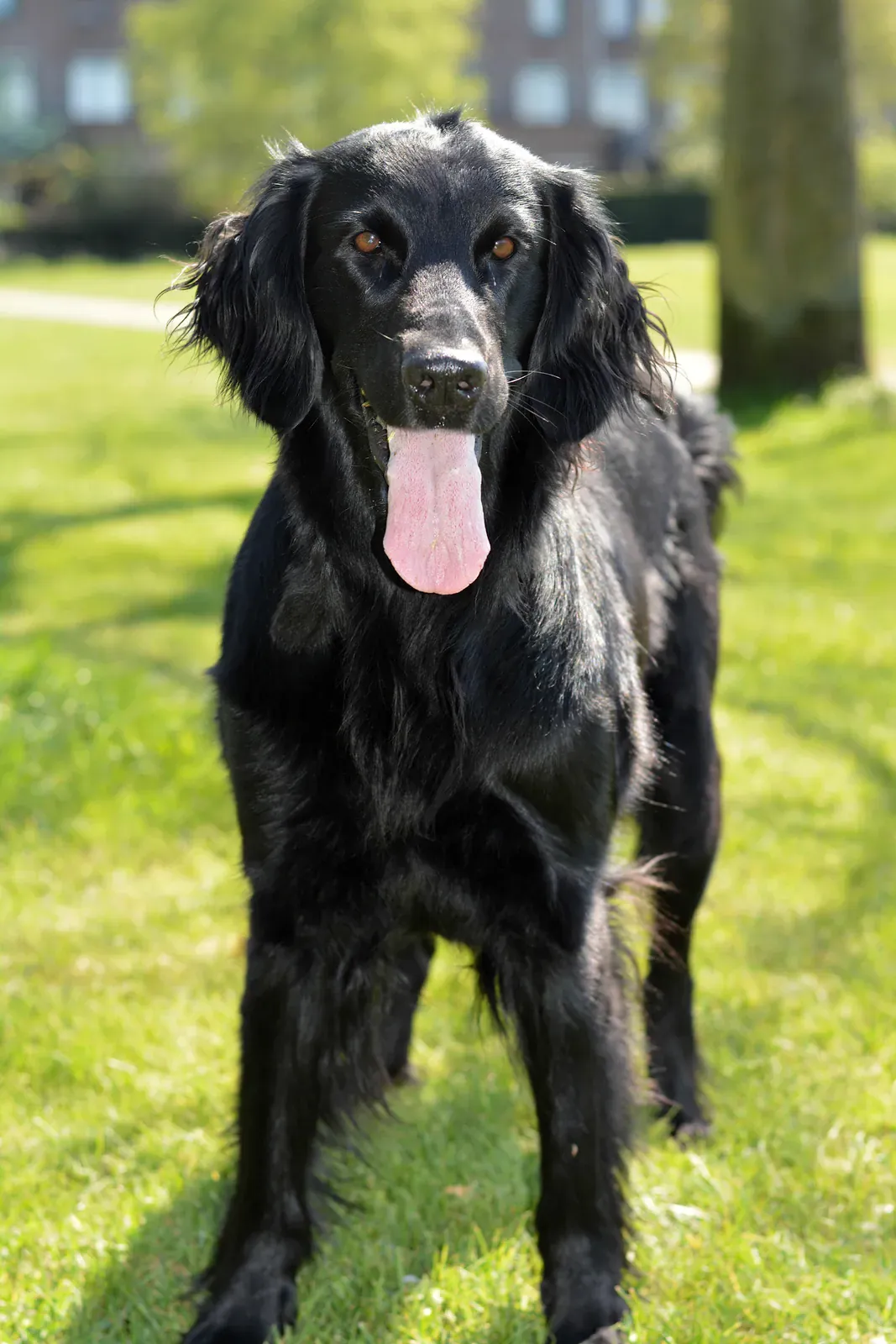
The Flat-coated Retriever is the closest relative by a wide margin, which fits the shared 1800s British retriever breeding. The Newfoundland appears lower on the list than a reader might expect, a reminder that the St John's water dog is a different, now lost, population from the modern Newfoundland.
Sister breeds · 3
- Newfoundland1600 to 1886
- Curly-coated Retriever1800 to 1860
- Chesapeake Bay Retriever1807 to 1918
Descend from it · 3
- Golden RetrieverUnited Kingdom
- LabradoodleAustralia
- Australian LabradoodleAustralia
- Flat-coated Retriever57.0 Mb 2.4%
- Golden Retriever35.1 Mb 1.5%
- Newfoundland17.8 Mb 0.7%
- Nova Scotia Duck Tolling Retriever13.1 Mb 0.5%
- Curly-coated Retriever10.7 Mb 0.4%
Source: Parker et al. 2017. Percent of the whole genome.
| Breedwith Labrador | Shared DNA with Labrador (Mb)Shared DNA (Mb) |
|---|---|
| Flat-coated Retriever | 57.0 |
| Golden Retriever | 35.1 |
| Newfoundland | 17.8 |
| Nova Scotia Duck Tolling Retriever | 13.1 |
| Curly-coated Retriever | 10.7 |
How big is a Labrador and what does it look like?
 Looks relatedEnglish Springer Spaniel1800 to 1902 · United Kingdom
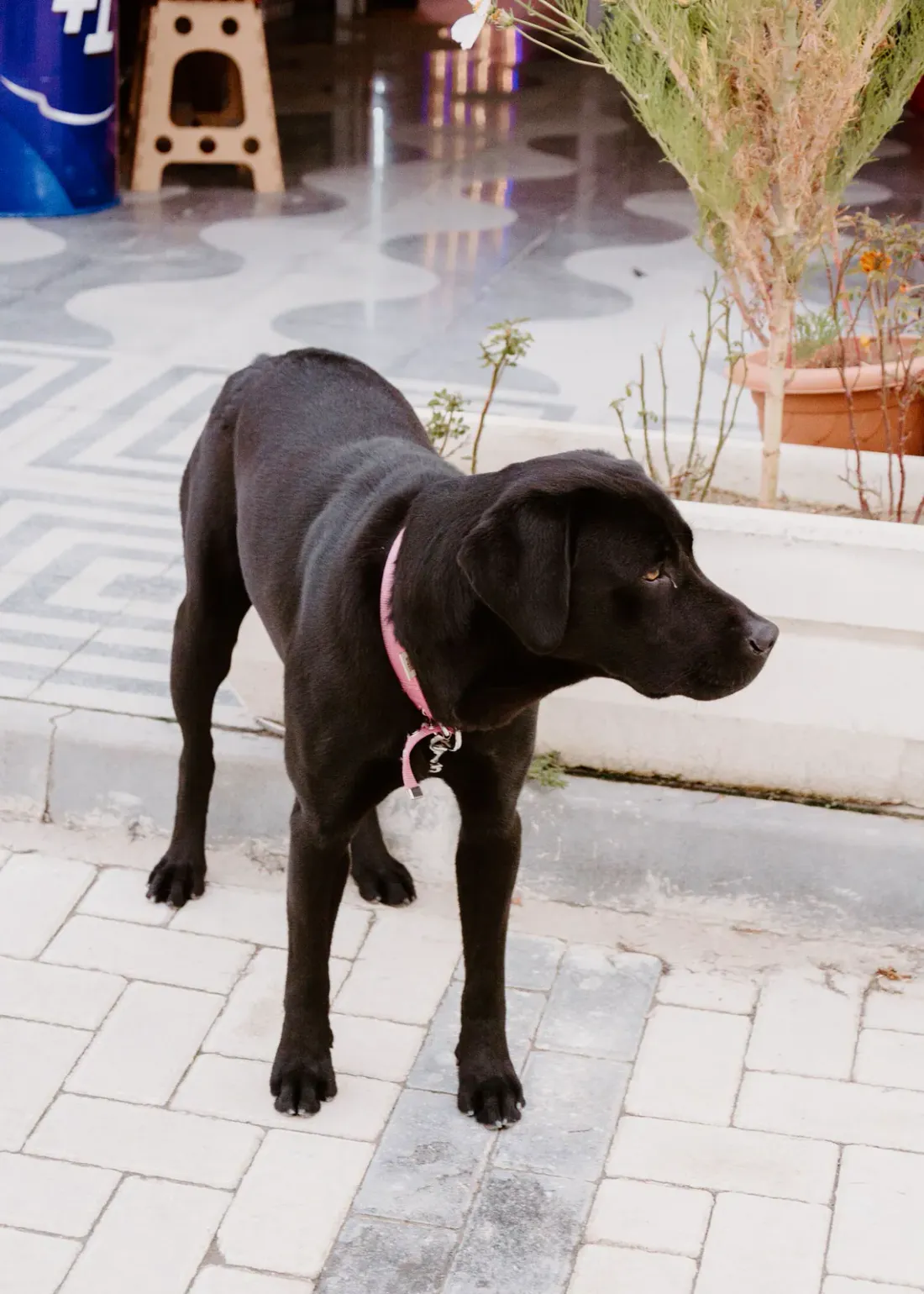
The Kennel Club and AKC describe a strongly built, athletic dog, short in the back, with a broad skull, a clean muzzle and a kind expression.
- Height. Kennel Club: dogs 56 to 57 cm, bitches 54 to 56 cm.
- Weight. AKC standard: dogs 29 to 36 kg, bitches 25 to 32 kg. Pet Labradors often exceed this. Show-type males can reach 36 to 41 kg or more, while working-type males are often 29 to 34 kg.
- Head. Wide skull, defined stop, wide nose, powerful jaws.
- Eyes. Brown or hazel, friendly and intelligent.
- Ears. Medium, hanging close to the head.
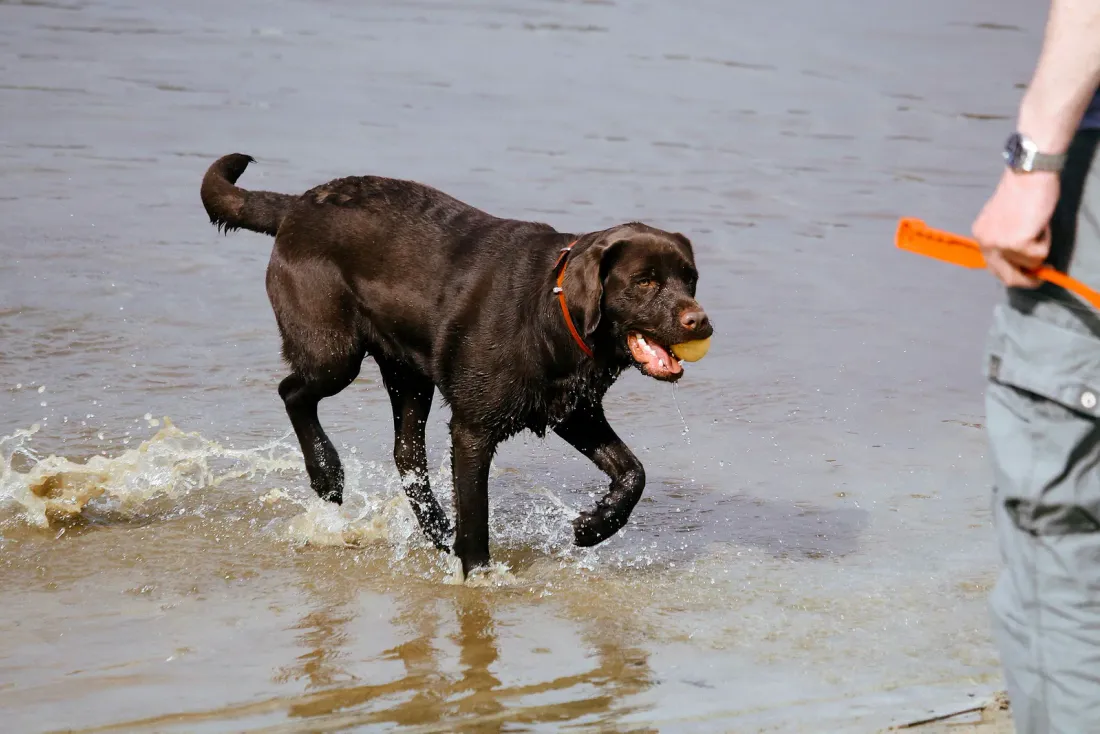
- Coat. Short, hard and dense, with a weather-resistant undercoat. It sheds all year, with heavier moults twice a year.
- Tail. Thick at the base, tapering, with no feathering. Often called an "otter tail" and used like a rudder when swimming.
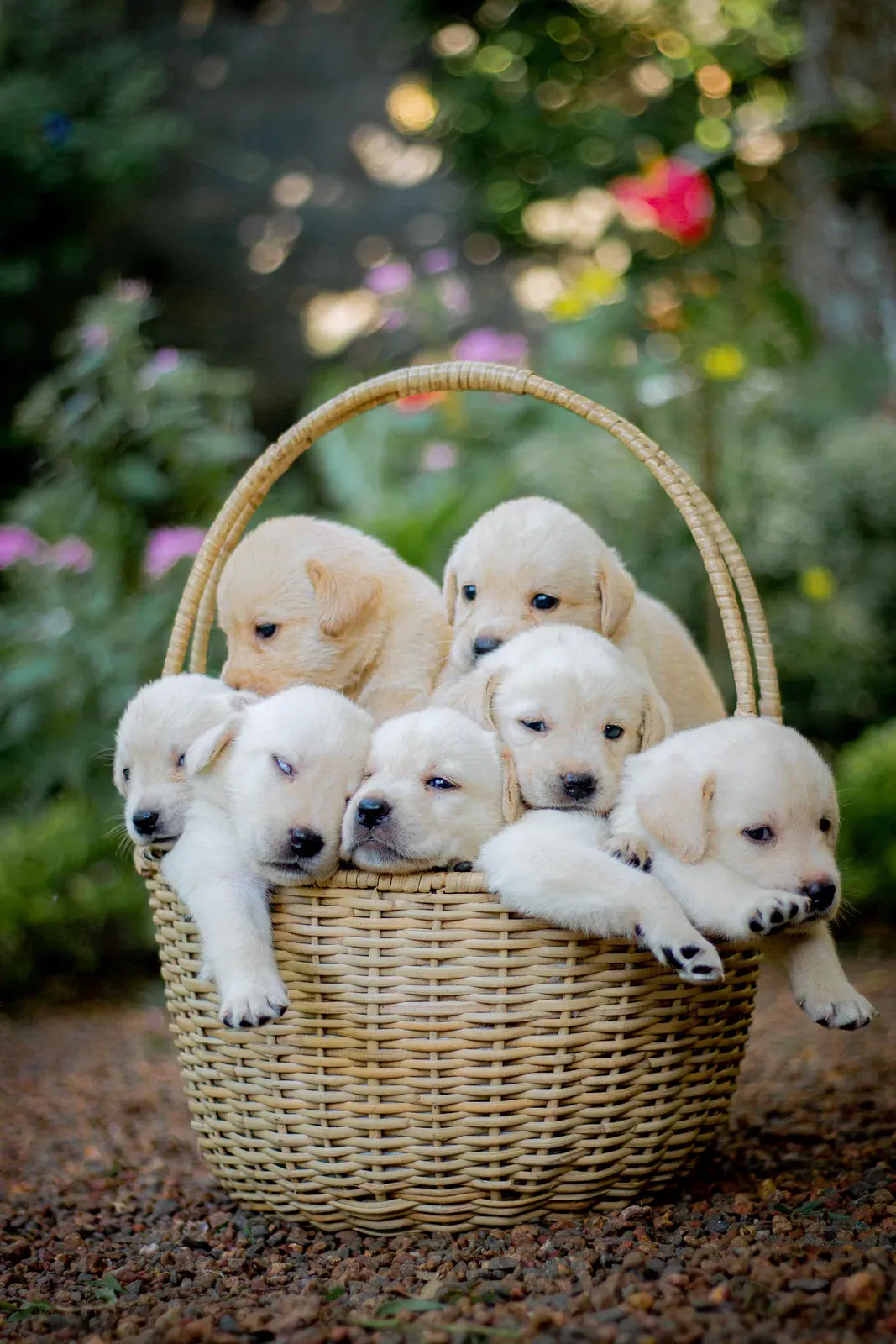
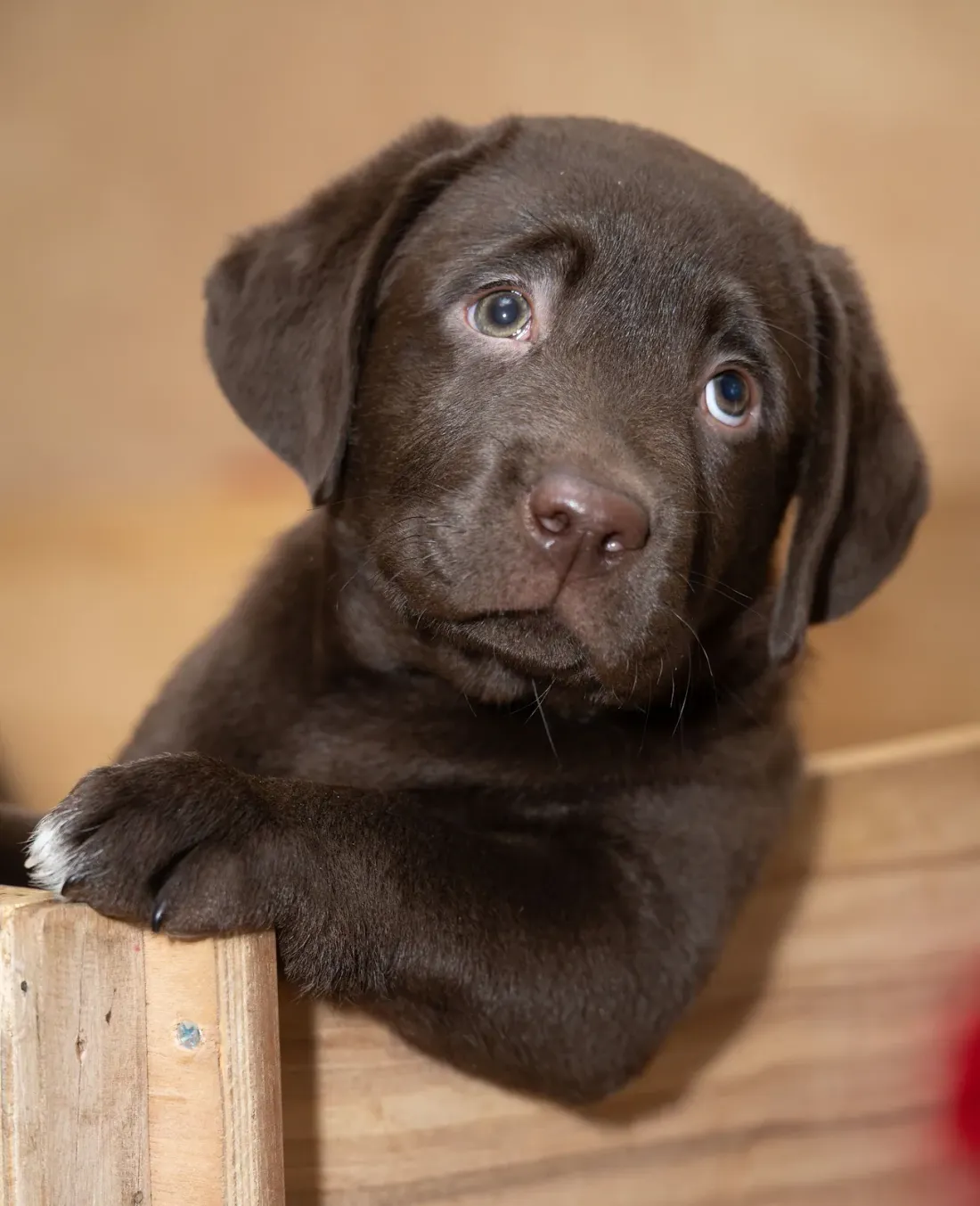
- Colours. Black, yellow (cream to fox-red) and liver or chocolate. Two genes explain them. A mutation in MC1R lets yellow show (Newton et al. 2000), and variants in TYRP1 turn black pigment into brown (Schmutz et al. 2002). Dogs sold as "silver" or "charcoal" Labradors are controversial. Many kennel clubs do not accept those colours as part of the breed standard and some breeders say they carry crossbreed genes. This draft has not checked a genetic study on the question.

What is the Labrador Retriever's temperament like?
 Related breedGerman Shorthaired Pointer1800 to 1872 · Germany
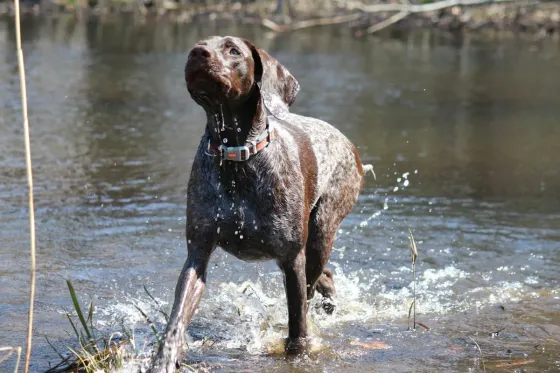
Kennel club standards describe the Labrador as even-tempered and keen to please. In daily life that means a sociable dog that greets strangers, usually does well with children and other pets and rarely shows aggression. It is also mouthy, enthusiastic and boisterous when young. Most Labradors take longer to mature than owners expect and stay puppy-like for two to three years.
Temperament varies by breeding line. Lofgren and colleagues (Applied Animal Behaviour Science, 2014) studied Labradors and found that whether a dog came from working, show or pet lines was one of the best predictors of personality. A 2016 paper by Fadel and colleagues (Scientific Reports) reached a similar view across several breeds, reporting that working and show lines differ in impulsivity, with working lines more impulsive.
Working lines versus show lines
The Labrador is a single breed with two diverging populations.
| Trait | Working (field) line | Show (bench) line |
|---|---|---|
| Bred for | Hunting, field trials, retrieving | shows, appearance |
| Build | Taller, lighter, leaner | Heavier, shorter, more substantial |
| Energy | Very high | Moderate |
| Impulsivity | Higher (Fadel et al. 2016) | Lower |
| Best home | Active, working or sport home | Family home with daily exercise |
Most guide dog and assistance dog programmes breed their own lines. They look for calm, trainable dogs, so they usually fall between the two extremes. When choosing a puppy, ask about both parents' work and temperament, not only the coat colour.
What was the Labrador bred to do, and what does it do now?
 Related breedPomeranian1800 to 1900 · Germany
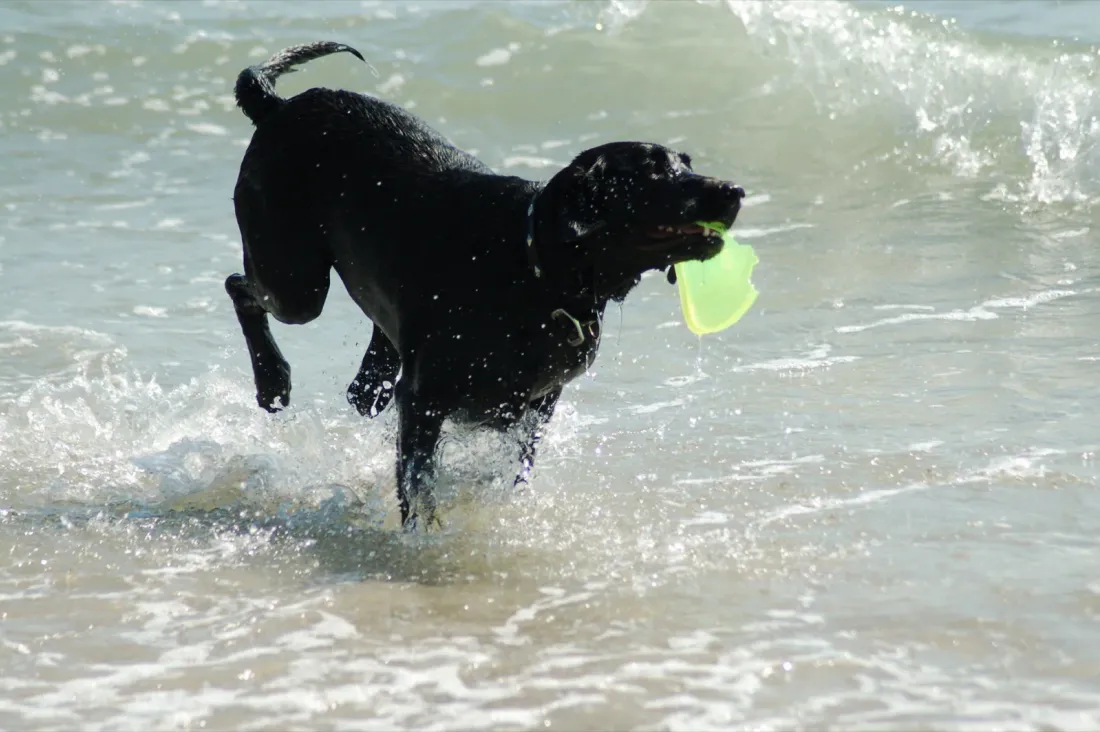
The core job is retrieving. Labradors mark where birds fall, remember several falls, take a command to fetch and bring game back gently. This "soft mouth" and a love of water carry over into modern life.
- Gundog. Retrieving on shooting days and in field trials.
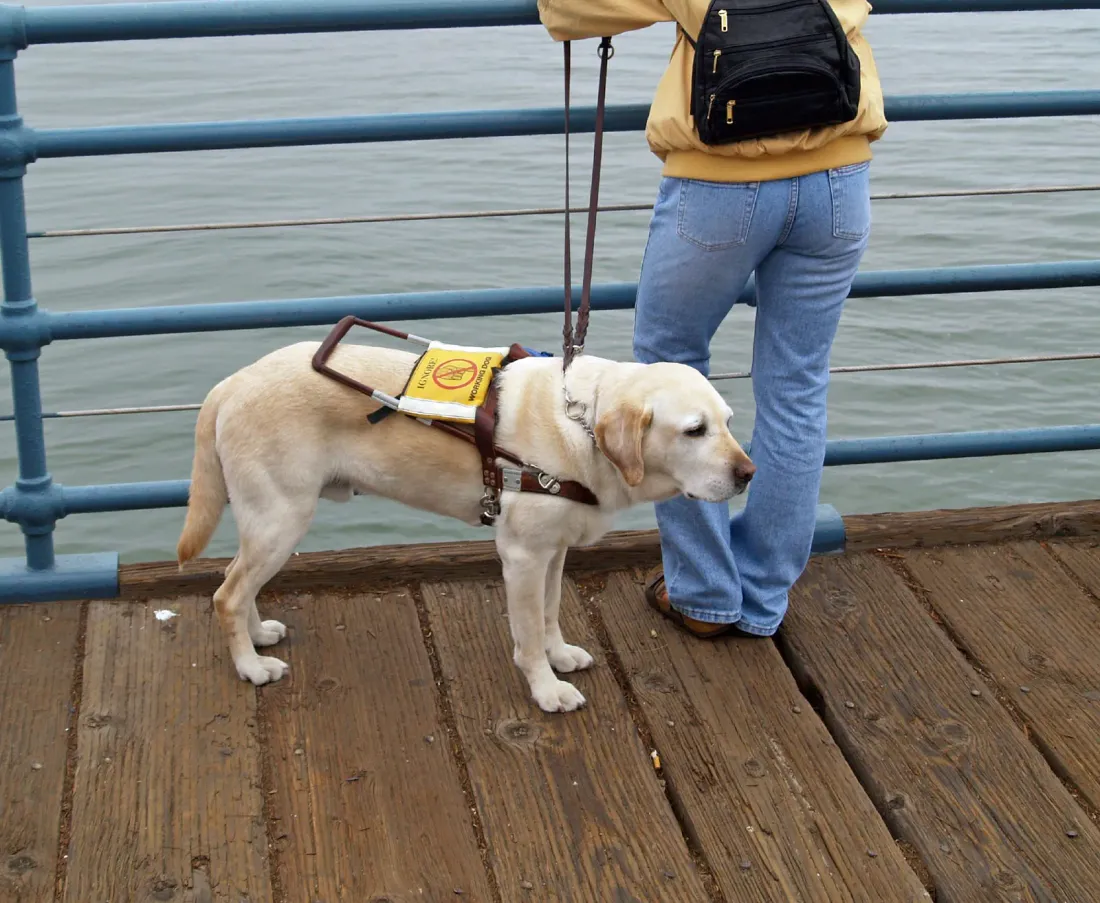
- Guide dog. Labradors are widely used as guide dogs for blind and partially sighted people. Guide dog schools began in Germany after the First World War, and Guide Dogs in Britain began training in the 1930s. Labradors joined later because their size, steadiness and friendliness suit the work.
- Assistance dog. Mobility support, hearing alerts, diabetic alert and other tasks for disabled owners.
- Detection and rescue. Police and customs services use Labradors to find drugs, explosives and missing people.
- Therapy and companion. Visiting hospitals and schools, and living as family pets.
The Labrador was the most registered breed with the AKC for about thirty years from 1991, a fact widely reported in AKC announcements. Our draft has not checked the exact last year of that run.
What health problems affect Labrador Retrievers?
 Related breedRough Collie1800 to 1886 · United Kingdom
The most recent large UK study, by McGreevy and colleagues (Canine Genetics and Epidemiology, 2018), examined 33,320 Labradors under primary veterinary care in 2013. The median age at death was 12.0 years, and chocolate Labradors lived about 10 percent less, with a median of 10.7 years against about 12.1 for black and yellow dogs. The same study listed otitis externa (ear infection) as the most common disorder, followed by obesity and joint problems.
The breed has several documented inherited conditions. This is general information. Talk to a vet about your own dog.
| Condition | What it is | Evidence |
|---|---|---|
| Obesity | Excess weight that shortens life and aggravates arthritis | POMC deletion (Raffan et al. 2016); lifetime food restriction study (Kealy et al. 2002) |
| Exercise-induced collapse (EIC) | Weakness or collapse after intense exercise; DNM1 mutation (R256L) | Patterson et al. 2008; about 3 percent of 400 US Labradors had two copies and 37 percent were |
| Hip and | Joint malformation that leads to arthritis | OFA data (US) report 11.5 percent hip and 10.2 percent elbow dysplasia, 1974 to 2015. Screening schemes exist in the UK (BVA/Kennel Club) |
| Progressive retinal atrophy (prcd-PRA) | Inherited retinal degeneration leading to blindness; DNA test available | About 2 percent affected at 2 to 3 years or older in one report. Carrier frequency could be as high as 24 percent |
| Centronuclear myopathy and hereditary nasal parakeratosis | Muscle weakness (CNM) and nasal skin crusting (HNPK); recessive, DNA tests available | Part of standard Labrador DNA test panels |
| Ear infections | Hanging ears and swimming raise the risk | McGreevy et al. 2018, the most common disorder in the study |
Breed clubs and the Kennel Club recommend hip and elbow scoring, eye testing and the DNA tests above for breeding dogs. Healthy-looking carriers can still pass a recessive gene on, so test both parents.
 Ticks and fleasTicks and fleas on dogs: how to check, remove and prevent themTicks and fleas on dogs: how to tell them apart, check your dog, remove a tick safely, break the flea life cycle and prevent both.
 GuidesPractical guidesBehaviour, training, health and adoptionRelated breedRough Collie1800 to 1886 · United Kingdom
Why are Labradors so prone to obesity, and what does the POMC gene have to do with it?
Labradors beg, steal food and gain weight easily. A study led by Eleanor Raffan at the University of Cambridge (Cell Metabolism, 2016) gave the first genetic explanation in dogs. The team sequenced candidate obesity genes in Labradors and found a 14 base pair deletion in the POMC gene (pro-opiomelanocortin). The deletion disrupts the coding for two hormones, beta-MSH and beta-endorphin, which help signal fullness to the brain.
Key findings from the paper and the university's press material:
- The deletion had an allele frequency of about 12 percent in the Labradors studied. Around one in four Labradors (23 percent) is thought to carry at least one copy.
- Each copy was linked to a heavier body weight (an effect of 0.33 standard deviations per allele), more body fat and greater food motivation.
- The deletion was also found in Flat-coated Retrievers, the Labrador's closest DNA relative in the Parker study, but not widely in other breeds tested.
- It was more common in Labradors chosen as assistance dogs. A likely reason is that food-motivated dogs are easier to train with treats, so selection for trainability may have kept the variant common.
This is the "double-edged sword" the researchers described: the same change that makes a dog easier to train with food also makes it more prone to obesity. Not every obese Labrador carries the deletion, and not every carrier is obese. Diet, exercise, neutering and owner habits still matter. Later genetic studies in Labradors have also looked at other genes, including ADCY3, and at structural variants linked to body weight.
A classic long-term experiment, Kealy and colleagues (Journal of the American Veterinary Medical Association, 2002), compared Labrador litter-mates fed either freely or about 25 percent less over their lives. The leaner dogs lived about 1.8 years longer on average and developed arthritis later. The paper is a well-known argument for keeping Labradors lean. Check the exact numbers in the original before quoting them.
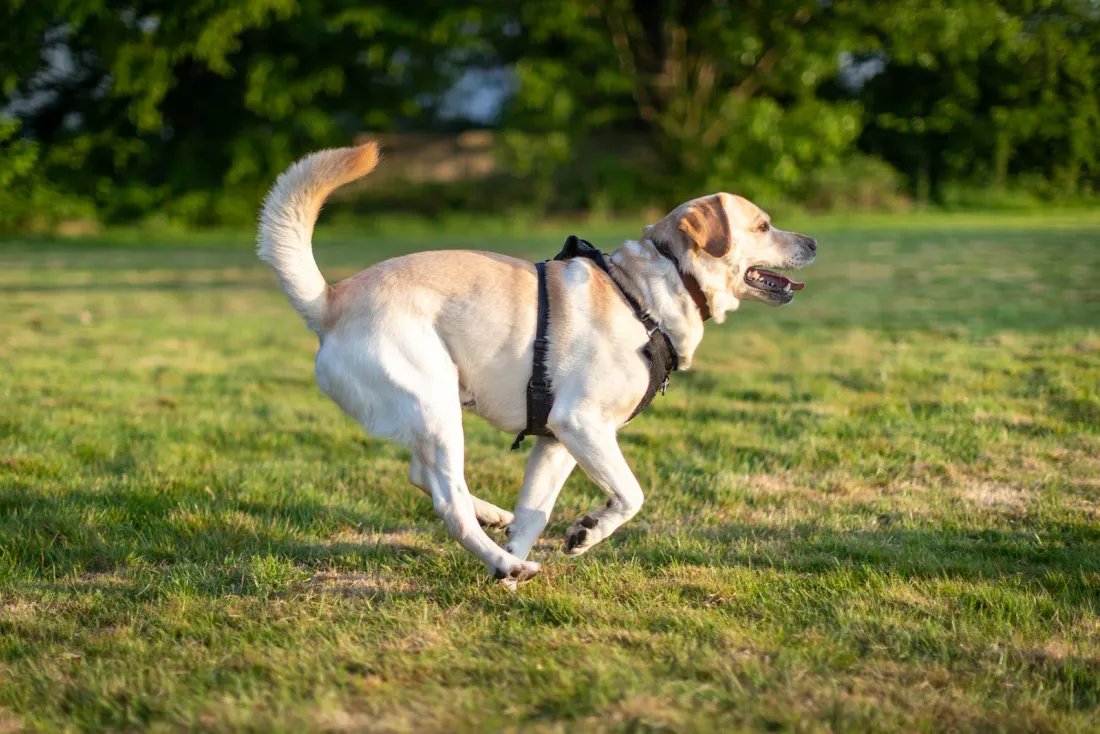
Is a Labrador Retriever right for you?
It suits you if you want a friendly, trainable dog for an active family, enjoy walking and playing, and can control feeding. It suits people who want a sports or working dog (field work, scent work, assistance). Labradors do not need a large garden if they get daily exercise, but they do need company.
It does not suit you if you are away most of the day, dislike mud and wet fur, want a quiet dog or cannot resist feeding treats. Young Labradors chew, jump up and pull on the lead, so they need training in the first two years. They shed heavily. Owners who cannot manage weight risk shortening the dog's life.
Labrador Retriever fun facts
- The Labrador takes its name from a region that is not its home. The dogs came from Newfoundland.
- The Labrador's otter tail works like a rudder in the water.
- The 1887 letter of the third Earl of Malmesbury is the earliest written use of "Labrador dog" that histories cite.
- Raffan's 2016 study found the POMC change in assistance dogs more often than in pet Labradors.
- Chocolate Labradors had a median life span of 10.7 years in the 2018 UK study, against about 12 for black and yellow dogs.
- Many guide dog programmes cross Labradors with Golden Retrievers to combine steadiness and trainability. (Common practice, not checked for a named source here.)
Frequently asked questions
Are Labradors good family dogs?
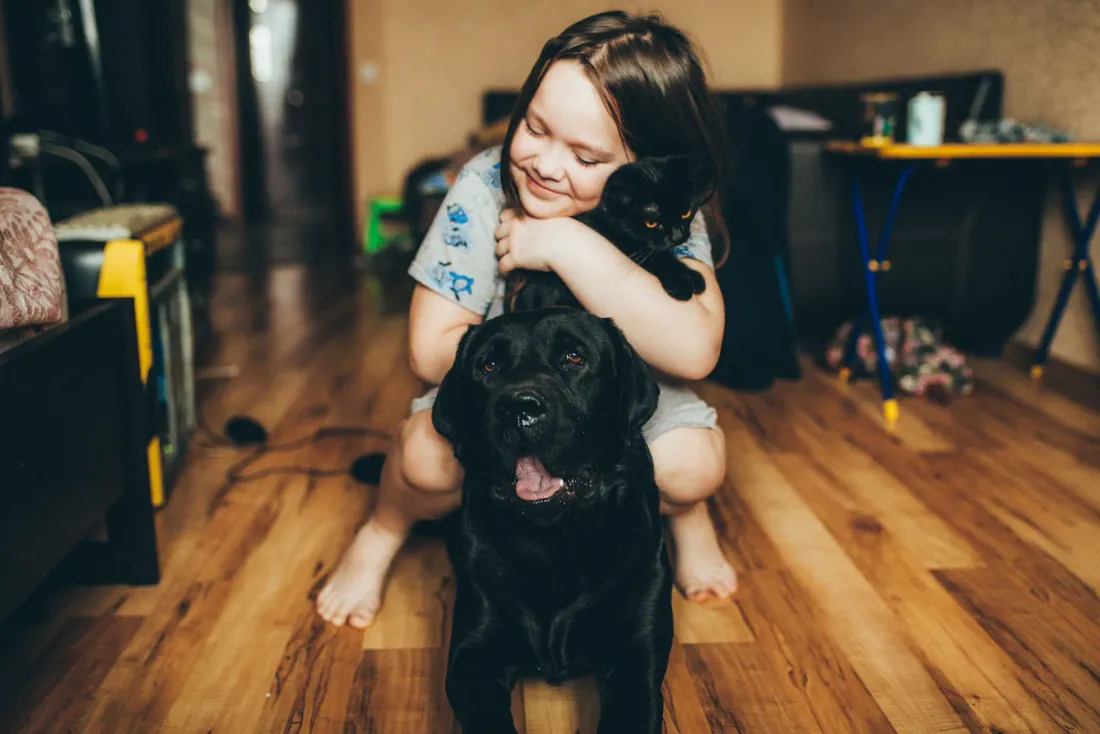
Generally yes. They are social and tolerant. They are strong and exuberant when young, so supervise them with small children.
How big do Labrador Retrievers get?
Dogs reach 56 to 57 cm, bitches 54 to 56 cm (Kennel Club). Weights run from about 25 to 36 kg, with working types lighter and show types heavier.
How long do Labradors live?
Project data gives 10 to 12 years. The 2018 UK study gave a median of 12.0 years overall and 10.7 for chocolate Labradors.
What Labrador health problems should I know about?
Obesity, joint dysplasia, ear infections, exercise-induced collapse and inherited eye and muscle diseases. DNA and joint screening of parents helps.
Why is my Labrador always hungry?
Many Labradors are food motivated. About one in four carries a POMC deletion linked to appetite (Raffan et al. 2016). Measure meals and use part of the daily ration for training.
Do Labradors shed?
Yes, all year, with heavier shedding in spring and autumn.
Which breeds are related to the Labrador?
The Flat-coated Retriever and Golden Retriever are the closest in the 2017 DNA study. The Labrador also gave its name to the Labradoodle cross.
Read next
Sources (17)
- American Kennel Club, Labrador Retriever breed page and breed history, and AKC registration statistics.
- Fadel F.R. et al., "Differences in trait impulsivity indicate diversification of dog breeds into working and show lines", Scientific Reports, 2016.
- Fédération Cynologique Internationale, Labrador Retriever, standard no. 122.
- Hawker P., Instructions to Young Sportsmen, 1814.
- Kealy R.D. et al., "Effects of diet restriction on life span and age-related changes in dogs", Journal of the American Veterinary Medical Association, 2002.
- Lofgren S.E. et al., "Management and personality in Labrador Retriever dogs", Applied Animal Behaviour Science, 2014.
- McGreevy P. et al., "Labrador retrievers under primary veterinary care in the UK: demography, mortality and disorders", Canine Genetics and Epidemiology, 2018.
- Newton J.M. et al., "Melanocortin 1 receptor variation in the domestic dog", Mammalian Genome, 2000.
- Orthopedic Foundation for Animals, hip and elbow dysplasia statistics for Labrador Retrievers, 1974 to 2015.
- Parker H.G. et al., "Genomic analyses reveal the influence of geographic origin, migration, and hybridization on modern dog breed development", Cell Reports, 2017.
- Patterson E.E. et al., "A canine DNM1 mutation is highly associated with the syndrome of exercise-induced collapse", Nature Genetics, 2008.
- Raffan E. et al., "A deletion in the canine POMC gene is associated with weight and appetite in obesity-prone Labrador Retriever dogs", Cell Metabolism, 2016, and University of Cambridge press release.
- Schmutz S.M. et al., "TYRP1 and MC1R genotypes and their effects on coat color in dogs", Mammalian Genome, 2002.
- The Kennel Club (UK), Labrador Retriever breed standard and breed information pages.
- Wikipedia, "Labrador Retriever" and "Guide dog" (used for dates and summaries, checked against the other sources listed).
- Northumberland and Durham Labrador Retriever Club, history of the breed (Malmesbury and Buccleuch lines).
- Project knowledge base, breed records and Parker 2017 shared-haplotype table (this site).