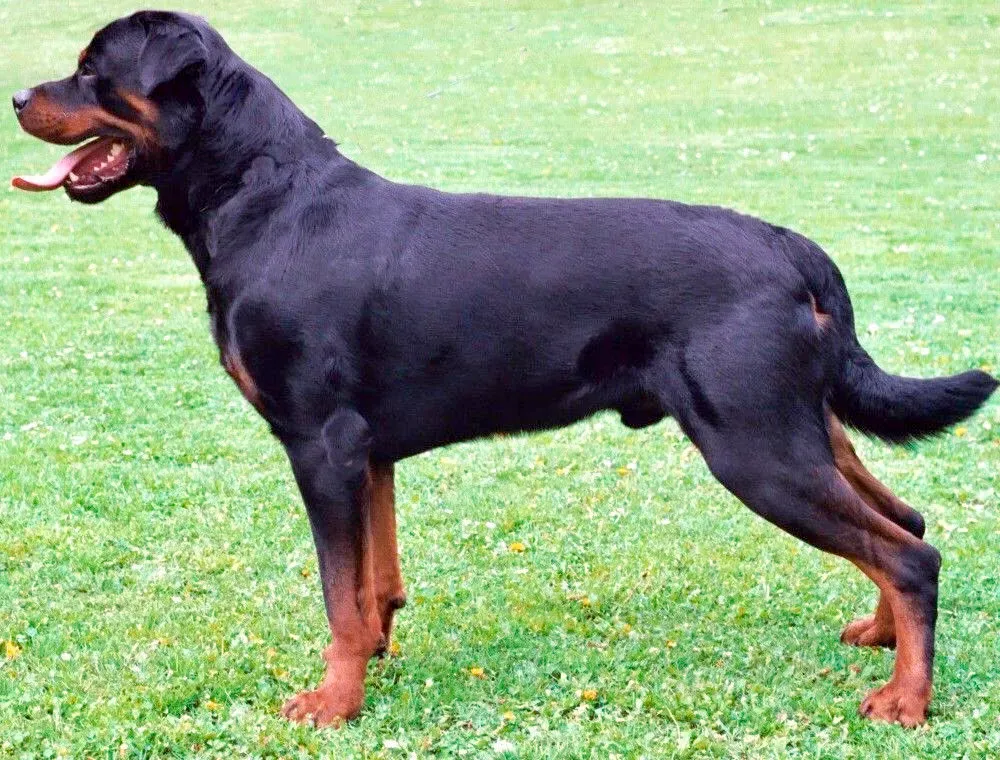
It was developed as a drover's dog that moved cattle to market and guarded the butcher's money, which gave it the old name "Rottweil butcher's dog" (Rottweiler Metzgerhund). Today it works as a guard, police, service and sport dog, and lives in many homes as a companion. It is a confident, protective and intelligent breed. It suits owners who will train and socialise it from puppyhood and give it daily exercise and a job to do. UK studies put the typical life span at about 9 years.
Rottweiler quick facts
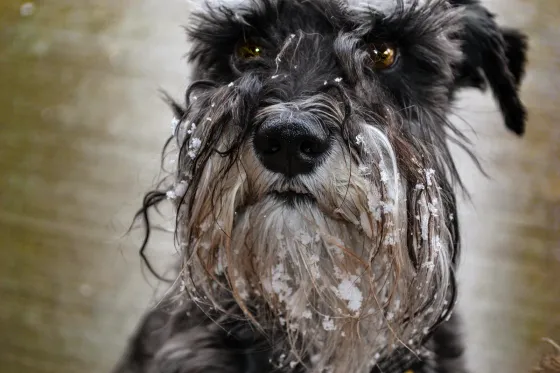 Related breedGiant Schnauzer1850 to 1923 · Germany
- Closest DNA relatives
- Black Russian Terrier, Leonberger, Great Dane
- Descendant breeds
- Black Russian Terrier, Dobermann, Laizhou Hong (project data)
- Country of origin
- Germany (Rottweil, Baden-Wurttemberg)
- Period of development
- Roman-era legend; real breed development in the Middle Ages to the 1800s; modern breed from the early 1900s (project data: about 1901 established)
- Original job
- Droving cattle, guarding butchers and their money, pulling carts
- Type
- Molossoid (FCI Group 2, Pinscher and Schnauzer, Molossoid and Swiss Mountain and Cattledogs; FCI standard no. 147; AKC Working Group; UK Kennel Club Working Group)
- Home club
- Allgemeiner Deutscher Rottweiler Klub (ADRK), founded 1921
- Height
- Dogs 61 to 68 cm, bitches 56 to 63 cm (FCI and AKC, in cm)
- Weight
- FCI: about 50 kg dogs, about 42 kg bitches. AKC: about 43 to 61 kg dogs
- Coat
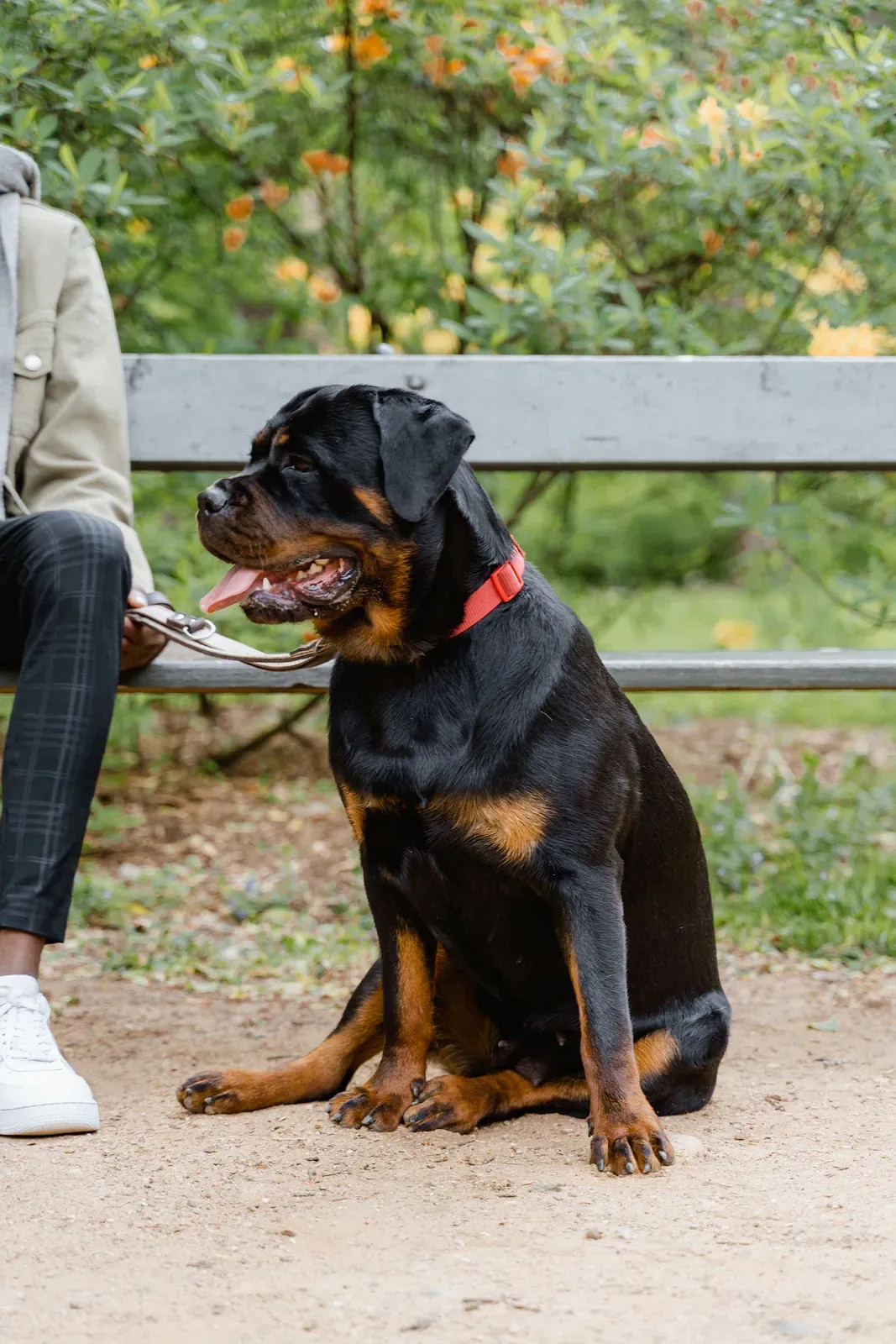
- Short to medium, coarse, flat, with undercoat on neck and thighs
- Colour
- Black with rust to mahogany markings
- Life span
- Project data: 8 to 10 years. UK VetCompass median 9.0 years
- Exercise
- More than 2 hours a day (UK Kennel Club)
- DNA family
- Drover family (Parker et al. 2017)
Name and origin
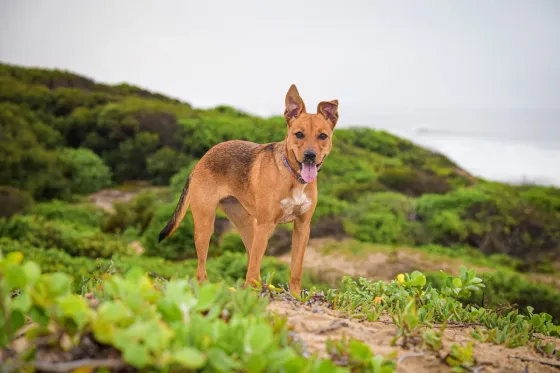 Related breedAfricanis300 CE to 1000 · South Africa
The breed is named after Rottweil, an old free imperial city in southwest Germany. "Metzgerhund" means "butcher's dog", and "Rottweiler" simply means "of Rottweil". The Rottweil name comes up in every history of the breed, and the FCI standard describes the dog as the old butcher's dog of the town.
Where the dogs themselves came from is less certain.
- The Roman legend. The usual story says Roman legions drove cattle over the Alps with mastiff-type dogs, and some of those dogs settled around Rottweil, a town the Romans founded. The ADRK and the FCI repeat this account. No DNA or written record proves it, so treat it as tradition, not documented fact.
- The medieval account. The same sources say the dogs were crossed with local herding dogs and then selected for fitness, intelligence, endurance and driving ability. This is how a working forms, and it matches what we know of other drovers' dogs.
- What the DNA says. The 2017 Parker study places the Rottweiler in the Drover family, a group of large mastiff-type and mountain breeds. That fits an alpine and central European origin, though the study cannot confirm Roman ancestry.
The project data gives the first appearance as about 100 CE (a low-confidence date based on the Roman account) and the established modern breed as 1901.
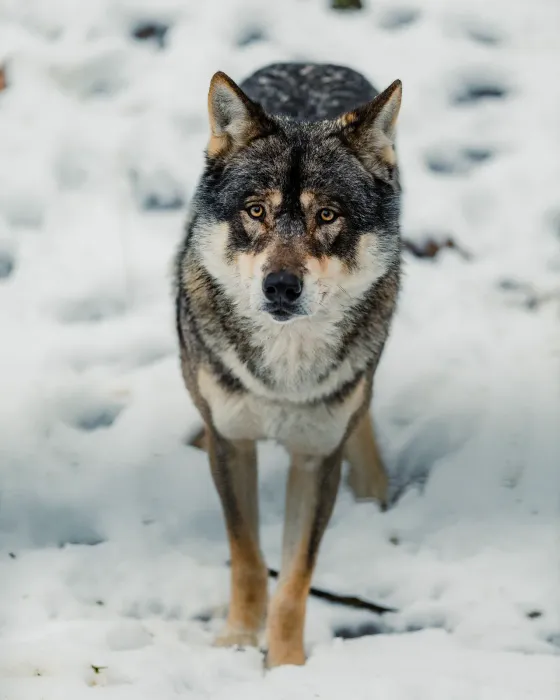
History
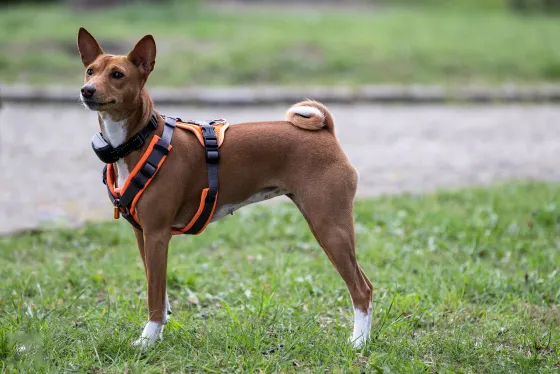 Same eraBasenji3000 BCE to 1937 · Democratic Republic of the Congo
Drovers and butchers
Rottweil became a big cattle market. Butchers and cattle dealers needed dogs that could drive herds over long distances through thinly settled country, then guard the animals and the owner's money. The breed was shaped purely for performance and usefulness, according to the ADRK. A first-rate watch and driving dog came out of this, and the same dogs could pull a butcher's cart. A popular tradition says dealers tied the money pouch round the dog's neck. That detail is a common story and is not documented in the sources used here.
Decline and revival
Railways and new roads ended the long cattle drives. The ADRK says the breed's traditional work faded, and that the dog's outstanding traits were remembered early in the 20th century. Popular histories claim only a handful of Rottweilers were left around 1900. That figure is repeated widely and not checked here. What is documented is that interest returned just as police forces were looking for working dogs.
Police and military work
In 1910 the Rottweiler was officially recognised as a police dog in Germany (ADRK). Police departments of the time tested several breeds, and the Rottweiler proved well suited to the tasks. The build-up to the First World War raised demand for service dogs and renewed interest in the breed. During both World Wars Rottweilers served as messenger, ambulance, draught and guard dogs.
Police and security work has continued since. The breed also takes part in tracking, obedience and protection sport, where its strength and trainability are tested.
Clubs and recognition
| Year | Event |
|---|---|
| 1901 | First Rottweiler clubs formed in Germany (project data; the 1901 date is as reported in secondary histories) |
| 1910 | Rottweiler officially recognised as a police dog; ADRK recognised by the VDH |
| 1914 | Deutscher Rottweiler-Klub (DRK) founded on 13 January |
| 1915 | Suddeutscher Rottweiler-Klub (SDRK) founded on 27 April |
| 1921 | The German clubs merge into the Allgemeiner Deutscher Rottweiler Klub (ADRK) |
The ADRK is the breed's home club and supervises breeding in Germany. It states that its goal is a healthy, mentally sound, friendly companion and family dog. The FCI lists the breed as standard no. 147 (definitive), country of origin Germany. The AKC places it in the Working Group, and the UK Kennel Club also lists it in its Working Group.

Ancestors, descendants and relatives
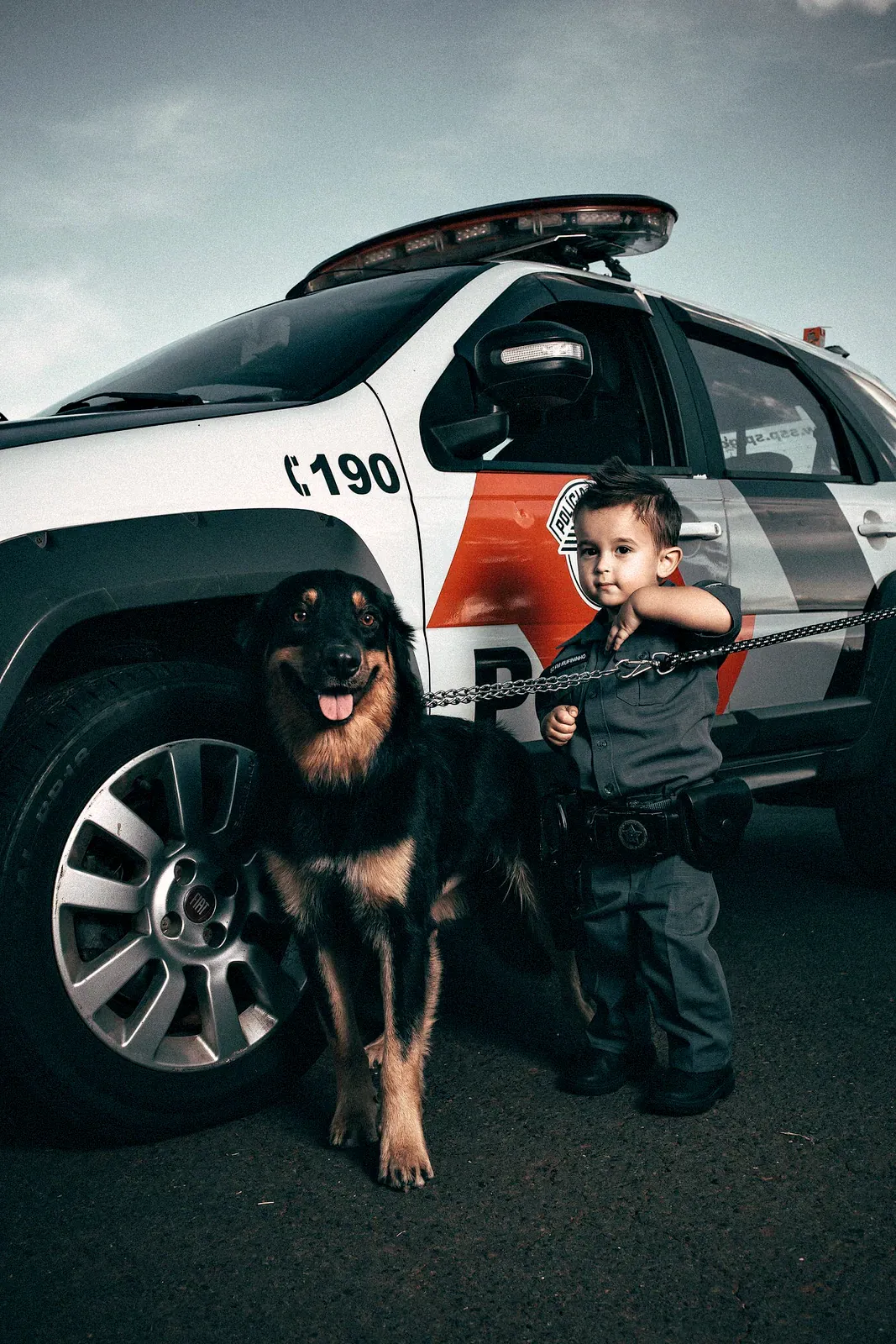
 Same familyCanaan Dog2000 BCE to 1966 · Israel
The project knowledge base lists no fixed parent breeds for the Rottweiler. It is a foundation breed of the Drover family.
Descendant breeds (project data)
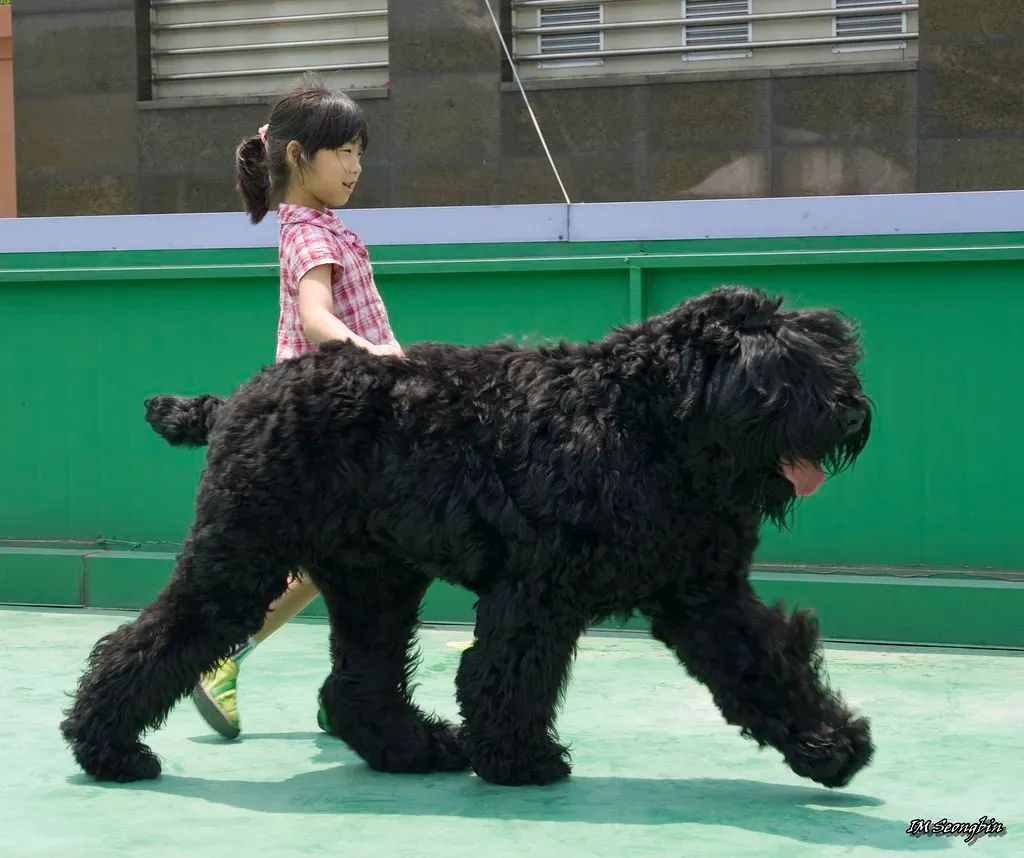
- Black Russian Terrier. Soviet-era working dog, built from several breeds including the Rottweiler. It is also the Rottweiler's closest DNA relative in the study below.
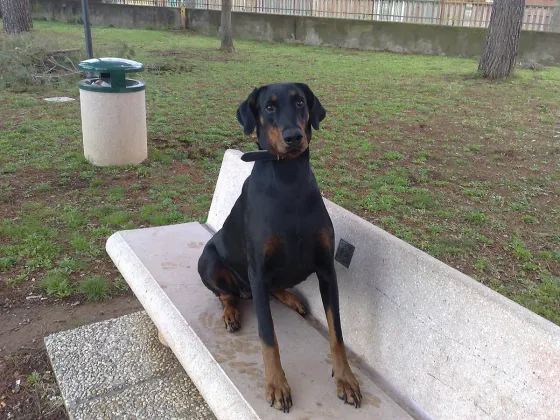
- Dobermann. Some histories list the Rottweiler among the breeds used to create the Dobermann in Germany in the late 1800s.
- Laizhou Hong. A Chinese dog developed with Rottweiler influence, according to the project data.
What does DNA say?
A 2017 study by Parker and colleagues (Cell Reports) analysed 1,346 dogs from 161 breeds and sorted them into 23 clades. The Rottweiler falls in the Drover , with strong support. The study measured shared : long stretches of identical DNA inherited from common ancestors. More shared (Mb) means the breeds were more likely crossed or came from shared founders. The study cannot say which way the genes flowed.
Source: Parker et al. 2017, as recorded in this site's breed database.
The Black Russian Terrier stands far above everything else, which fits its history as a breed built with Rottweiler blood. The other relatives are large mastiff and mountain types, a fair picture of the Rottweiler's own build and origins.
Descend from it · 3
- DobermannGermany
- Laizhou HongChina
- Black Russian TerrierRussia
- Black Russian Terrier180.2 Mb 7.5%
- Leonberger26.9 Mb 1.1%
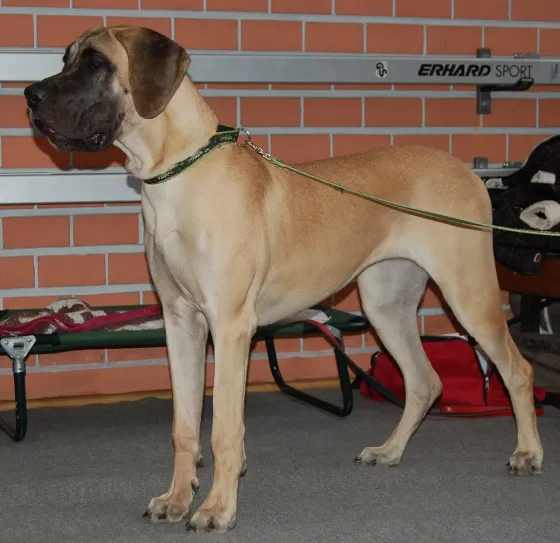
- Great Dane24.1 Mb 1.0%
- Greater Swiss Mountain Dog18.4 Mb 0.8%
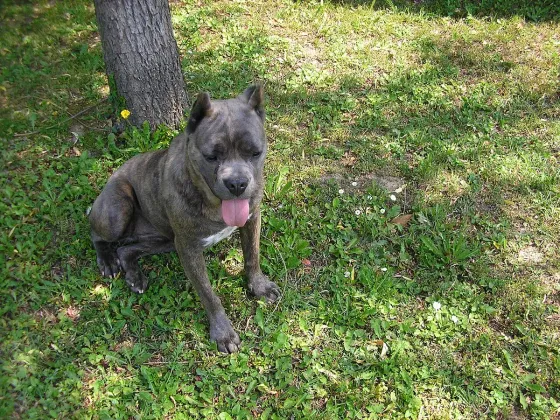
- Cane Corso15.0 Mb 0.6%
- St. Bernard12.9 Mb 0.5%
- Boerboel10.6 Mb 0.4%
Source: Parker et al. 2017. Percent of the whole genome.
| Breedwith Rottweiler | Shared DNA with Rottweiler (Mb)Shared DNA (Mb) |
|---|---|
| Black Russian Terrier | 180.2 |
| Leonberger | 26.9 |
| Great Dane | 24.1 |
| Greater Swiss Mountain Dog | 18.4 |
| Cane Corso | 15.0 |
| St. Bernard | 12.9 |
| Boerboel | 10.6 |
The breed standard
 Looks relatedDingo3000 BCE to 1500 BCE · Australia
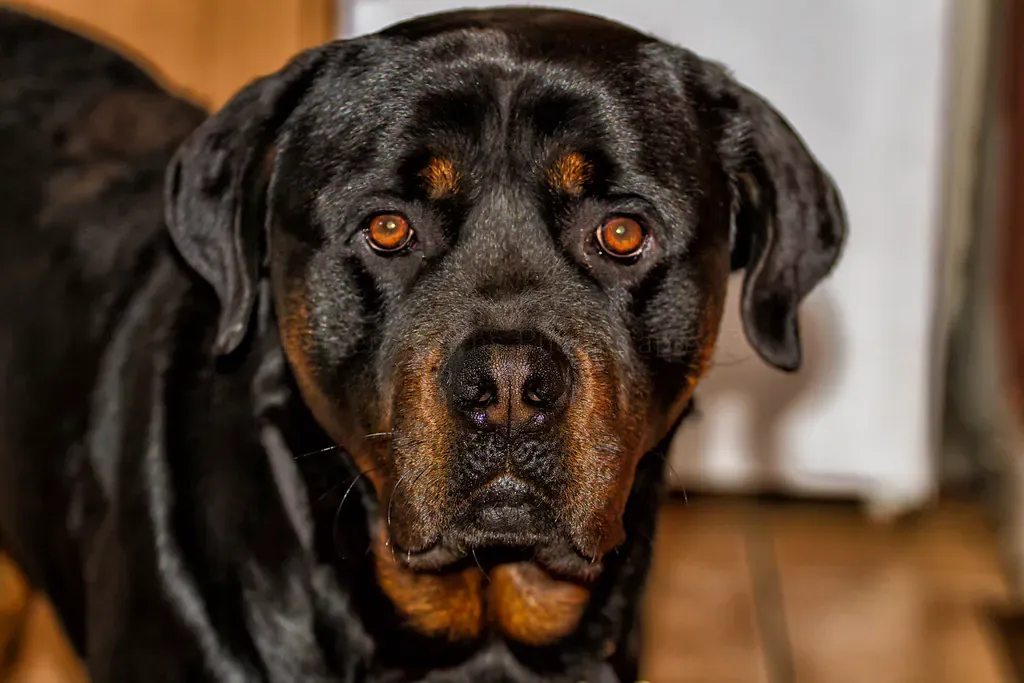
A breed standard is the written ideal for a breed that kennel clubs judge dogs against. The FCI, AKC and UK Kennel Club standards for the Rottweiler agree on most points. The main differences are weight (the FCI and AKC both give figures, the Kennel Club standard does not) and tails.
| Trait | FCI (no. 147) | AKC | UK Kennel Club |
|---|---|---|---|
| Height, dogs | 61 to 68 cm | 61 to 68 cm | 61 to 68 cm |
| Height, bitches | 56 to 63 cm | 56 to 63 cm | 56 to 63 cm |
| Weight | About 50 kg dogs, 42 kg bitches | Dogs about 43 to 61 kg, bitches about 36 to 45 kg | Not given in the standard |
| Coat | Top coat coarse, dense, flat, medium length; undercoat on neck and thighs | Same pattern | Same pattern |
| Colour | Black with clearly defined rust-brown markings | Always black with rust to mahogany markings | Black with tan markings (as reported; not checked against the full standard) |
| Tail | Natural tail described | Docked tail described (1 to 2 vertebrae left) | Natural tail described |
| Ears | Medium, pendant, triangular, set wide | Same | Same |
| Eyes | Medium, almond-shaped, dark brown | Same | Same |
The Kennel Club column states the same height ranges as the FCI and AKC; this is as reported on the club's breed pages. The standards describe a strong, compact, slightly longer-than-tall dog with a broad head, deep chest and powerful hindquarters, with a confident, steady expression.
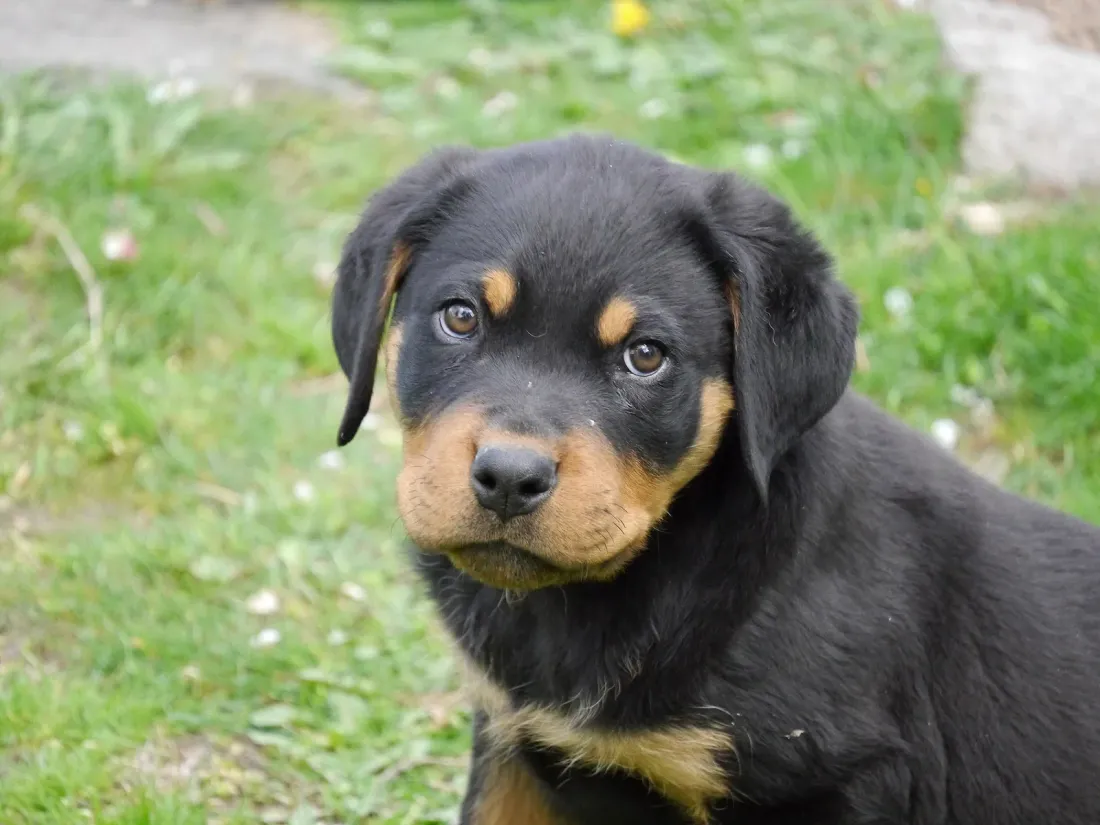
Colour. Markings are placed on the cheeks, over each eye, on the muzzle sides, throat, chest and legs. The AKC standard describes the exact spots. Other colours seen in the pet trade, such as "red" or "blue", are not in any of the standards.
Tail docking. The AKC standard describes a docked tail. Docking is banned or restricted in much of Europe, and the FCI and UK versions describe a natural tail.
Temperament
 Related breedIbizan Hound500 BCE to 1950 · Spain
The UK Kennel Club describes the breed as "strong, intelligent and protective". The FCI standard describes a good-natured, placid, devoted dog that is obedient and eager to work, with a strong guarding instinct and an alert, self-assured manner. In daily life that means a dog that is calm and watchful around its family, often wary of strangers, and willing to step in if it senses a threat.
Three points shape how a Rottweiler behaves in a home.
- It is a guardian. The Kennel Club notes that the dog is territorial and protective of its owner and property. Early socialisation, with many people, dogs, places and sounds in the first year, is what teaches it to tell normal from threatening.
- It is strong. A fully grown male may weigh over 50 kg. Poorly trained, even a friendly Rottweiler can pull, jump and knock people over. Training matters for control as much as for behaviour.
- It bonds closely. Many Rottweilers follow their person from room to room and do poorly if left alone for long periods.
Temperament varies by line, by early experience and by the individual. Ask a breeder about both parents' behaviour, not just show wins or working titles. The breed has "often suffered from bad press" and attracted people who wanted a tough image, according to the Kennel Club, which is one reason it needs informed owners.
Working instincts and training
 Related breedMaltese500 BCE to 1888 · Malta
Rottweilers learn quickly and like having a task. The droving background shows in a steady, determined work style rather than the speed of a sheepdog.
- Needs. More than 2 hours of activity each day (Kennel Club), split between walks, play and training.
- Sports. Tracking, obedience, protection sport and carting suit the breed. Pulling a cart is close to the job its ancestors did in Rottweil.
- Training. Reward-based training, started early and kept consistent, works well. A dog of this size and strength should be taught loose-lead walking, a reliable recall and calm greetings before adolescence.
- Common problems. In the 2017 VetCompass study of 5,321 UK Rottweilers (O'Neill and colleagues), aggression was the most commonly recorded disorder, noted in 7.46 percent of dogs, about 1 in 13. That is a record of problems reported to vets, not a count of every dog's behaviour. Poor socialisation, fear and unmet needs are the usual factors, and a professional behaviourist can help when a dog guards, lunges or snaps.
Health
 Related breedSaluki3000 BCE to 1922 · Iraq
Most Rottweilers live healthy lives. This section lists what breeders screen for and what owners can watch for, with figures from named studies. Information here is general. Talk to a vet about your own dog.
Life span. O'Neill and colleagues (Canine Genetics and Epidemiology, 2017) studied 5,321 Rottweilers from 304 UK clinics. Median life span was 9.0 years: 9.5 years for females and 8.7 years for males. Cancer (neoplasia) was the most common recorded cause of death, at 33.0 percent of 312 deaths with a recorded cause. The UK Kennel Club breed page gives a life span of under 10 years.
| Condition | What it is | How common | What helps |
|---|---|---|---|
| Osteosarcoma | A bone tumour, most often in a leg bone | Appendicular osteosarcoma recorded in 1.14 percent of UK Rottweilers, about 1 in 88 (O'Neill et al. 2017). Risk is much higher than in crossbreds (see below) | Ask a vet about any limb lameness that lasts more than a few days; keep an adult dog lean; no screening test exists |
| The hip joint forms loosely and wears early | In OFA records from 1974 to 2015, about 1 in 5 Rottweilers evaluated (20.2 percent) were dysplastic. A South African study of 2007 to 2015 found 22 percent. UK average hip score for the breed is 12 (Kennel Club) | Breeders use the BVA/Kennel Club hip scheme or OFA/PennHIP; keep puppies lean; avoid hard jumping on growing joints | |
| Elbow dysplasia | Abnormal development of the elbow joint | About 1 in 3 evaluated dogs in OFA records (36.7 percent). South African study: 39 percent | BVA/Kennel Club elbow scheme for breeding dogs; weight control; early vet checks for forelimb lameness |
| Cruciate ligament disease | Damage to a stabilising ligament in the knee | Recorded in 2.32 percent of UK Rottweilers, about 1 in 43 (O'Neill et al. 2017). The breed is predisposed in earlier clinic studies | Keep weight in check; build fitness gradually; see a vet early if a dog starts to favour a hind leg |
| Overweight and obesity | Excess body fat that loads joints | 7.06 percent of UK Rottweilers had recorded obesity, about 1 in 14 (O'Neill et al. 2017) | Measured meals, regular exercise, body condition checks with a vet |
| Ear infection (otitis externa) | Inflammation of the ear canal | 6.14 percent, about 1 in 16 (O'Neill et al. 2017) | Routine ear checks; vet treatment if the dog scratches or shakes its head |
| Degenerative joint disease | Wear of joints with age | 4.69 percent, about 1 in 21 (O'Neill et al. 2017) | Healthy weight, steady exercise, vet-led pain care |
| JLPP | Inherited nerve disease causing voice change and breathing noise in young dogs | In Rottweilers tested through a commercial DNA database (owners who opted into research), about 1 in 13 were (7.9 percent) and 0.2 percent were affected | DNA test of breeding dogs; carriers can be bred to clear dogs |
| LEMP | Inherited brain and spinal cord disease; signs often start before 1 year | Rare; no prevalence figure in the sources used | DNA test (NAPEPLD gene) for breeding dogs |
OFA and similar figures come from dogs whose owners chose to submit results, so they may overstate the true rate. The UK figures come from primary care records and cover every Rottweiler seen at the clinics, not a self-selected group.
The UK Kennel Club lists DNA testing for JLPP and hip and elbow screening as good practice for breeders. LEMP DNA testing and eye screening are listed as best practice.
Research on osteosarcoma
Edmunds and colleagues (Canine Medicine and Genetics, 2021) compared 1,756 dogs with osteosarcoma against 905,211 dogs without it, all from UK records. Rottweilers had about 13 times the odds of osteosarcoma compared with crossbreds (odds ratio 13.30, 95 percent confidence interval 10.55 to 16.75; 139 Rottweiler cases). Rottweilers, Rhodesian Ridgebacks and Great Danes ranked among the highest-risk breeds. Large body size and long limb bones were the strongest general risk factors. The authors noted that risk genes may have concentrated in some breeds while they were selected for large size.
An odds ratio shows relative risk, not the chance for any one dog. In the VetCompass data above, about 1 in 88 UK Rottweilers had a recorded osteosarcoma, so most dogs never develop one.
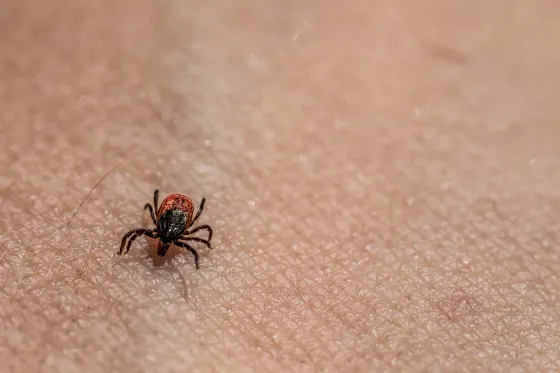 Ticks and fleasTicks and fleas on dogs: how to check, remove and prevent themTicks and fleas on dogs: how to tell them apart, check your dog, remove a tick safely, break the flea life cycle and prevent both.
 GuidesPractical guidesBehaviour, training, health and adoptionRelated breedSaluki3000 BCE to 1922 · Iraq
Breed-specific legislation
 Related breedShiba Inu300 BCE to 1936 · Japan
Some countries and regions restrict or regulate the Rottweiler by breed. Rules change, so owners and anyone travelling should check current local law.
- United Kingdom. The Rottweiler is not one of the types banned under the Dangerous Dogs Act 1991. Any dog can still be prosecuted if dangerously out of control.
- Ireland. The Control of Dogs Regulations 1998 list the Rottweiler as a restricted breed. In public it must be muzzled and held on a strong lead no longer than 2 metres by a person aged 16 or over.
- France. The Rottweiler is category 2. Owners need a licence, and the dog must be leashed and muzzled in public places and transport.
- Germany. Rules differ by state and city. Some places apply conditions to the Rottweiler. Check the local list.
- Denmark. The 2010 Danish ban covers 13 breeds. The Rottweiler is not on that list.
- Other places. Several other countries, states and cities add the Rottweiler to dangerous-dog lists, with muzzle, insurance, registration or import conditions.
Living with a Rottweiler
 Related breedXoloitzcuintle1000 BCE to 1956 · Mexico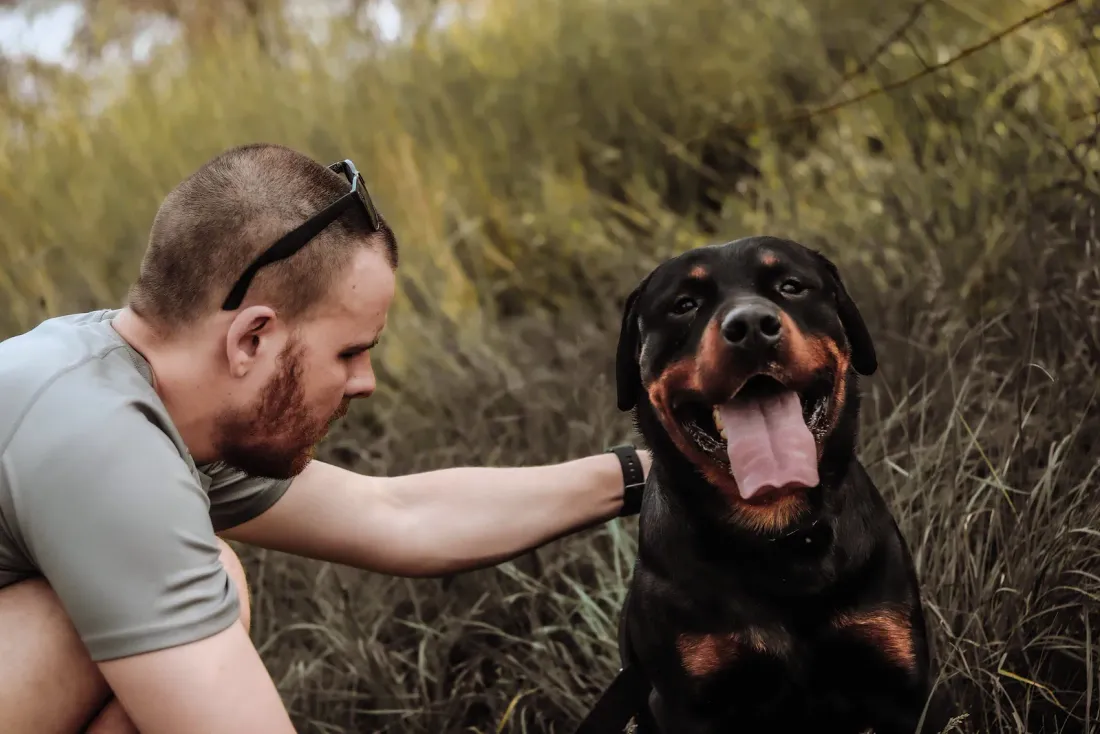
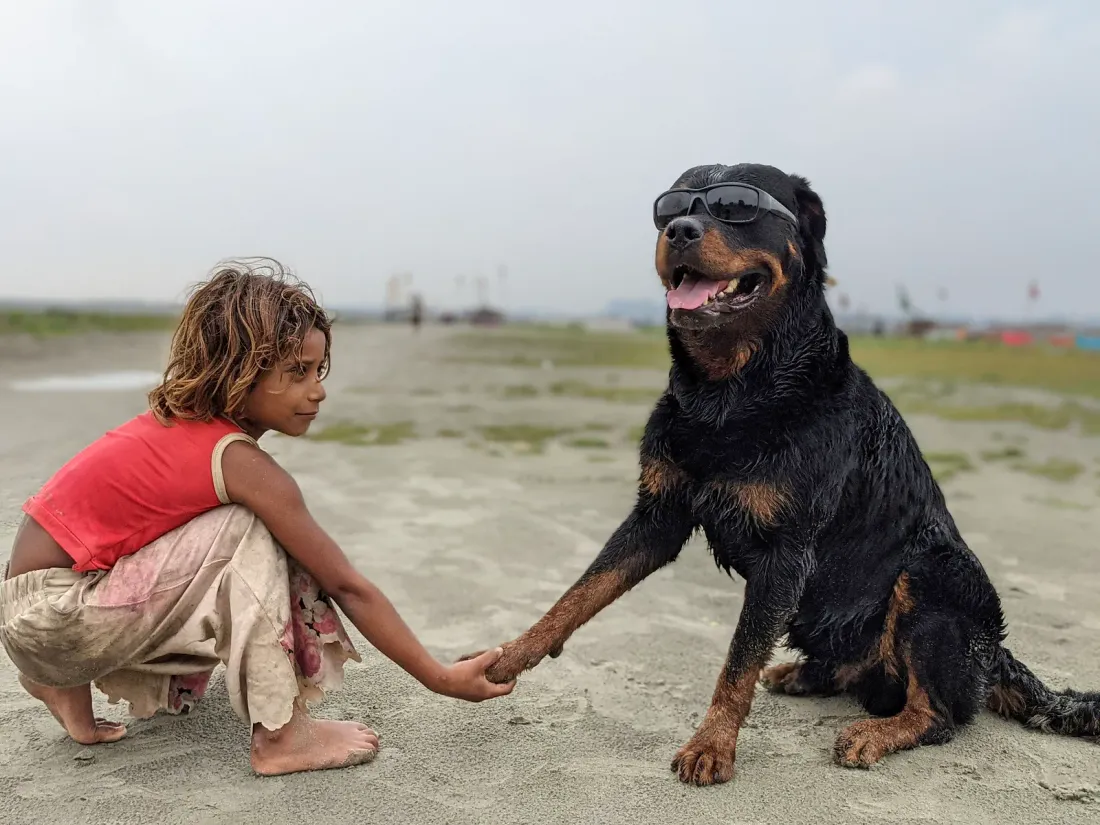
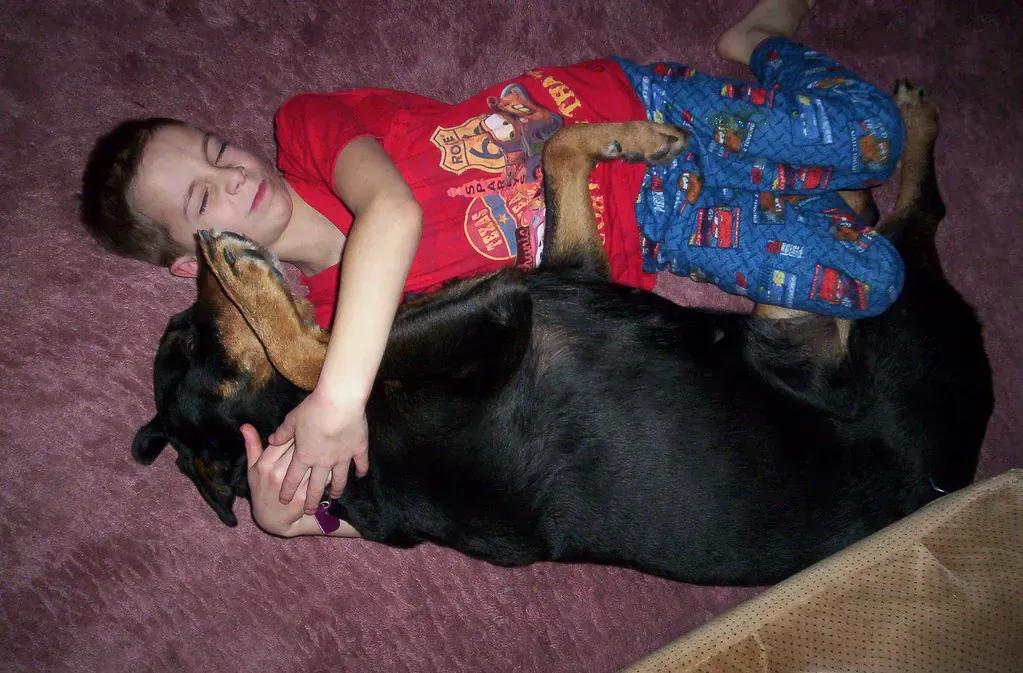
| Daily reality | Rating | Why |
|---|---|---|
| Exercise per day | High | More than 2 hours (Kennel Club) |
| Training needs | High | Strong, guarding breed; early training and socialisation needed |
| Grooming | Low | Weekly brushing (Kennel Club) |
| Shedding | Medium | Sheds (Kennel Club); has an undercoat |
| Barking | Varies | Alert and protective; depends on training and the individual |
| Time alone | Poor | Closely bonded; breed is not suited to long hours alone |
| Children | Varies | Big and strong; calm families can do well; supervision is a must |
| Other dogs | Varies | Territorial; early socialisation is needed |
| Cats and small pets | Varies | Depends on early exposure; evidence is thin |
| Flat living | Poor | Large dog; the Kennel Club suggests a large house and garden |
| Heat tolerance | Fair | Large, dark-coated dog; no source rates it; keep exercise to cooler hours |
| Cold tolerance | Good | Dense short coat with undercoat |
| First-time owner fit | Fair | Needs informed owners (Kennel Club); first-timers can manage with a trainer |
A great fit if
- You have space and time for over 2 hours of daily exercise and training.
- You want a loyal dog that works closely with you, and you will join a training class.
- You can handle a strong dog and plan to socialise it widely during its first year.
- You are home for much of the day.
Think twice if
- You are away most of the day.
- You live in a small flat without a garden or easy outdoor access.
- You have no interest in training, or want a dog that is friendly with everyone without effort.
- You live where the breed is restricted, or where your landlord or insurer excludes it.
Before you get one
- Health tests. Ask the breeder for hip scores, elbow scores, a JLPP DNA result and, for best practice, LEMP and eye test results for both parents. Ask for the original certificates.
- Puppy or adult rescue. Breed rescues exist and often place adults whose size and temperament are already known. An adult can be a good match for a first-time owner who wants a clearer picture.
- First year. Plan for puppy classes from early on, steady calm walks (hard exercise is not good for growing joints), and a lean body weight. Large puppies grow fast, so food and exercise need a vet's guidance.
Similar breeds to consider
- Dobermann. German working dog with a leaner build and a similar guarding role.
- Black Russian Terrier. A close DNA relative with a thicker coat that needs more grooming.
- Greater Swiss Mountain Dog. Another Drover-family breed, also used as a drover and carting dog, with its own, different temperament.
- Great Dane. Larger, calmer and less guard-minded, but with its own health needs.
 Herding dog behaviourBorder Collie behaviour problems and how to train themBorder Collie behaviour and training: why they nip, chase, fixate and fear noise, what to do about each, and a weekly plan for owners.Thinking of adopting?How to adopt a dog from a shelter or rescueHow to adopt a dog from a shelter or rescue: the process, costs in general terms, choosing a dog, the first weeks and what if it does not work out.Related breedXoloitzcuintle1000 BCE to 1956 · Mexico
Rottweiler fun facts
- The breed is named after Rottweil, a town the Romans founded; "Metzgerhund" means "butcher's dog".
- Rottweilers were officially accepted as police dogs in Germany in 1910.
- A Rottweiler was once a draught dog as well as a drover: butchers used them to pull small carts.
- The Black Russian Terrier shares more DNA with the Rottweiler (180.2 Mb in the Parker 2017 study) than any other breed.
Frequently asked questions
Are Rottweilers good family dogs?
They can be, in homes that train and socialise them and supervise contact with children. The Kennel Club says a well-trained Rottweiler makes a wonderful family companion, but needs responsible, intelligent owners.
How big is a Rottweiler?
Dogs stand 61 to 68 cm and bitches 56 to 63 cm (FCI, AKC). The FCI gives about 50 kg for dogs and 42 kg for bitches.
How long do Rottweilers live?
The 2017 UK median was 9.0 years (9.5 for females, 8.7 for males). Project data gives 8 to 10 years.
What health problems do Rottweilers get?
Joint conditions (hip and , cruciate disease), bone cancer, obesity and ear infections are the most documented, along with inherited nerve diseases such as JLPP and LEMP, which breeders can test for.
Are Rottweilers banned anywhere?
Some places restrict or regulate the breed, including Ireland and France. The UK Dangerous Dogs Act does not list it, and Denmark does not include it in its ban.
How much exercise does a Rottweiler need?
More than 2 hours a day, with training and play included (Kennel Club).
Why is it called a Rottweiler?
After the town of Rottweil, where butchers used it to drive and guard cattle.
Where did the Rottweiler come from?
From Rottweil in southern Germany. The Roman dog story is a tradition. DNA places the breed in the Drover family with other large mastiff and mountain breeds.
Read next
Sources (14)
- Allgemeiner Deutscher Rottweiler Klub (ADRK), breed history and breed standard pages.
- American Kennel Club, Rottweiler breed standard and breed history pages.
- Control of Dogs Regulations 1998, S.I. No. 442/1998 (Ireland).
- Danish Veterinary and Food Administration, information on Danish legislation on dogs.
- Edmunds G.L. et al., "Dog breeds and body conformations with predisposition to osteosarcoma in the UK: a case-control study", Canine Medicine and Genetics, 2021.
- Commercial canine DNA testing database, Rottweiler breed data on JLPP carrier frequency (opted-in tested dogs).
- Fédération Cynologique Internationale, Rottweiler, standard no. 147.
- Orthopedic Foundation for Animals (OFA), breed statistics for hip and elbow dysplasia, 1974 to 2015.
- O'Neill D.G., Seah W.Y., Church D.B., Brodbelt D.C., "Rottweilers under primary veterinary care in the UK in 2013: demography, mortality and disorders", Canine Genetics and Epidemiology, 2017.
- Parker H.G. et al., "Genomic analyses reveal the influence of geographic origin, migration, and hybridization on modern dog breed development", Cell Reports, 2017.
- South African Veterinary Association journal, phenotypic hip and elbow dysplasia trends in Rottweilers and Labrador Retrievers in South Africa, 2007 to 2015.
- The Kennel Club (UK), Rottweiler breed standard and breed information, including health testing recommendations and BVA/Kennel Club hip scheme statistics.
- University of Bern and UC Davis Veterinary Genetics Laboratory, information on leukoencephalomyelopathy (LEMP).
- Project knowledge base, breed records and Parker 2017 shared-haplotype table (this site).