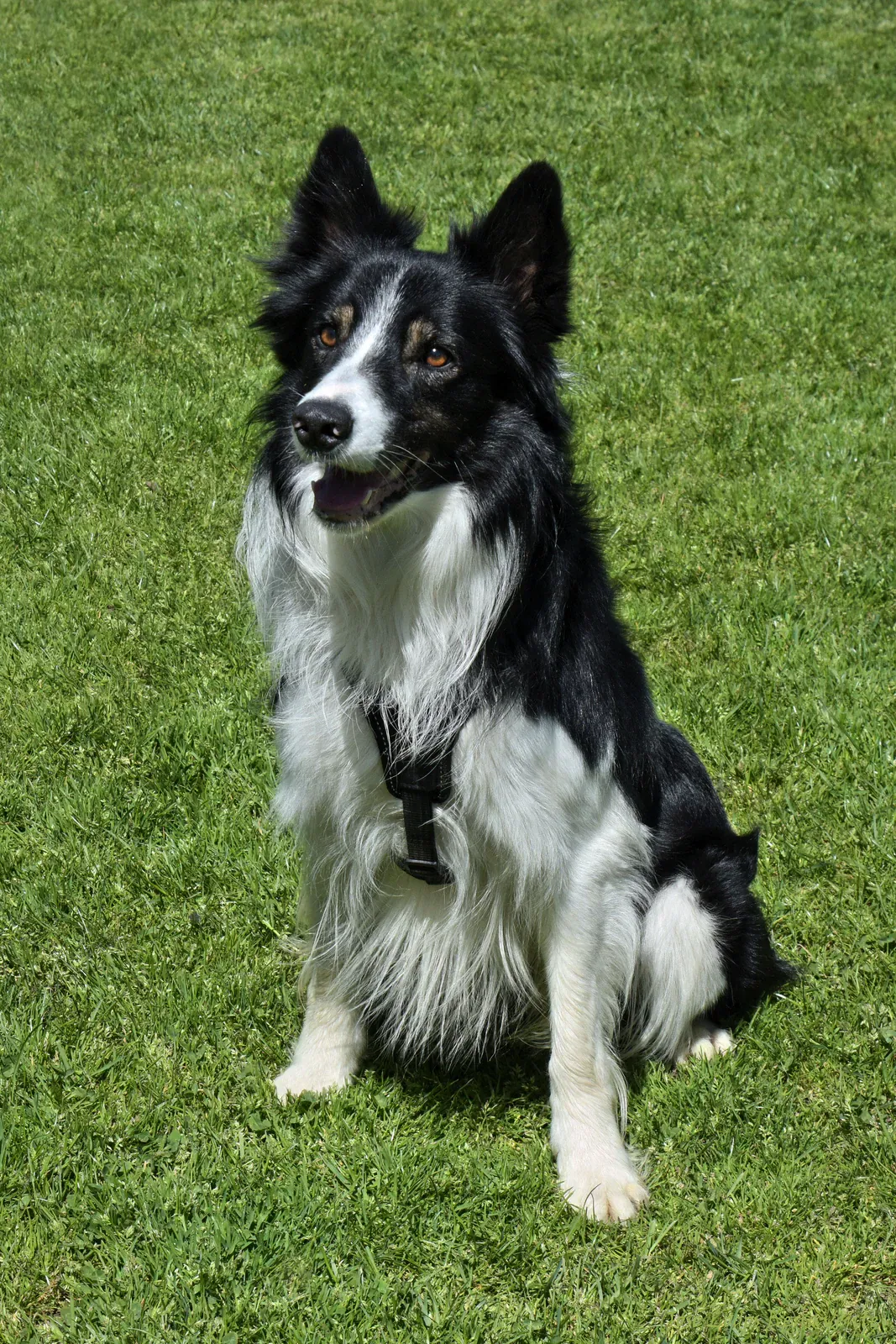
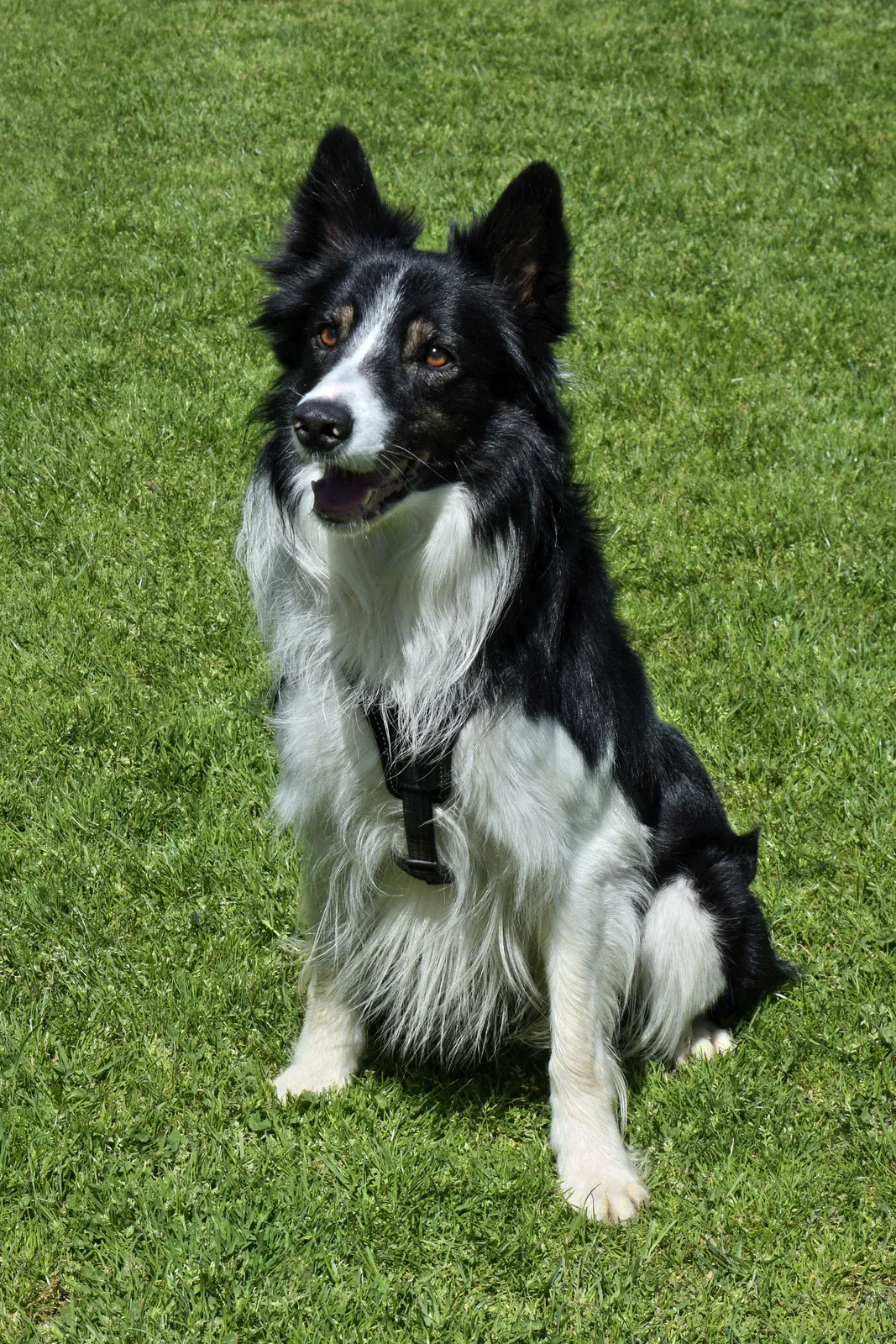
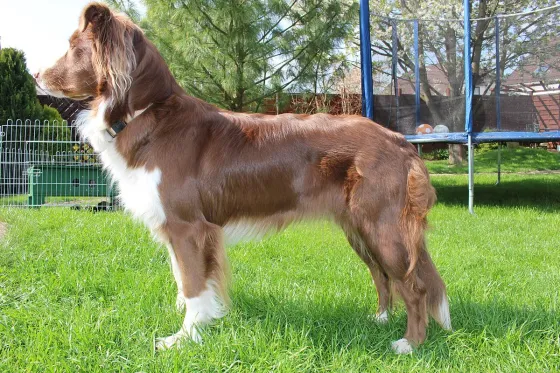
It includes the Border Collie, Rough Collie, Shetland Sheepdog, Bearded Collie, Old English Sheepdog and Pembroke Welsh Corgi, the Australian Kelpie, Australian Cattle Dog and Australian Shepherd, and the Greyhound, Whippet, Borzoi and Irish Wolfhound. The family is a DNA grouping, not a kennel club group: it takes its name and its core from a 2017 genetic study that found these breeds sit together on one branch of the dog family tree. This page is for anyone who wants to know which of these breeds are related, where they came from and what they have in common.
UK Rural quick facts
 Family storyEuropean MastiffRead the family's story: origins, members, DNA
| Fact | Detail |
|---|---|
| Family name | UK Rural (the name the 2017 study gave the ) |
| DNA basis | "U.K. Rural" clade, Parker et al. 2017 (Cell Reports) |
| Members | 44 breeds: 35 living and 9 extinct in this site's data (Smithfield counted as living, see the extinct section) |
| Breeds DNA-tested in the 2017 study | 16 of the 44, all with strong support. The other 28 are placed by history and type |
| Two halves | 29 herding and droving dogs, 15 sighthounds |
| Region of origin | Britain (England, Scotland, Wales), then Australia, New Zealand, the United States, Brazil and Chile; the sighthounds add Gaul, Spain, Russia, Ukraine, Poland, Hungary and Croatia |
| Period | Oldest types from about 500 BCE, most breeds take shape 1300 to 1900, newest breed 1980 |
| Job | Gathering, driving and heeling sheep and cattle; hunting by sight and speed |
| Parent group | European dogs lineage (this site's tree), inside West Eurasian dogs |
| Closest relatives | Drover, Continental Herder, Hungarian and Mediterranean families |
| Shared health themes | MDR1 drug sensitivity, collie eye anomaly (CEA), -linked eye and ear defects |
What is the UK Rural family?
 Family storyTerrierRead the family's story: origins, members, DNA
The UK Rural family is the set of breeds that formed on the same branch of the dog family tree as Britain's working collies. In the 2017 study by Parker and colleagues (Cell Reports), researchers analysed DNA from 1,346 dogs of 161 breeds and sorted 150 of the breeds into 23 clades of two to 18 breeds each, all supported at more than 50 percent. One of those clades is called "U.K. Rural". The paper names the Collie, Border Collie, Shetland Sheepdog and Australian Shepherd as members, and says that the clade, like the Mediterranean one, contains both sighthounds and working dogs from one region.
This family follows the paper's clade and adds untested breeds by history:
- Tested breeds in the clade. In this site's copy of the study's breed table, the U.K. Rural clade holds 16 breeds, and all 16 are in this family. Ten are herding dogs: Border Collie, Bearded Collie, Rough Collie, Shetland Sheepdog, Old English Sheepdog, Pembroke Welsh Corgi, Cardigan Welsh Corgi, Australian Kelpie, Australian Cattle Dog and Australian Shepherd. Six are sighthounds: Greyhound, Whippet, Italian Greyhound, Scottish Deerhound, Irish Wolfhound and Borzoi.
- Breeds added by history. The other 28 members have no clade in the study data held here. They were added because records place them in the same stock. Nineteen are herding or droving dogs: the Smooth Collie, Cumberland Sheepdog, Smithfield, Welsh Sheepdog, Welsh Hillman, Old Welsh Grey Sheepdog, Lancashire Heeler, Cur, Villano de Las Encartaciones, Halls Heeler, Australian Stumpy Tail Cattle Dog, the English Shepherd, McNab and Miniature American Shepherd in North America, the Koolie, Huntaway, New Zealand Heading Dog, Patagonian Sheepdog and Gaucho Sheepdog. Nine are sighthounds: Vertragus, Galgo Espanol, Magyar Agar, Old Croatian Sighthound, Chortai, Gorskaya Borzaya, Krymskaya Borzaya, Polish Greyhound and Silken Windhound. Their place in the family is a judgement from history, not a DNA result.
Where a breed's own DNA result and its history point to different families, the DNA result wins for a tested breed. Weak or missing DNA support is the only reason a breed is placed by history.
Where does the family sit in the dog family tree?
 See alsoGiant Schnauzer1850 to 1923 · Germany
The path upward is UK Rural, then European dogs, then West Eurasian dogs, then domestic dogs, then the Late Pleistocene wolf population that dogs and modern wolves both come from. The upper levels follow two ancient-DNA studies (Skoglund et al. 2015 and Bergstrom et al. 2020). Where a clade hangs under a lineage, the placement is inferred from those studies, so treat it as a working map.
Sister families under European dogs include:
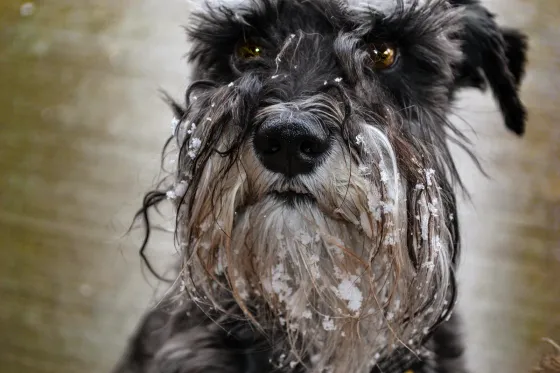
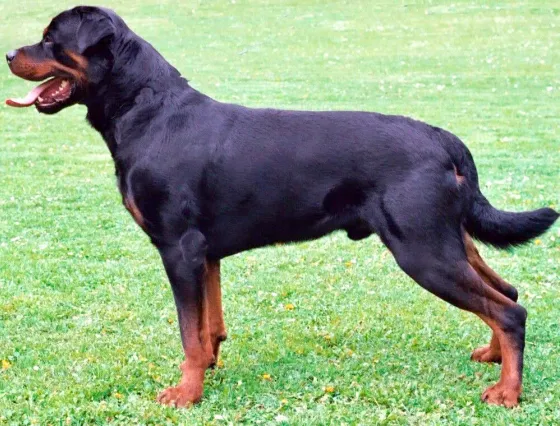
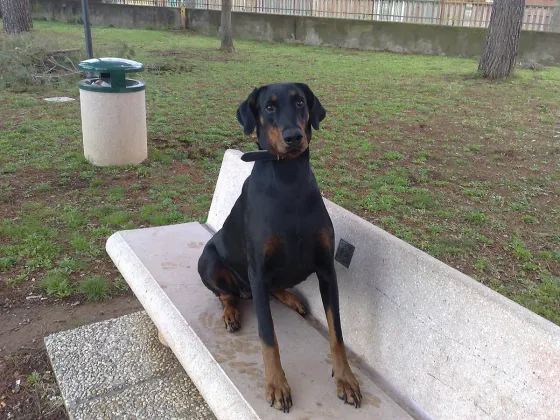
- Drover, cattle-droving dogs: the Rottweiler, Dobermann, Giant Schnauzer and Black Russian Terrier.
- Continental Herder, for example the Belgian Malinois, Briard and Bouvier des Flandres.
- Hungarian, the Puli, Pumi and Mudi.
- Other clades with other jobs: Terrier, Spaniel, Retriever, Scent Hound, Pointer Setter, Poodle, Pinscher and Schnauzer, and more.
Livestock guardians, such as the Kangal and Maremma, and many other sighthounds, such as the Saluki and Afghan Hound, branch in the Mediterranean family, under West Eurasian dogs. The shared job of working sheep did not make the herding families one family: in the DNA, herding shows up as a trait that arose more than once. Parker and colleagues wrote that traits such as herding, coursing and intimidating size "have likely been developed more than once in different geographical locals".
Why is it called "UK Rural", and what do collie, sheepdog and heeler mean?
Family storyEuropean MastiffRead the family's story: origins, members, DNA"UK Rural" is the name the 2017 study gave the DNA group, and this site keeps it. It names a place and a way of life, not a job, which suits a clade that holds both herders and sighthounds: the authors read it as a shared regional origin that later split by job. The name is narrower than the family. Many members were bred far from the United Kingdom, from Australia to Russia.
The names inside the family each mean something:
- Collie. A Scots word for a sheepdog, recorded from the 1650s. Its origin is uncertain: theories include "coaly" (coal-black), Gaelic cuilean (puppy or whelp), and a dog name, "Colle", known in Middle English. No theory is proven.
- Sheepdog. A plain job title. It is used for breeds from Wales to Brazil (Welsh Sheepdog, Shetland Sheepdog, Patagonian Sheepdog, Gaucho Sheepdog).
- Heeler. A dog that nips at the heels of cattle to move them. The Lancashire Heeler is named for this.
- Corgi. From Welsh words usually read as "dwarf dog", which fits the short legs of the Pembroke Welsh Corgi.
- Heading dog. A dog that works at the head of stock to turn them, as in the New Zealand Heading Dog.
- Huntaway. From "hunting away": a dog that drives sheep forward with its bark.
- Kelpie. After the first Kelpie, a female pup bought about 1872 by Jack Gleeson. Her name is usually linked to the kelpie, a shape-shifting water spirit from Celtic folklore.
- Shepherd. Used for the American breeds (Australian Shepherd, English Shepherd, Miniature American Shepherd). The Australian Shepherd is not from Australia: it was developed in the western United States. Its name comes from the sheep and dogs that arrived there from Australia (Wikipedia, "Australian Shepherd").
- Sighthound, windhound, borzaya. A sighthound hunts by sight and speed. "Windhound" is another name for the same kind of dog, and the Russian borzaya means a fast hound, the root of the name Borzoi. The Spanish galgo comes from Latin words for a "Gaulish dog".
Where did these dogs come from?
Family storyTerrierRead the family's story: origins, members, DNALandrace sheepdogs and drovers
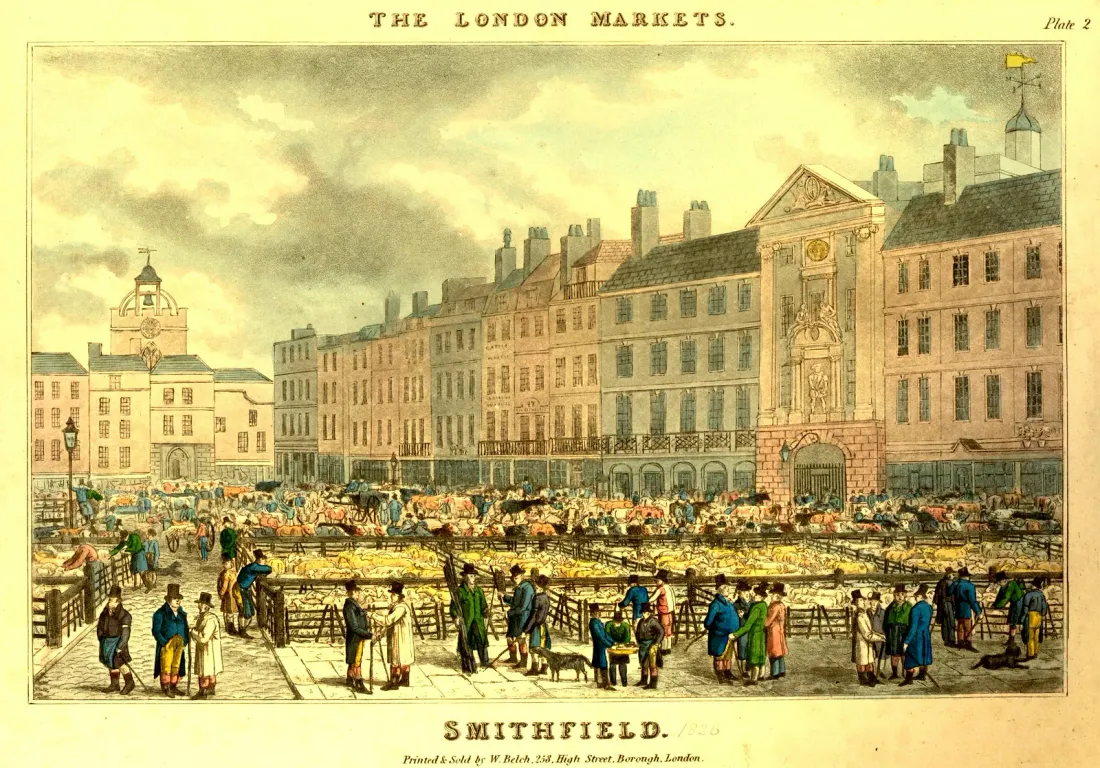
Before breed clubs, British farms kept working dogs selected for ability, not looks, and the herding dogs of hill country were loose regional types. Two jobs shaped them. Shepherds on hills needed dogs that gathered sheep at a distance. Drovers needed dogs that could move cattle and sheep along roads for weeks to market. By the late 18th century, roughly 100,000 cattle and 750,000 sheep reached London's Smithfield Market each year, and Welsh flocks of 1,500 to 2,000 animals walked to London in 20 to 25 days (Wikipedia, "Droving"). Railways ended most droving by the middle of the 19th century. Droving dogs are described as large, high-legged, tireless and independent, and droving was the work of the Smithfield, the Old Welsh Grey Sheepdog and the Welsh Hillman.
Sheepdog trials and the working registry
The first recorded sheepdog trial in Britain is usually given as Bala, North Wales, in 1873. Earlier trials are recorded overseas: Wanaka in New Zealand in 1867 and Young, New South Wales, in 1871. Trials gave farmers a public way to compare dogs and favoured the quiet, close-working collie type, most of all the Border Collie. The International Sheep Dog Society (ISDS) was formed in 1906 and keeps its own registry of working dogs. The Old Welsh Grey Sheepdog worked differently, with a loose-eyed, noisy style, and as Border Collies spread the older Welsh types declined on most farms (Wikipedia, "Old Welsh Grey Sheepdog" and "Welsh Sheepdog").
The show-ring split
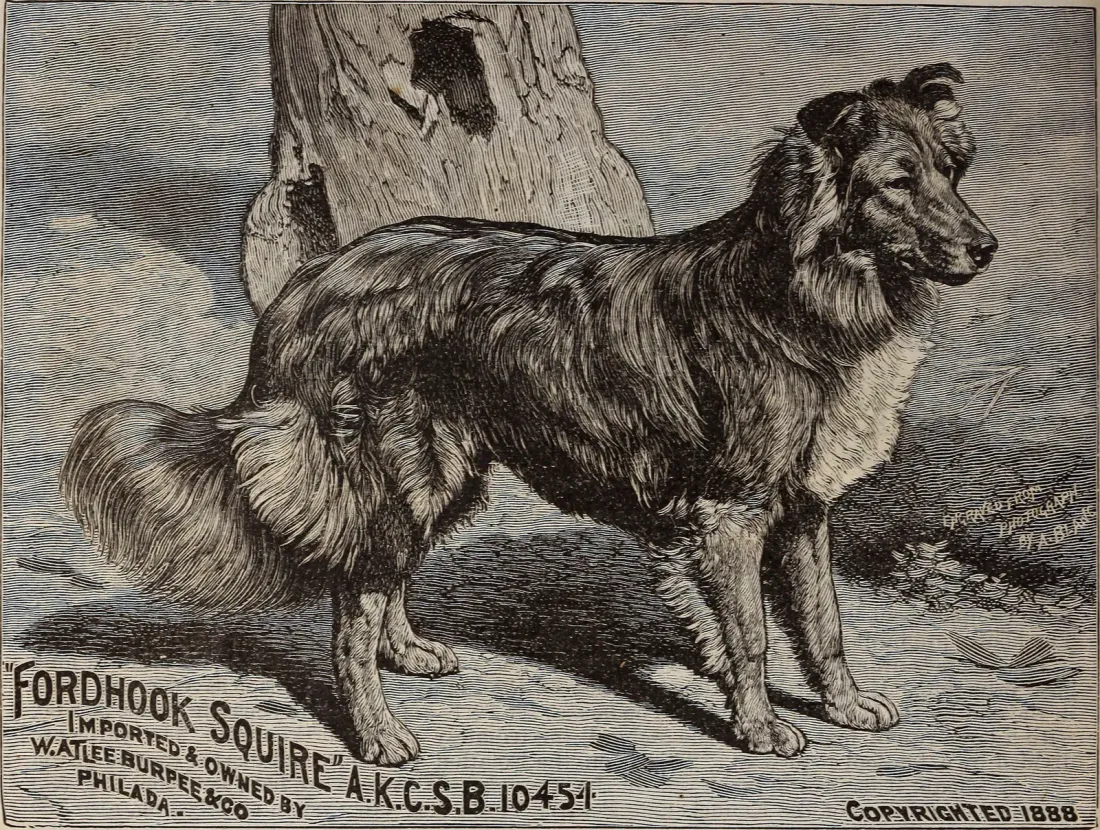
From the early 1860s, collies were exhibited at dog shows, beginning at Birmingham. Queen Victoria's interest in the collies at Balmoral in the 1860s made them fashionable. The dog Old Cockie, born in 1867, became a model for show breeders, and popular breed histories say a cross to the Borzoi lengthened the head of the show Rough Collie (the project records this link at low confidence). Show collies were selected for looks and became the Rough Collie and Smooth Collie. Working collies stayed under the ISDS, selected for herding. The Kennel Club (UK) was founded in 1873. Other family members also entered the ring in this period: the Old English Sheepdog was first exhibited at Birmingham in 1873, with three entries, and the Shetland Sheepdog was recognised by the Kennel Club in 1909.
Export with the settlers
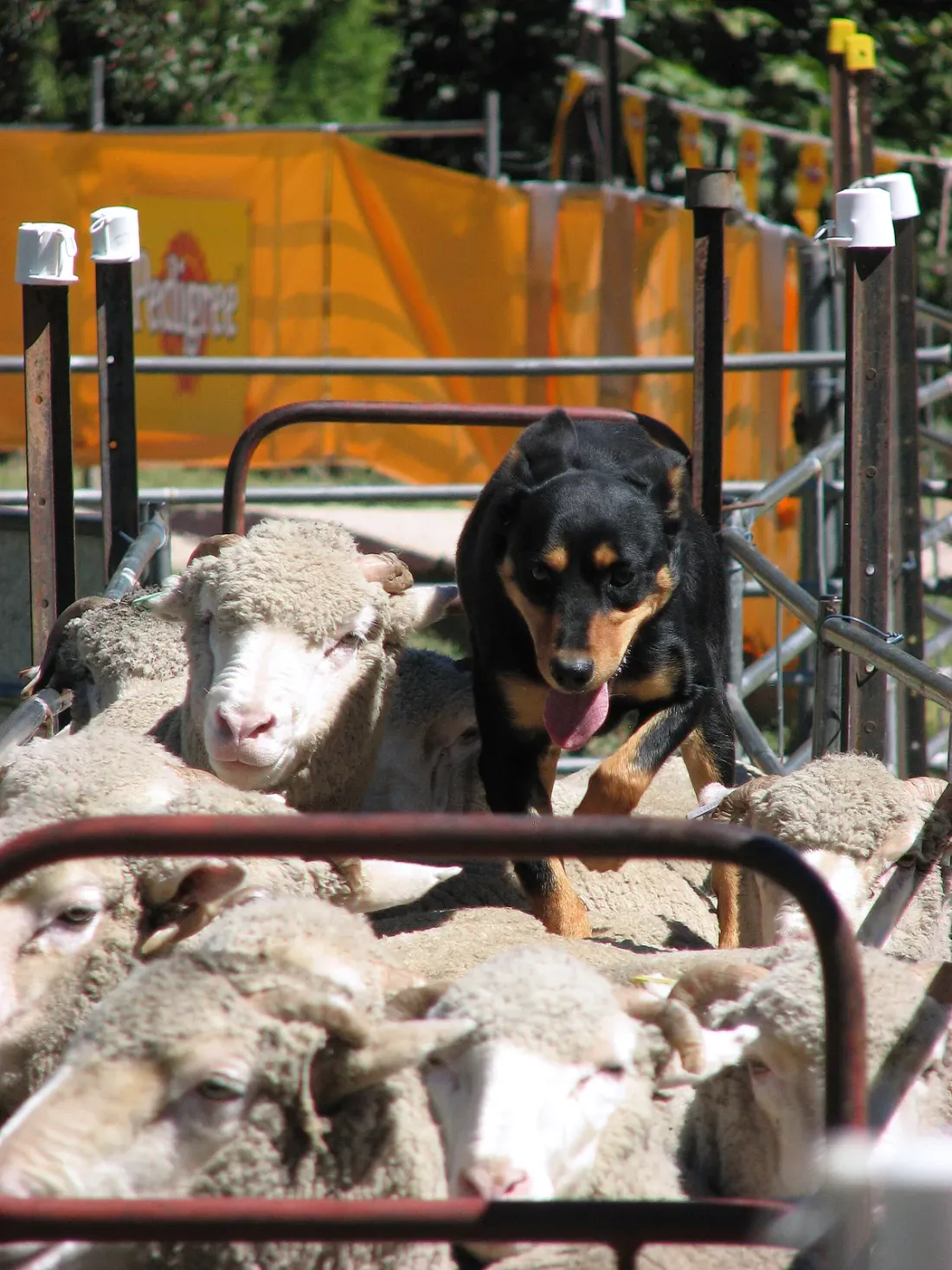
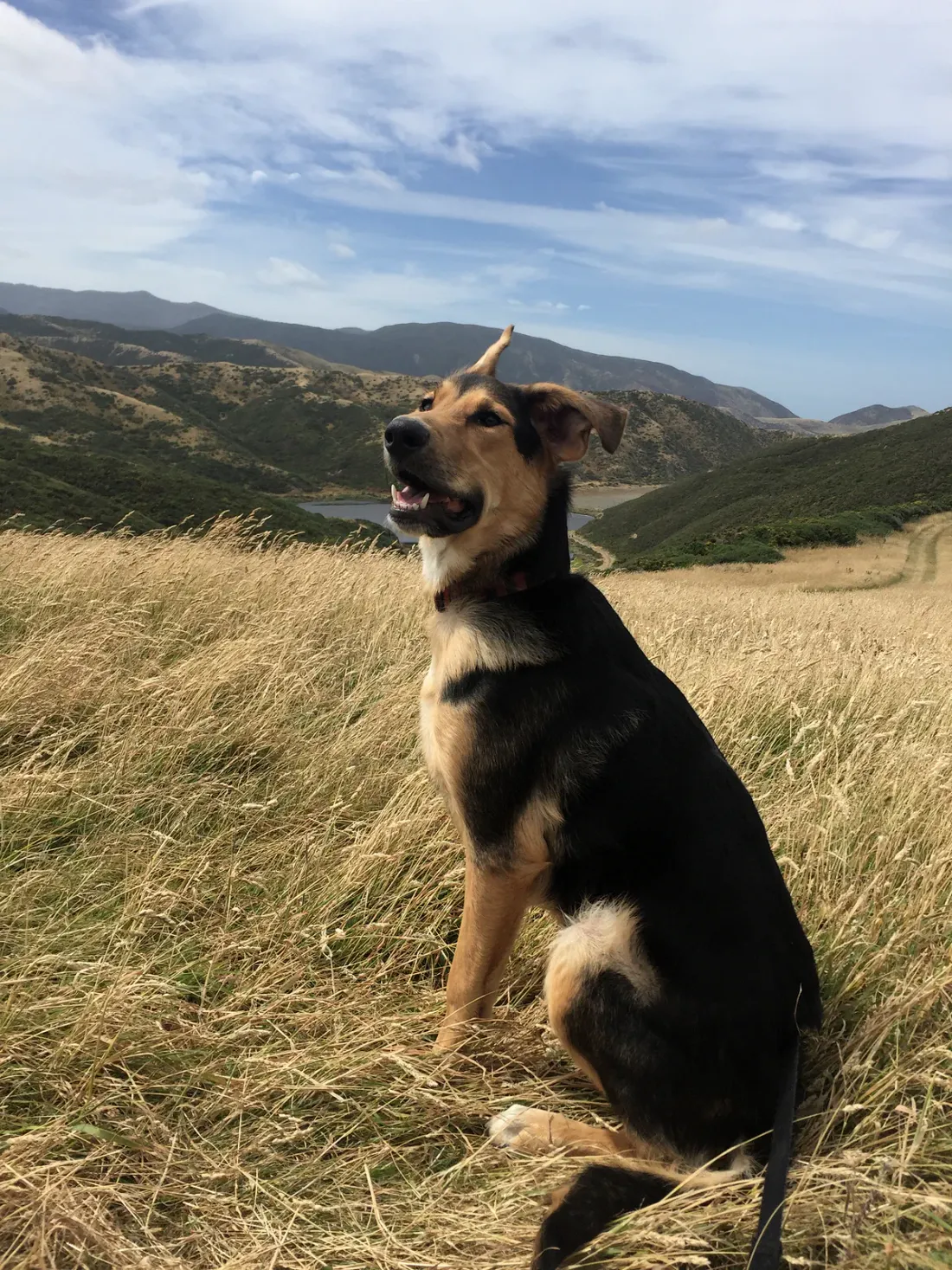
Sheep farming spread with British settlers, and their dogs went along. In Australia, collies imported in the early 19th century were crossed and selected into independent working dogs, giving the Koolie and the Australian Kelpie. The first Kelpie-named dog was a pup from a litter at Warrock Station near Casterton (western Victoria), bought by Jack Gleeson about 1872. One Koolie history reports a pair of smooth-coated collies imported to the Hunter Valley in the 1840s. In New Zealand, Border Collies became the New Zealand Heading Dog, bred with shorter coats and a standing style that shows up against tussock grass. The Huntaway grew from British sheepdogs and other working types by about 1870. A trial class for Huntaways was advertised in the Upper Waitaki that year. In North America, Scottish collies reached California with Alexander McNab, who established a large sheep ranch at Hopland in the late 19th century, and farm collies became the English Shepherd. In Brazil and Chile, collies and other dogs met local herding stock and produced the Gaucho Sheepdog and, with possible Welsh Grey ancestry brought by Welsh settlers, the Patagonian Sheepdog.
Sighthounds and coursing dogs
The sighthound half of the family has an older paper trail. The Vertragus, a Gaulish hound whose name is usually read as "swift-footed", is described by the Roman writer Arrian around 145 CE (Cynegeticus) and is seen as a possible ancestor of the Greyhound and of the Spanish Galgo. Medieval Europe had regional sighthounds such as the Old Croatian Sighthound. In Russia the borzoi types were bred for coursing wolves and hares. The extinct Gorskaya Borzaya (mountain borzoi) and Krymskaya Borzaya (Crimean borzoi) are named in the data as the base of the living Chortai. Britain gave the Greyhound, Whippet, Scottish Deerhound and Irish Wolfhound. Some modern members are recent builds: the Silken Windhound was built from Borzoi and Lurcher lines from about 1980, and the Greyhound was crossed into the Magyar Agar in the 19th and early 20th centuries.
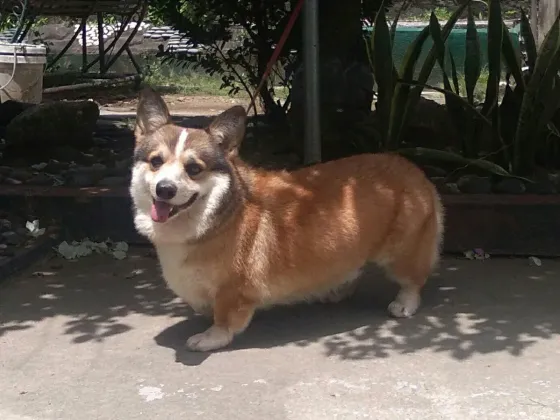
Which breeds are in the UK Rural family?
Family storyEuropean MastiffRead the family's story: origins, members, DNAThe table lists every member in order of when it first appears, with the DNA-tested breeds first. The rest of the members are hidden until you choose to show all 44. "Appeared" gives the project's approximate date range: when the type first shows up, then when it became an established breed. Dates for landraces are estimates. Size classes follow this site's weight bands (small 4.5 to 10 kg, medium 10 to 25 kg, large 25 to 45 kg).
| Breed | Country or region of origin | Status | Size | Appeared | DNA-tested |
|---|---|---|---|---|---|
| Italian Greyhound | Italy | Living | Toy | 500 BCE to 1900 | Yes (Parker 2017) |
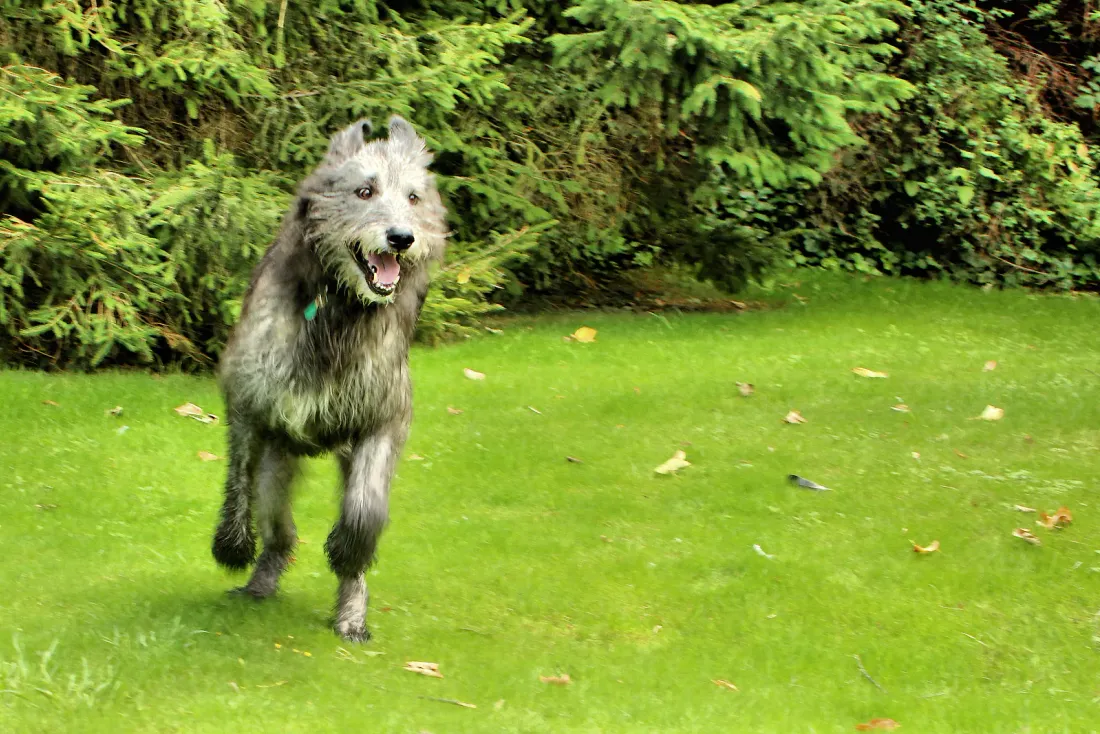
| Irish Wolfhound | Ireland | Living | Giant | 100 BCE to 1885 | Yes (Parker 2017) |
| Greyhound | England | Living | Large | 800 CE to 1850 | Yes (Parker 2017) |
| Pembroke Welsh Corgi | Pembrokeshire, Wales | Living | Medium | 1100 to 1934 | Yes (Parker 2017) |
| Borzoi | Russia | Living | Giant | 1200 to 1650 | Yes (Parker 2017) |
| Cardigan Welsh Corgi | Cardiganshire, Wales | Living | Medium | 1200 to 1934 | Yes (Parker 2017) |
| Bearded Collie | Scotland | Living | Medium | 1500 to 1944 | Yes (Parker 2017) |
| Scottish Deerhound | Scotland | Living | Giant | 1500 to 1886 | Yes (Parker 2017) |
| Old English Sheepdog | West Country, England | Living | Large | 1700 to 1888 | Yes (Parker 2017) |
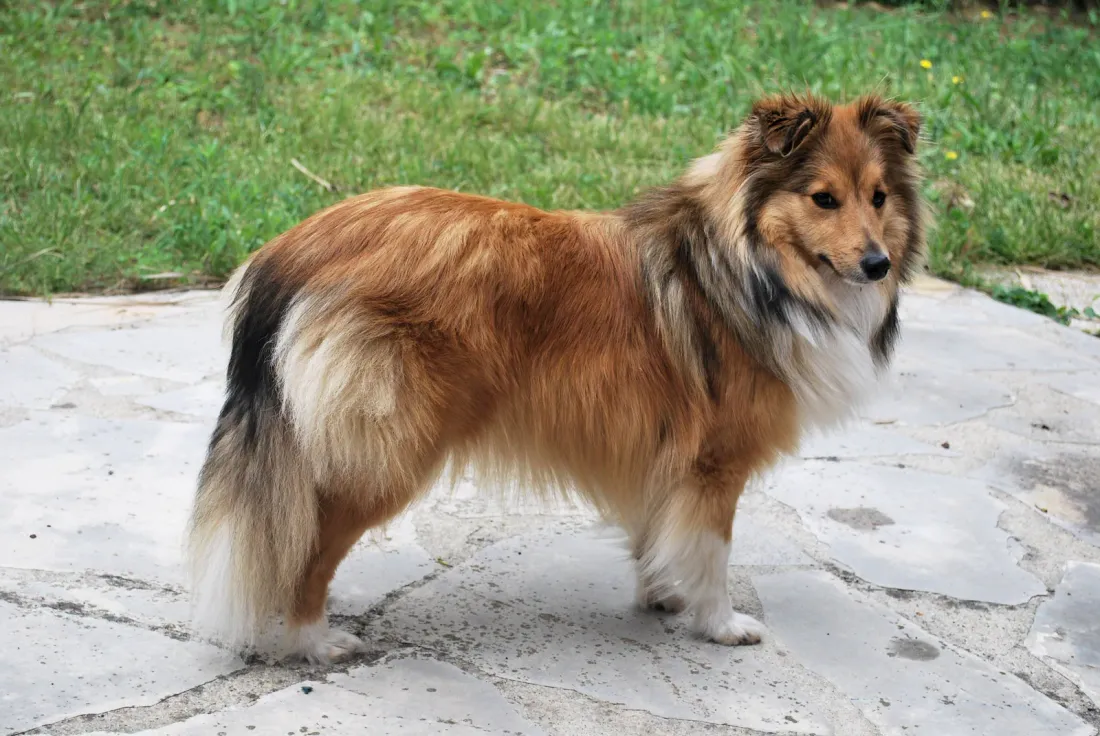
| Shetland Sheepdog | Shetland Islands, Scotland | Living | Small | 1700 to 1909 | Yes (Parker 2017) |
| Border Collie | Anglo-Scottish Border | Living | Medium | 1800 to 1915 | Yes (Parker 2017) |
| Rough Collie | Scotland | Living | Medium | 1800 to 1886 | Yes (Parker 2017) |
| Whippet | Northern England | Living | Medium | 1800 to 1890 | Yes (Parker 2017) |
| Australian Cattle Dog | New South Wales & Queensland, Australia | Living | Medium | 1840 to 1903 | Yes (Parker 2017) |
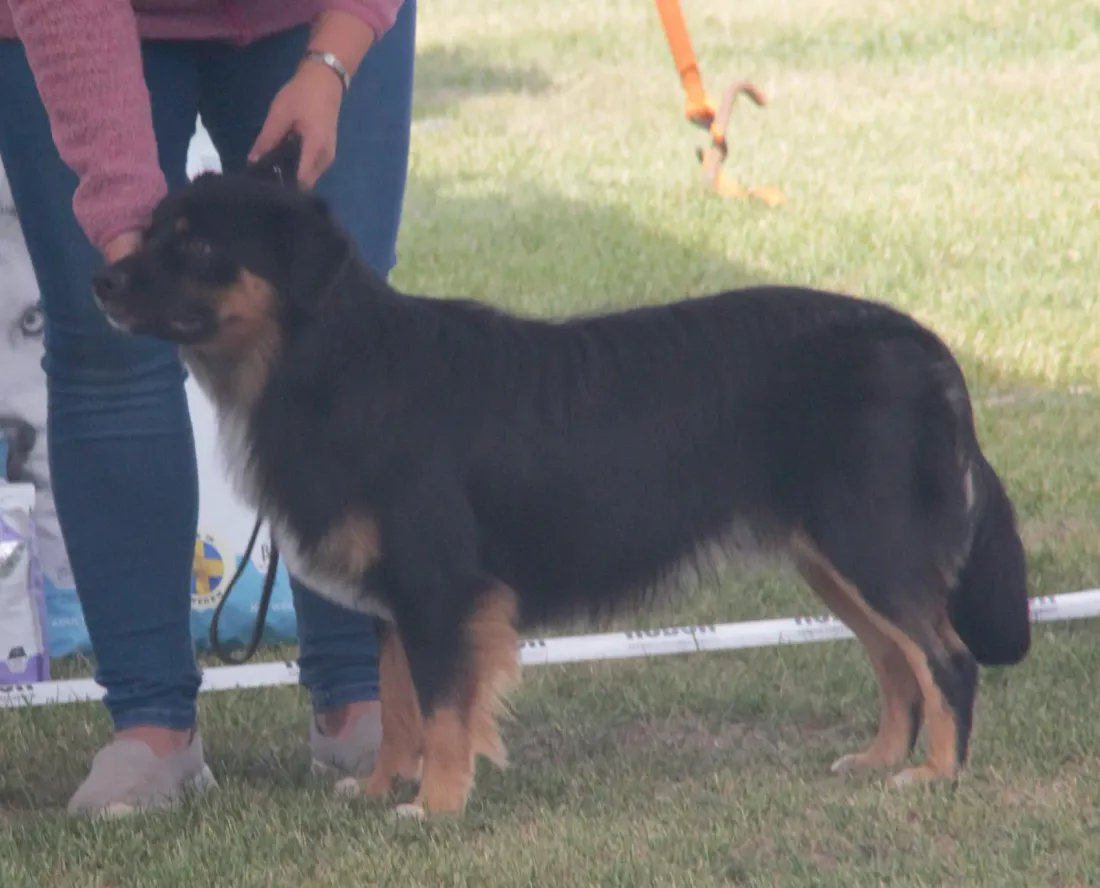
| Australian Shepherd | Western states, United States | Living | Medium | 1840 to 1957 | Yes (Parker 2017) |
| Australian Kelpie | Victoria, Australia | Living | Medium | 1870 to 1902 | Yes (Parker 2017) |
| Vertragus | Gaul, France | Extinct | Medium | 300 BCE to 150 CE | By history |
| Galgo Español | Castile, Spain | Living | Large | 500 CE to 1900 | By history |
| Magyar Agár | Hungary | Living | Large | 900 CE to 1920 | By history |
| Welsh Hillman | Wales | Extinct | Large | 1000 to 1900 | By history |
| Cur | England | Extinct | Medium | 1200 to 1500 | By history |
| Old Croatian Sighthound | Croatia | Extinct | Large | 1200 to 1400 | By history |
| Chortai | Ukraine, Russia | Living | Large | 1300 to 1951 | By history |
| Gorskaya Borzaya | Russia | Extinct | Large | 1300 to 1917 | By history |
| Krymskaya Borzaya | Crimea, Ukraine | Extinct | Large | 1300 to 1917 | By history |
| Polish Greyhound | Poland | Living | Large | 1300 to 1990 | By history |
| Villano de Las Encartaciones | Las Encartaciones, Biscay, Spain | Living | Large | 1600 to 2000 | By history |
| English Shepherd | United States | Living | Medium | 1700 to 1927 | By history |
| Welsh Sheepdog | Wales | Living | Medium | 1700 to 1997 | By history |
| Cumberland Sheepdog | Cumberland, England | Extinct | Medium | 1800 to 1900 | By history |
| Gaucho Sheepdog | Rio Grande do Sul, Brazil | Living | Medium | 1800 to 2016 | By history |
| Koolie | Australia | Living | Medium | 1800 to 2000 | By history |
| Lancashire Heeler | Lancashire, England | Living | Small | 1800 to 1978 | By history |
| Old Welsh Grey Sheepdog | Wales | Extinct | Medium | 1800 to 1900 | By history |
| Smithfield | London, England | Living (see note) | Large | 1800 to 1900 | By history |
| Smooth Collie | Scotland | Living | Medium | 1800 to 1885 | By history |
| Australian Stumpy Tail Cattle Dog | New South Wales, Australia | Living | Medium | 1830 to 1917 | By history |
| Halls Heeler | New South Wales, Australia | Extinct | Medium | 1830 to 1870 | By history |
| Huntaway | New Zealand | Living | Large | 1870 to 2013 | By history |
| Patagonian Sheepdog | Magallanes Region, Chile | Living | Medium | 1880 to 1990 | By history |
| McNab | Mendocino County, California, United States | Living | Medium | 1885 to 1900 | By history |
| New Zealand Heading Dog | New Zealand | Living | Medium | 1900 to 1960 | By history |
| Miniature American Shepherd | California, United States | Living | Small | 1968 to 2015 | By history |
| Silken Windhound | United States | Living | Medium | 1980 to 1998 | By history |
Twenty-three members are recognised by the FCI: fourteen in Group 1 (Sheepdogs and Cattledogs), eleven definitively and three provisionally (Australian Stumpy Tail Cattle Dog, Lancashire Heeler and Miniature American Shepherd), and nine definitively in Group 10 (Sighthounds). The Border Collie, Bearded Collie, Rough Collie, Smooth Collie, Shetland Sheepdog, Old English Sheepdog, Pembroke Welsh Corgi and Australian Shepherd are also recognised by the AKC and the Kennel Club (UK). The Lancashire Heeler has Kennel Club recognition since 1981 and AKC recognition since 2024 (Wikipedia, "Lancashire Heeler"). The Miniature American Shepherd entered the AKC on 1 July 2015. Many others, such as the Koolie, McNab and Welsh Sheepdog, are working breeds held by their own registries and clubs. The Koolie is not recognised by any major kennel club.
Which members descend from which?
 See alsoGerman Shepherd1899 · Germany
The project's breed records list documented ancestor breeds. Inside the family, the links are these:
| Ancestor | Descendant | Link | Confidence in project data |
|---|---|---|---|
| Scottish Deerhound | Irish Wolfhound | Crossed with | Medium |
| Vertragus | Galgo Español | Main ancestor | Low |
| Greyhound | Galgo Español | Crossed with | Medium |
| Vertragus | Greyhound | Main ancestor | Low |
| Greyhound | Magyar Agár | Crossed with | Medium |
| Krymskaya Borzaya | Chortai | Main ancestor | Medium |
| Gorskaya Borzaya | Chortai | Main ancestor | Medium |
| Bearded Collie | Old English Sheepdog | Crossed with | Medium |
| Smithfield | Old English Sheepdog | Main ancestor | Low |
| Rough Collie | Shetland Sheepdog | Crossed with | Medium |
| Border Collie | Welsh Sheepdog | Crossed with | Medium |
| Rough Collie | Gaucho Sheepdog | Main ancestor | Low |
| Australian Kelpie | Koolie | Crossed with | Medium |
| Border Collie | Koolie | Crossed with | Medium |
| Pembroke Welsh Corgi | Lancashire Heeler | Main ancestor | Low |
| Cardigan Welsh Corgi | Lancashire Heeler | Main ancestor | Low |
| Borzoi | Rough Collie | Crossed with | Low |
| Greyhound | Whippet | Main ancestor | Low |
| Halls Heeler | Australian Stumpy Tail Cattle Dog | Main ancestor | Medium |
| Bearded Collie | Halls Heeler | Main ancestor | High |
| Halls Heeler | Australian Cattle Dog | Main ancestor | High |
| Australian Kelpie | Australian Cattle Dog | Crossed with | Medium |
| Cumberland Sheepdog | Australian Shepherd | Main ancestor | Low |
| Smooth Collie | Australian Kelpie | Crossed with | Low |
| Old Welsh Grey Sheepdog | Patagonian Sheepdog | Main ancestor | Low |
| Border Collie | New Zealand Heading Dog | Main ancestor | High |
| Australian Shepherd | Miniature American Shepherd | Main ancestor | High |
| Borzoi | Silken Windhound | Main ancestor | Medium |
Thirteen links point to ancestors outside the family. Notable ones: the Pembroke Welsh Corgi has a low-confidence link to the Swedish Vallhund, the Lancashire Heeler is generally said to descend from the Welsh Corgi and the Manchester Terrier, and the Australian Shepherd lists the Carea Leones, a Spanish herding dog, at low confidence. The Australian Cattle Dog and Halls Heeler were crossed with the Dingo, and the Australian Cattle Dog also with the Dalmatian. The Irish Wolfhound lists a Great Dane cross, the Borzoi a Saluki cross, and the Gaucho Sheepdog's second origin theory adds the Estrela Mountain Dog and German Shepherd.
Eleven pairs are linked as sisters: they share ancestry but have no documented parent breed. They include the Rough Collie with the Border Collie, Smooth Collie and English Shepherd, the Pembroke and Cardigan Welsh Corgis, and the Greyhound with the Old Croatian Sighthound. The Welsh Sheepdog entry shows how sources differ. The project lists the Border Collie as an outcross into the older Welsh type, while the Welsh Sheepdog Society says the Welsh Sheepdog is an older native type that was crossed extensively with Border Collies.
How much DNA do the tested members share?
For the sixteen DNA-tested members, the 2017 study measured shared : long stretches of identical DNA inherited from common ancestors. The more (Mb) two breeds share, the stronger the sign of crossing or shared founders. The study cannot tell which way the genes moved. In this family, 49 of the 120 possible pairs among the sixteen tested breeds share significant haplotypes, and the strongest pairs stay inside each half.
| Breed pair | Shared DNA (Mb) |
|---|---|
| Rough Collie and Shetland Sheepdog | 252.3 |
| Irish Wolfhound and Scottish Deerhound | 122 |
| Bearded Collie and Border Collie | 77.8 |
| Cardigan Welsh Corgi and Pembroke Welsh Corgi | 73.9 |
| Bearded Collie and Rough Collie | 63.1 |
| Australian Kelpie and Border Collie | 62.6 |
| Australian Shepherd and Rough Collie | 61.8 |
| Greyhound and Whippet | 61.7 |
| Pembroke Welsh Corgi and Rough Collie | 44.1 |
| Australian Kelpie and Bearded Collie | 41.8 |
| Cardigan Welsh Corgi and Rough Collie | 40.3 |
| Greyhound and Scottish Deerhound | 37.6 |
Source: Parker et al. 2017, as recorded in this site's breed database. The lowest pair in the family, the Irish Wolfhound and Whippet, shares 9.8 Mb.
The Rough Collie and Shetland Sheepdog figure is far above every other pair, which fits records of Rough Collie crosses in the Shetland Sheepdog's early development. The Irish Wolfhound and Scottish Deerhound come second at 122 Mb, the strongest sighthound pair. The Old English Sheepdog shares the least with the other herding dogs, which may mean it stayed more apart from the collies, though the data cannot say why.
What do the members have in common?
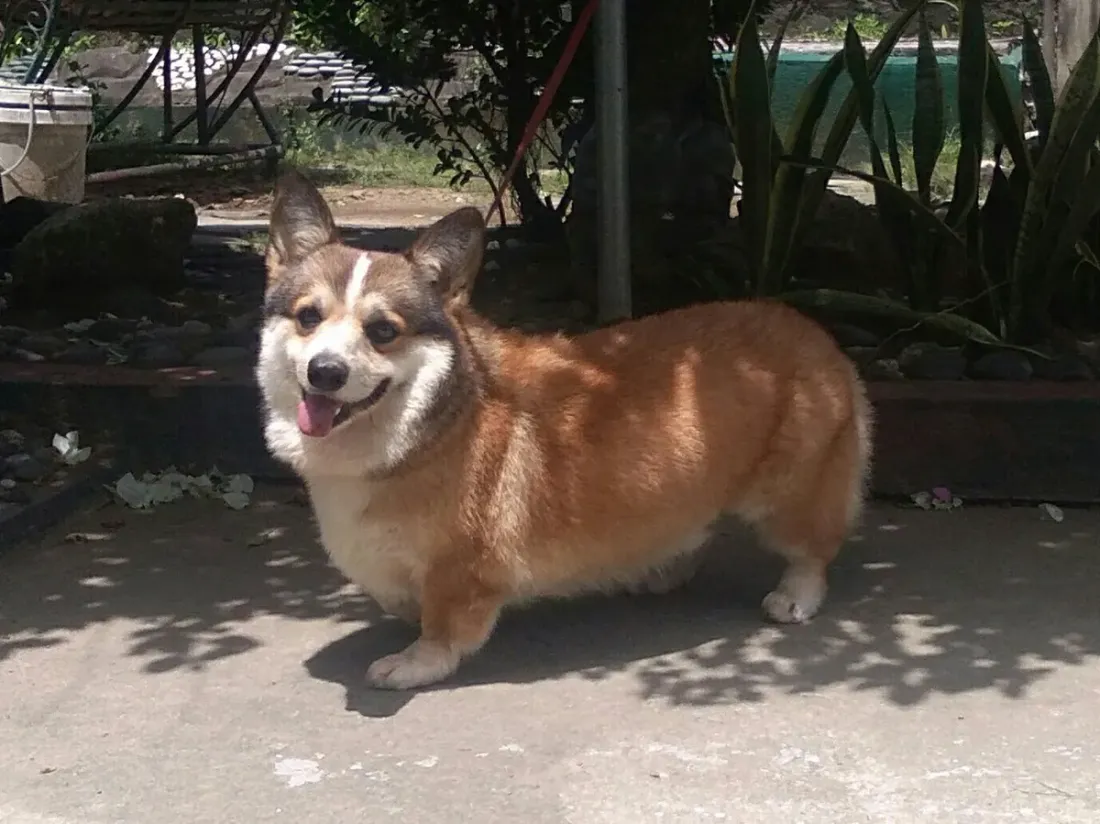
Family storyTerrierRead the family's story: origins, members, DNABuild. Twenty-four of the 44 fall in this site's medium size band (10 to 25 kg), three are small (Shetland Sheepdog, Lancashire Heeler, Miniature American Shepherd), thirteen are large (Welsh Hillman, Old English Sheepdog, Smithfield, Huntaway, Greyhound and most other sighthounds), three are giant (Irish Wolfhound, Borzoi, Scottish Deerhound) and one is toy (Italian Greyhound). The Pembroke Welsh Corgi, with its short legs, is achondroplastic, a true dwarf.
Coats. Both long and short coats occur, sometimes inside one breed: some breed bodies treat the Rough Collie and Smooth Collie as one breed in two coats, and the Border Collie, Koolie and Huntaway come rough or smooth. Merle patterning appears in the Koolie, Australian Shepherd and Border Collie, among others. Merle comes from an insertion in the SILV gene (Clark et al. 2006), and two copies (double merle) are linked to eye malformations and deafness.
Herding styles. The herding half covers almost every style of moving stock:
- Gathering with "eye". The Border Collie uses a fixed stare and a low, creeping stalk to hold stock in place or move them, a shortened form of the wolf hunting sequence. Dogs range from strong-eyed to loose-eyed.
- Loose-eyed, noisy working. The Old Welsh Grey Sheepdog and the McNab worked with a looser style. The Welsh Sheepdog does not fix its gaze on stock as the Border Collie does.
- Heading and heeling. The Koolie works by heading, heeling, casting and blocking, often silently. The Corgi, Australian Cattle Dog and Lancashire Heeler move cattle by nipping at the heels.
- Standing heading dogs. The New Zealand Heading Dog was bred to stand rather than crouch, so a shepherd can see it in tussock.
- Barking drivers. The Huntaway drives big mobs of sheep from behind with a deep, repeated bark, useful where the shepherd cannot see the dog.
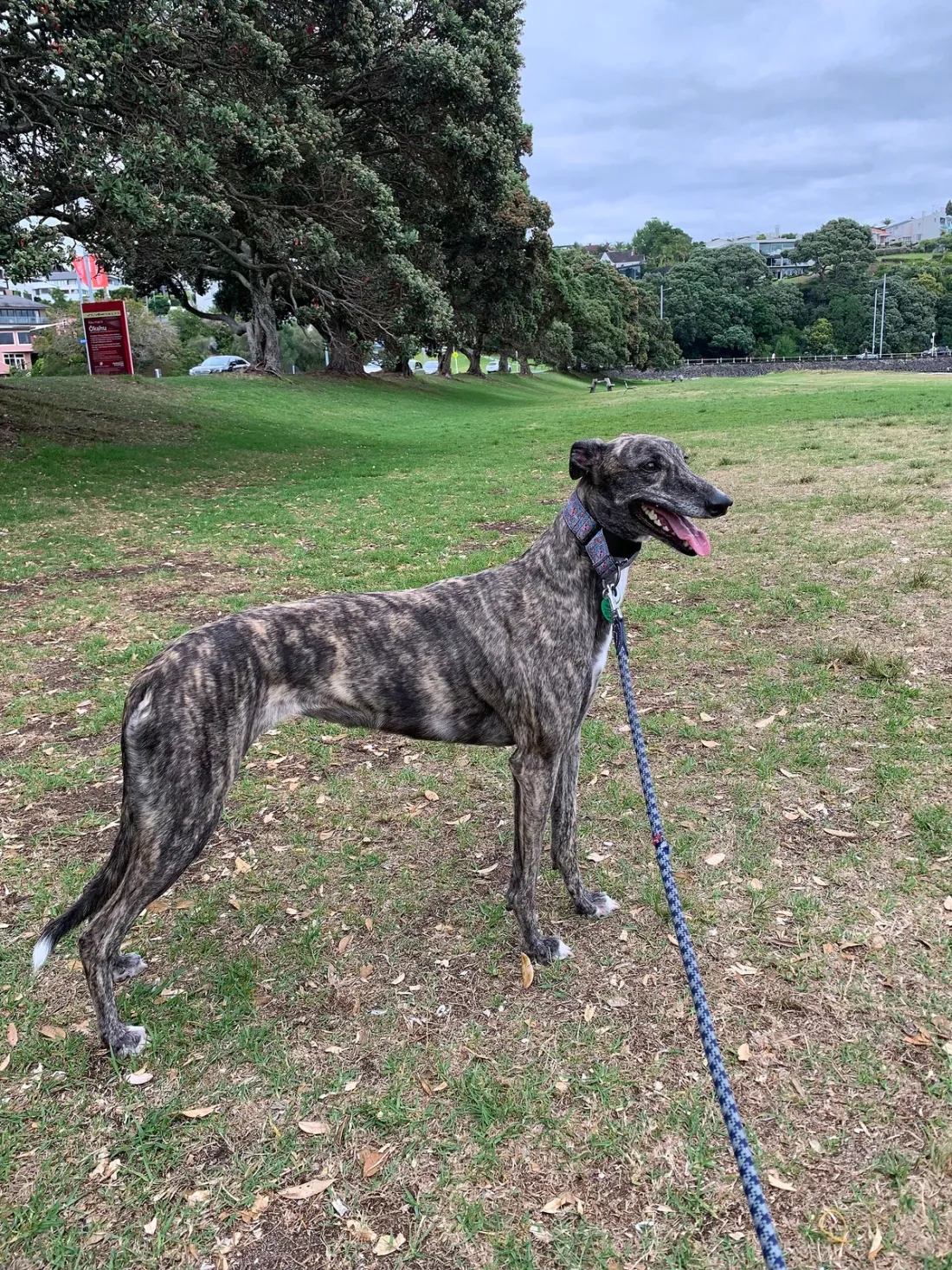
Sighthounds. The other half hunts by sight and speed, with long legs, deep chests and lean bodies. The family ranges from the toy Italian Greyhound to the giant Irish Wolfhound.
Temperament. Herding breeds tend to be alert, quick to learn and sensitive to movement and sound, and most were bred to work closely with a person. Temperament depends strongly on the line. A working line and a show or companion line of the same breed can differ a great deal. A 2022 study in Science found that breed explains just 9 percent of behavioural variation between individual dogs (Morrill et al.), so treat breed descriptions as tendencies, not promises.
What health problems run through the family?
Family storyEuropean MastiffRead the family's story: origins, members, DNABecause the family shares ancestors, it also shares some inherited conditions. The details below are general. Talk to a vet about your own dog, and DNA-test breeding animals where tests exist.
| Condition | What it is | Which members | Evidence |
|---|---|---|---|
| MDR1 drug sensitivity | A 4 bp deletion in ABCB1 causing severe reactions to some drugs, for example ivermectin | Collie (allele frequency 54.6%), Miniature Australian Shepherd (25.9%), Australian Shepherd (16.6%), Shetland Sheepdog (8.4%), English Shepherd (7.1%), Old English Sheepdog (3.6%). About 1% in Border Collies | Neff et al. 2004 (PNAS); Mealey and Meurs 2008 and Gramer et al. 2011 for the Border Collie |
| Collie eye anomaly (CEA) | Inherited defect of eye development, a 7.8 kb deletion in NHEJ1 | Rough Collie, Shetland Sheepdog, Border Collie, Australian Shepherd; also reported in the Lancashire Heeler | Parker et al. 2007 (Genome Research); Parker et al. 2017 |
| Double merle defects | Eye malformations and deafness in dogs with two merle copies | Any merle-coated member | Clark et al. 2006 |
| Addison's disease | Low adrenal hormone output | Bearded Collie, about 2 to 3.4 percent in North America | Wikipedia, "Bearded Collie" (secondary source) |
MDR1 is the clearest shared-ancestor marker. Neff and colleagues found that all dogs carrying the mutation descend from a dog that lived in Great Britain before breeds were isolated by registries, around 1873, and that the mutation probably arose between the 14th century and 1873 in an admixed population of working sheepdogs. Two long-haired sighthound types also carry it: the Longhaired Whippet (41.6 percent) and the Silken Windhound (17.9 percent), which is a member of this family.
The 2017 study reached the same result from haplotype sharing: it found CEA and MDR1 spread across the U.K. Rural breeds and traced an unexpected link to the German Shepherd, through the Australian Shepherd. It also found Collie or Shetland Sheepdog ancestry in the Nova Scotia Duck Tolling Retriever, the likely source of CEA in that breed.

Which members are extinct, and which are nearly gone?
Family storyTerrierRead the family's story: origins, members, DNANine members are extinct in the project's data, and a tenth is extinct in its original form.
- Welsh Hillman. A large, rangy Welsh , possibly descended from the old gellgi, described as about 64 cm tall and lighter in build than a German Shepherd. It was "almost extinct" by 1948. One source dates its extinction to about 1990.
- Old Welsh Grey Sheepdog. A shaggy, loose-eyed, noisy drovers' dog, valued for moving stock into England. It declined from the early 20th century as Border Collies spread. Some dogs survived on hill farms in the upper Towy valley into the 1980s, and it is now likely extinct. Its line may live on in the Patagonian Sheepdog.
- Cumberland Sheepdog. A black and white dog from Cumberland, about 51 cm high, described by Clifford Hubbard in 1948. In the early 20th century some were called Border Collies and the breed seems to have been absorbed into it.
- Halls Heeler. Bred in New South Wales from about 1830 to 1870 by Thomas Simpson Hall, who crossed blue speckled Highland Collies with selected dingoes. It is the base of the Australian Cattle Dog and the Australian Stumpy Tail Cattle Dog.
- Cur. An English working dog recorded from about 1200 to 1500, with a name probably from Old Norse kurra, "to grumble or growl".
- Vertragus. The swift Gaulish hound of about 300 BCE to 150 CE, seen as an ancestor of the Greyhound and Galgo.
- Old Croatian Sighthound. A medieval type from Croatia, about 1200 to 1400.
- Gorskaya Borzaya and Krymskaya Borzaya. The mountain and Crimean borzoi of Russia and Ukraine, known from about 1300 to 1917 and named as the base of the Chortai.
- Smithfield. The project records it as living, but the original British type is believed extinct and was never recognised by a major kennel club. Dogs of this shaggy drover type, with a natural bobtail in one variety, are shown at the Campbell Town Show in Tasmania.
Other members are rare. The Smooth Collie and Bearded Collie are UK Vulnerable Native Breeds, as is the Lancashire Heeler (listed since 2006). The Welsh Sheepdog is kept alive by breeders who want to hold it apart from the Border Collie.
What surprises does the family hold?
Family storyEuropean MastiffRead the family's story: origins, members, DNA- Corgis are in the same DNA clade as collies. The Pembroke Welsh Corgi looks nothing like a collie, but the study placed it in the same clade and it shares 19.1 Mb with the Border Collie and 44.1 Mb with the Rough Collie. The Cardigan Welsh Corgi is in the clade too, and shares 73.9 Mb with its Pembroke cousin.
- Sighthounds are in the family. The study reported that sighthounds such as the Greyhound and Whippet form one half of the U.K. Rural clade with the herding dogs, which the authors read as a regional origin that later split by job. Fifteen of the 44 members are sighthounds.
- The Australian Cattle Dog is a collie cousin by DNA. It carries dingo ancestry through the Halls Heeler, yet the study placed it in this clade with the collies, and the project's records make the Halls Heeler a descendant of Highland Collie stock.
- The Australian Shepherd is American. It was developed in the western United States, yet the study put it in the U.K. Rural clade and named it as an example of a New World breed built from European breeds. The study also found that the Australian Shepherd links the MDR1 mutation to the German Shepherd.
- The Shetland Sheepdog is not a miniature Rough Collie. Sources describe it as descending from small Scottish collies crossed with island Spitz-type dogs, with dogs from Iceland and Greenland and possibly King Charles Spaniels. The DNA shows large sharing with the Rough Collie (252.3 Mb), so the Rough Collie contributed heavily.
- The DNA clade is wider than any kennel club group. The FCI files the herding members in Group 1 and the sighthounds in Group 10, yet the paper puts them in one clade.
What does research say about the family?
Family storyTerrierRead the family's story: origins, members, DNA- Clade structure. Parker et al. 2017 (Cell Reports) is the core paper. It defined the U.K. Rural clade and showed collie blood in breeds developed overseas, such as the Australian Shepherd in the United States and the Nova Scotia Duck Tolling Retriever in Canada.
- MDR1 history. Neff et al. 2004 (PNAS) used the MDR1 mutation as a marker of breeds that emerged from the collie lineage and traced it to a shared British ancestor from before 1873.
- Herding genes. Shan, Xu and Brenig (2021, Frontiers in Veterinary Science) compared 55 herding dogs with 213 others across 130 breeds and found 44 significantly associated sites on five chromosomes, near genes such as THOC1, ASIC2, MSRB3, LLPH, RFX8 and CHL1. The authors warn that classing breeds by the AKC's written descriptions is not precise enough to catch all variants.
- Selection in herding breeds. Jeong, Ostrander and Kim (2025, Science Advances) compared herding and non-herding breeds and found signs of positive selection in pathways for social interaction and cognition. In Border Collies, a working-line haplotype of the gene EPHB1 was associated with higher chase-bite motor patterns.
- How much is breed? Morrill et al. (2022, Science) surveyed owners of 18,385 dogs and genotyped 2,155. Most behaviour traits are heritable (h2 above 25 percent), but breed explains only about 9 percent of behavioural variation. The authors suggest that behaviours linked to modern breeds come from long polygenic selection that predates breeds.
Which member suits which owner?
Family storyEuropean MastiffRead the family's story: origins, members, DNAThere is no single best breed, and individual lines differ. These pairings follow size, coat and job, using only what the sources say.
- For work with stock. The Border Collie, Australian Kelpie, Koolie, Huntaway and New Zealand Heading Dog are still bred as working dogs. The Huntaway suits big, open country where barking carries. The Heading Dog and Border Collie suit quieter, closer work.
- For speed and open space. The Greyhound, Whippet and Italian Greyhound are sighthounds. The Greyhound and Whippet are known as sprinters that settle well indoors, but a sighthound may chase small animals, so ask a breed club about recall and fencing.
- For small homes. The Shetland Sheepdog, Pembroke Welsh Corgi, Lancashire Heeler, Miniature American Shepherd and, among sighthounds, the Italian Greyhound are small. Expect herding instincts all the same: the Pembroke Welsh Corgi may nip at heels.
- For a big, shaggy dog. The Old English Sheepdog and Bearded Collie have long, thick coats. Ask a breed club what grooming they take.
- For a rare breed. The Smooth Collie, Bearded Collie and Lancashire Heeler are UK Vulnerable Native Breeds and a good fit for owners who want to support a small breed.
- For dog sports. The Border Collie suits herding trials, agility, obedience, flyball, scent work and disc sports, and the Miniature American Shepherd is also listed for herding, agility and obedience. Both need a lot of exercise and mental work. For the Border Collie, the Kennel Club lists more than two hours daily.
Across the family, a herding-bred dog without a job may invent one. That can mean chasing, nipping and staring at moving things, which owners often mistake for bad behaviour.

UK Rural fun facts
Family storyTerrierRead the family's story: origins, members, DNA- The Rough Collie and Shetland Sheepdog share 252.3 Mb, the most of any pair in the family, about twice the next pair (the Irish Wolfhound and Scottish Deerhound at 122 Mb).
- Old English Sheepdogs were first shown at Birmingham in 1873, the same year the Kennel Club (UK) was founded. Only three were entered.
- The Huntaway was the first dog breed of New Zealand origin recognised by the New Zealand Kennel Club, in August 2013.
- The Miniature American Shepherd was first bred in the late 1960s by breeding small Australian Shepherds, and was called the Miniature Australian Shepherd at first.
- The Smithfield is named for the London meat market where drovers' dogs moved cattle, and the type lives on in Tasmania.
- The Vertragus, a Gaulish hound described by Arrian about 1,900 years ago, is the oldest member of the family in the data.
- Every dog carrying the MDR1 drug-sensitivity mutation descends from a British dog, or admixed working sheepdog population, that lived before about 1873 (Neff et al. 2004).
Related families
Family storyEuropean MastiffRead the family's story: origins, members, DNA- Drover: the Rottweiler, Dobermann, Giant Schnauzer and Black Russian Terrier, working dogs of cattle and farm.
- Continental Herder: the herding dogs of mainland Europe.
- Hungarian: the Puli, Pumi and Mudi.
- Mediterranean: livestock guardians and the Saluki and other sighthounds that sit outside this clade.
- European dogs: the parent lineage.
Frequently asked questions
Are all collies related?
The DNA says yes, at different distances. Most tested herding members of the family share significant haplotypes with each other. The Rough Collie and Shetland Sheepdog are the closest pair in the data.
Is the Border Collie the ancestor of every breed in the family?
No. It is a parent of the New Zealand Heading Dog and an outcross into the Koolie and Welsh Sheepdog in the project data. The Rough Collie, Smooth Collie and Border Collie come from the same older working stock.
Why is the Pembroke Welsh Corgi in a herder family?
The Pembroke is a cattle-heeling dog, and in the 2017 study its DNA grouped with the collies and not with terriers or spitz types. Its appearance is unusual for the group because it is short-legged (achondroplastic).
Why are sighthounds in the same family as collies?
The 2017 study put the Greyhound, Whippet and their kin in the same clade as the collies. The authors read this as a shared regional origin in the United Kingdom that later split by job.
Is the Australian Shepherd Australian?
No. It was developed in the western United States. It is named for the sheep and dogs that arrived from Australia.
Which UK Rural breeds are extinct?
Nine: the Welsh Hillman, Old Welsh Grey Sheepdog, Cumberland Sheepdog, Halls Heeler, Cur, Vertragus, Old Croatian Sighthound, Gorskaya Borzaya and Krymskaya Borzaya. The Smithfield is extinct in Britain in its original form.
Do kennel clubs treat these breeds as one group?
No. The FCI files fourteen of its recognised members in Group 1 and nine in Group 10. For example, the AKC puts the Border Collie in its Herding Group and the Greyhound in its Hound Group, and the Kennel Club uses its Pastoral and Hound groups. Club groups follow job and type, not DNA.
Do these breeds share health problems?
Some do. MDR1 drug sensitivity and collie eye anomaly pass through several herding members. Testing is possible for both.
Read next
Sources (15)
- Bergstrom A. et al., "Origins and genetic legacy of prehistoric dogs", Science, 2020.
- Clark L.A. et al., "Retrotransposon insertion in SILV is responsible for merle patterning of the domestic dog", Proceedings of the National Academy of Sciences, 2006.
- Gramer I. et al., study of ABCB1-1Delta (MDR1) allele frequencies in German dogs, 2011.
- Jeong H., Ostrander E.A., Kim J., "Genomic evidence for behavioral adaptation of herding dogs", Science Advances, 11(18), 2025.
- Mealey K.L., Meurs K.M., breed prevalence of the ABCB1-1Delta mutation, Journal of the American Veterinary Medical Association, 2008.
- Morrill K. et al., "Ancestry-inclusive dog genomics challenges popular breed stereotypes", Science, 376, 2022.
- Neff M.W. et al., "Breed distribution and history of canine mdr1-1Delta, a pharmacogenetic mutation that marks the emergence of breeds from the collie lineage", Proceedings of the National Academy of Sciences, 101(32), 2004.
- Parker H.G. et al., "Genomic analyses reveal the influence of geographic origin, migration, and hybridization on modern dog breed development", Cell Reports, 19(4), 2017.
- Parker H.G. et al., "Breed relationships facilitate fine-mapping studies: a 7.8-kb deletion cosegregates with Collie eye anomaly across multiple dog breeds", Genome Research, 2007.
- Shan S., Xu F., Brenig B., "Genome-wide association studies reveal neurological genes for dog herding, predation, temperament, and trainability traits", Frontiers in Veterinary Science, 2021.
- Skoglund P. et al., "Ancient wolf genome reveals an early divergence of domestic dog ancestors and admixture into high-latitude breeds", Current Biology, 2015.
- Wikipedia, articles on Australian Kelpie, Australian Shepherd, Bearded Collie, Cumberland Sheepdog, Droving, English Shepherd, Gaucho Sheepdog, Huntaway, Koolie, Lancashire Heeler, McNab, Miniature American Shepherd, New Zealand Heading Dog, Old English Sheepdog, Old Welsh Grey Sheepdog, Patagonian Sheepdog, Pembroke Welsh Corgi, Rough Collie, Shetland Sheepdog, Smithfield, Smooth Collie, Welsh Hillman and Welsh Sheepdog (used for dates and summaries, cross-checked where possible).
- Koolie Club history pages (Koolie import history).
- Border Collie breed article on this site (Bala trial, ISDS, name, Kennel Club and AKC recognition), drafted from Kennel Club, AKC, FCI and ISDS information.
- Project knowledge base, breed records, family tree and Parker 2017 shared-haplotype table (this site).